
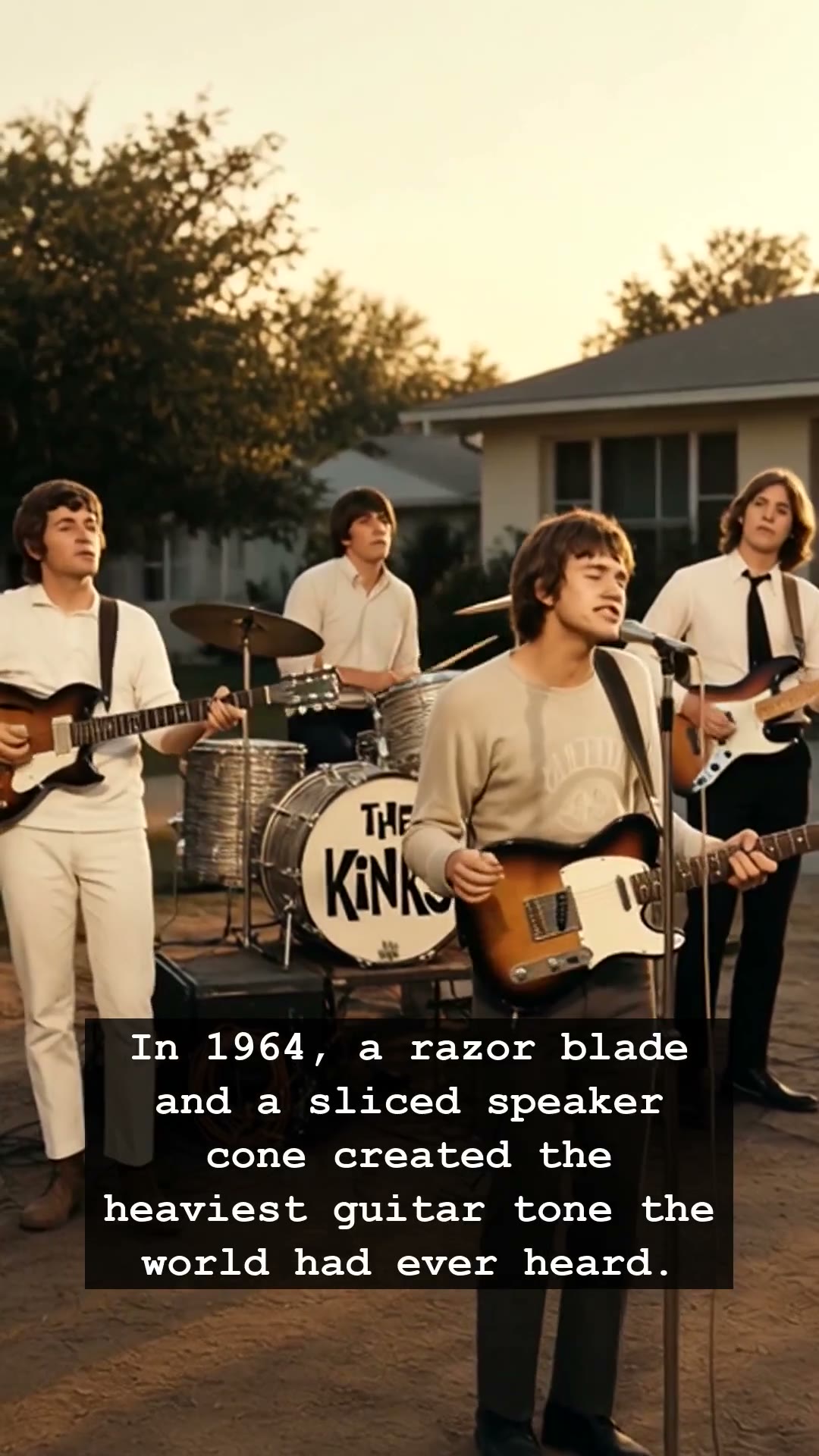
It was 1964, a time when the radio waves were dominated by the polished, squeaky-clean harmonies of the early British Invasion. Yet, in a cramped London studio, something far more sinister was about to unfold. Dave Davies, the volatile young guitarist of The Kinks, was feeling particularly restless. He didn’t want the soft, shimmering tones that were standard for the era; he wanted something that growled, something that felt as dangerous as the street corners of North London. In a moment of pure, unadulterated frustration, he grabbed a razor blade. With a steady hand and a reckless spirit, he slashed right through the cone of his amplifier speaker. What emerged from that wounded equipment was not the sound of a broken machine, but the birth of a sonic revolution.
The resulting tone on the track You Really Got Me was jagged, fuzzy, and undeniably aggressive. It was a violent departure from everything that came before it, effectively tearing a hole in the fabric of mainstream pop. When The Kinks unleashed that sound, they weren’t just playing a riff; they were establishing the blueprint for the heavy rock movement that would eventually swallow the music industry whole. Before the stomp boxes and the sophisticated digital processors of the modern era, there was only a razor, a speaker, and the raw, unbridled ego of The Kinks daring the world to listen.
This act of vandalism changed the landscape of rock and roll forever. For the teenagers of the mid-sixties, it was a revelation. It offered a voice to the growing restlessness that would soon define a generation. While other bands were busy perfecting their suits and smiles, The Kinks were exploring the darker, more visceral possibilities of amplified sound. This distortion—this deliberate imperfection—became the cornerstone of what we would later recognize as hard rock and proto-metal. It was the antithesis of the pristine production found at the time, and it resonated deeply with a youth culture increasingly hungry for something authentic and intense.
The legacy of that sliced speaker cone echoes through decades of musical history. From the heavy sludge of the seventies to the garage rock revivals of the new millennium, the influence of The Kinks remains a ghost in the machine of every guitar player who reaches for a bit of grit. It serves as a reminder that the greatest innovations in art often come from moments of intense frustration, where the status quo is not just challenged, but physically carved apart. That single, shredding chord remains one of the most important milestones in rock history.
Today, when we look back at the golden age of the sixties, we often focus on the melodies and the lyrics. But we must never forget the sheer, industrial violence that helped fuel the revolution. The Kinks didn’t just write a hit song; they hacked into the future of sound. As you sit back and spin those old records today, listen closely to the crackle and the buzz. That isn’t just aging vinyl; it is the sound of a razor blade finding its mark, reminding us all that sometimes, you have to break something beautiful to create something immortal.