
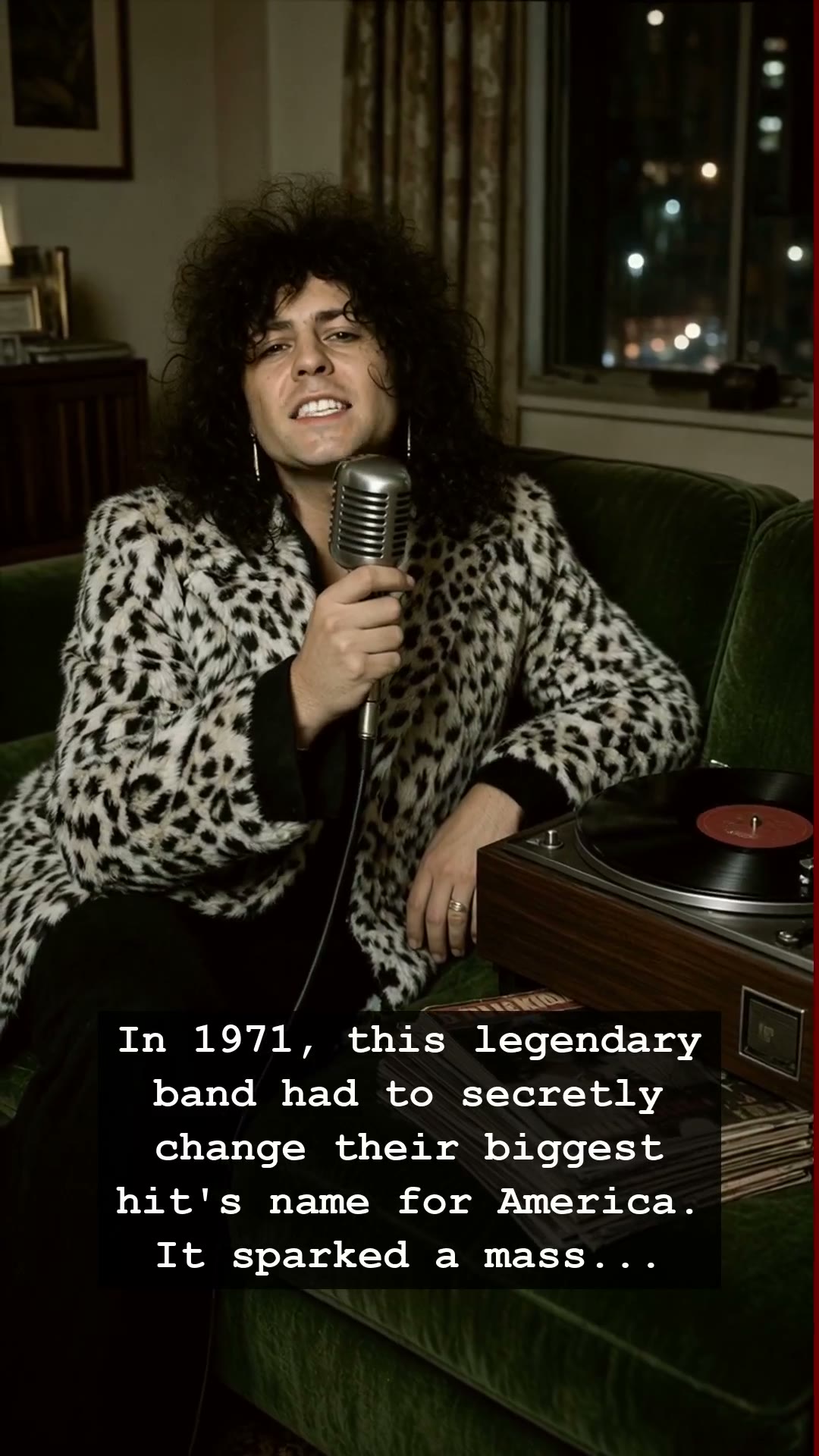
It was 1971, and the airwaves were dominated by the folk-rock introspection of the late sixties. But across the Atlantic, a seismic shift in sound was brewing, cloaked in glitter, platform boots, and a dangerous amount of ego. Marc Bolan, the enigmatic frontman of T. Rex, was on the cusp of conquering the world with his brand of glam rock. Yet, when it came time to launch his meteoric success in the United States, the music industry machine intervened with a calculated, almost cynical demand. The band’s biggest anthem, a song that defined the early seventies, had to undergo a mysterious name change to avoid a complete commercial disaster.
The song in question was originally titled Get It On. To the British public, the phrase was a common, slightly cheeky idiom. However, when T. Rex prepared for their American breakthrough, executives feared the double entendre might be too provocative—or perhaps just too confusing—for the conservative radio gatekeepers of the era. Fearing the track would be buried or censored, the label forced a change. In the United States, the song was retitled Bang a Gong (Get It On). This sneaky, rhythmic tweak didn’t just appease the censors; it gave the track a sharper, more punchy identity that fit perfectly into the burgeoning glam rock landscape of the early seventies.
This small edit sparked a massive chart takeover that solidified T. Rex as icons of a new era. Walking through the streets of Los Angeles with a Walkman wasn’t possible yet, but the song blared from every passing car radio and jukebox in the country. Bolan, with his shimmering suits and elf-like charisma, became the poster boy for a generation weary of the somber, acoustic protest songs that had defined the previous decade. He brought the spectacle back to rock and roll, proving that style was just as vital as substance in the world of high-voltage performance.
The drama didn’t end with the title change. The friction between Bolan’s creative vision and the demands of international fame highlighted the volatile nature of the industry during the height of the glam rock movement. T. Rex existed in a constant state of transition, capturing the lightning-in-a-bottle energy that would eventually pave the way for David Bowie’s Ziggy Stardust and the flamboyant theater of the decade. The shift in the song’s title serves as a fascinating footnote to a time when image was everything, and a single word could be the difference between a forgotten track and an everlasting classic.
Today, Bang a Gong (Get It On) remains a definitive relic of that golden age. Whether you were there at the time or you discovered it decades later, the raw, driving riff still captures the infectious spirit of T. Rex. It reminds us of a time when the stakes felt impossibly high and every hit record was a battle fought in the boardroom and the studio alike. Even after all these years, when that familiar, growling guitar kicks in, you can still feel the glittery, rebellious heartbeat of 1971. It is a timeless piece of history that proves sometimes, the best accidents are the ones that rewrite the rules of rock and roll forever.