
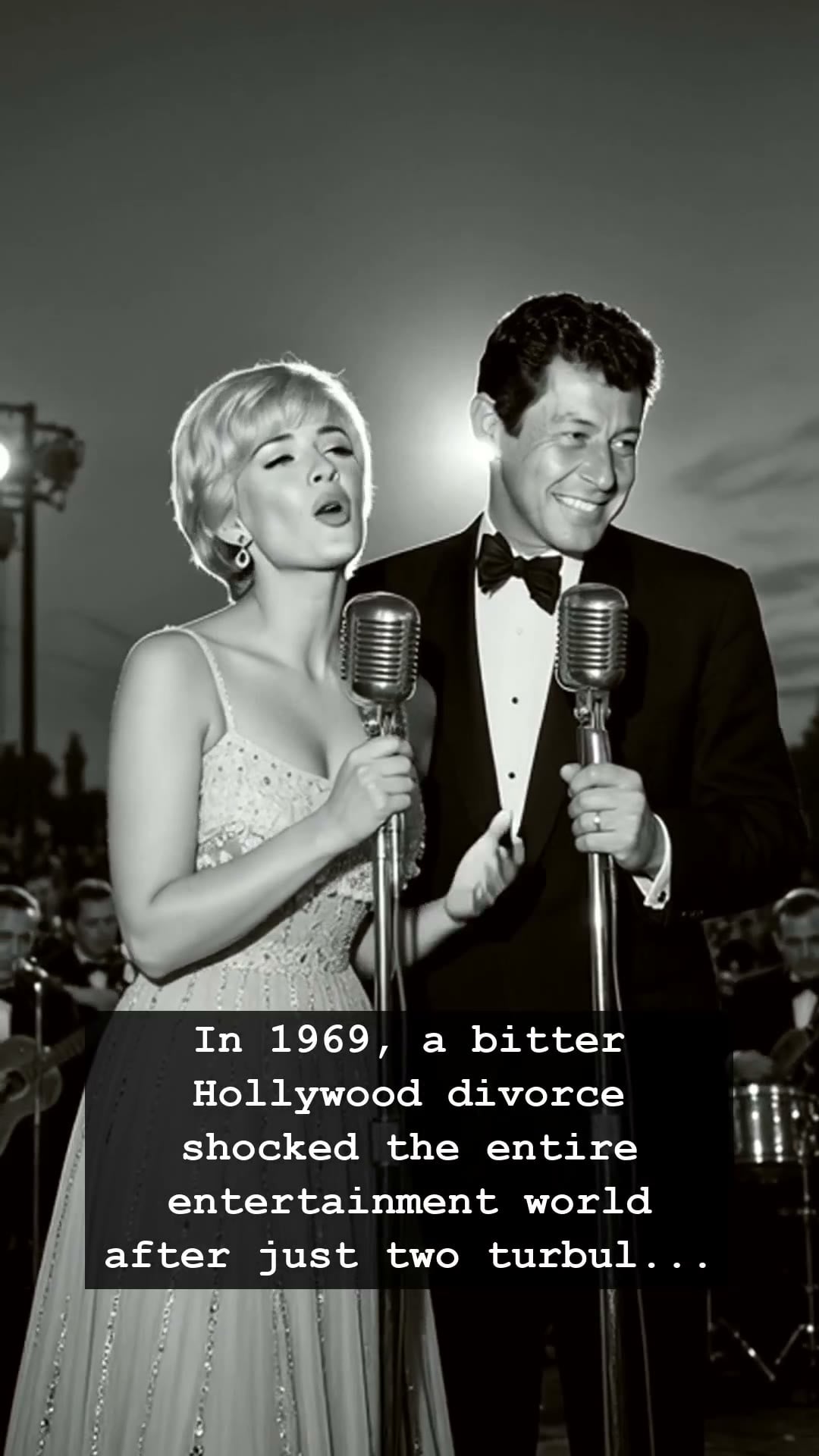
The year 1969 was a cultural powder keg, a time when the innocence of the post-war era collided violently with the shifting sands of a new, cynical decade. As the world turned its gaze toward the moon landing and the lingering, muddy echoes of Woodstock, Hollywood was busy consuming its own legends in a very different kind of fire. Amidst the chaos of the late sixties, the marriage between Eddie Fisher and Connie Stevens collapsed in a blaze of headlines that left the American public reeling. It was a union that seemed destined for the silver screen—the powerhouse crooner and the vivacious, rising starlet—yet it ended in a wreckage that defined the heartbreak of that generation.
Eddie Fisher, already a man defined by his tumultuous romances and his signature velvet voice, had been a constant presence on the Jukeboxes of America for years. When he married Connie Stevens in 1967, it felt like the ultimate Hollywood power move. Stevens was the quintessential girl-next-door turned star, radiating charm that lit up televisions across the nation. For two short, turbulent years, they occupied the glossy pages of gossip columns. However, behind the closed doors of their estate, the pressure of maintaining a facade in the spotlight began to take its toll. The music industry was changing, disco was on the horizon, and the classic crooner era that Eddie Fisher ruled was slowly losing its grip on a generation hungry for grit and rebellion.
When the divorce hit in 1969, it was not merely a legal dissolution; it was a public spectacle that underscored the fragility of fame. The scandal was visceral, shocking a public that had grown accustomed to the polished veneer of celebrity life. In an era before the 24-hour news cycle, the headlines surrounding Eddie Fisher and Connie Stevens dominated every dinner table conversation. It was a stark reminder that even the most beautiful people in the world were not immune to the crushing weight of ego, incompatibility, and the relentless demands of the entertainment industry. The split served as a grim exclamation point to the end of a decade that had promised so much glamour.
What makes this story resonate today is the human element buried beneath the tabloid filth. Looking back through the lens of history, we see two individuals struggling to reconcile their personal identities with the expectations placed upon them by their audience. While their careers continued, the emotional scars of their 1969 fallout remained a quiet footnote to their legacy. The drama reminds us that for every hit song played on the radio, there were thousands of forgotten moments of sorrow.
As we look back at the era of the Walkman and the shifting musical tides, the tragedy of Eddie Fisher and Connie Stevens remains a haunting piece of Americana. It is a story of love, betrayal, and the ephemeral nature of fame. Do you remember where you were when the headlines broke?