
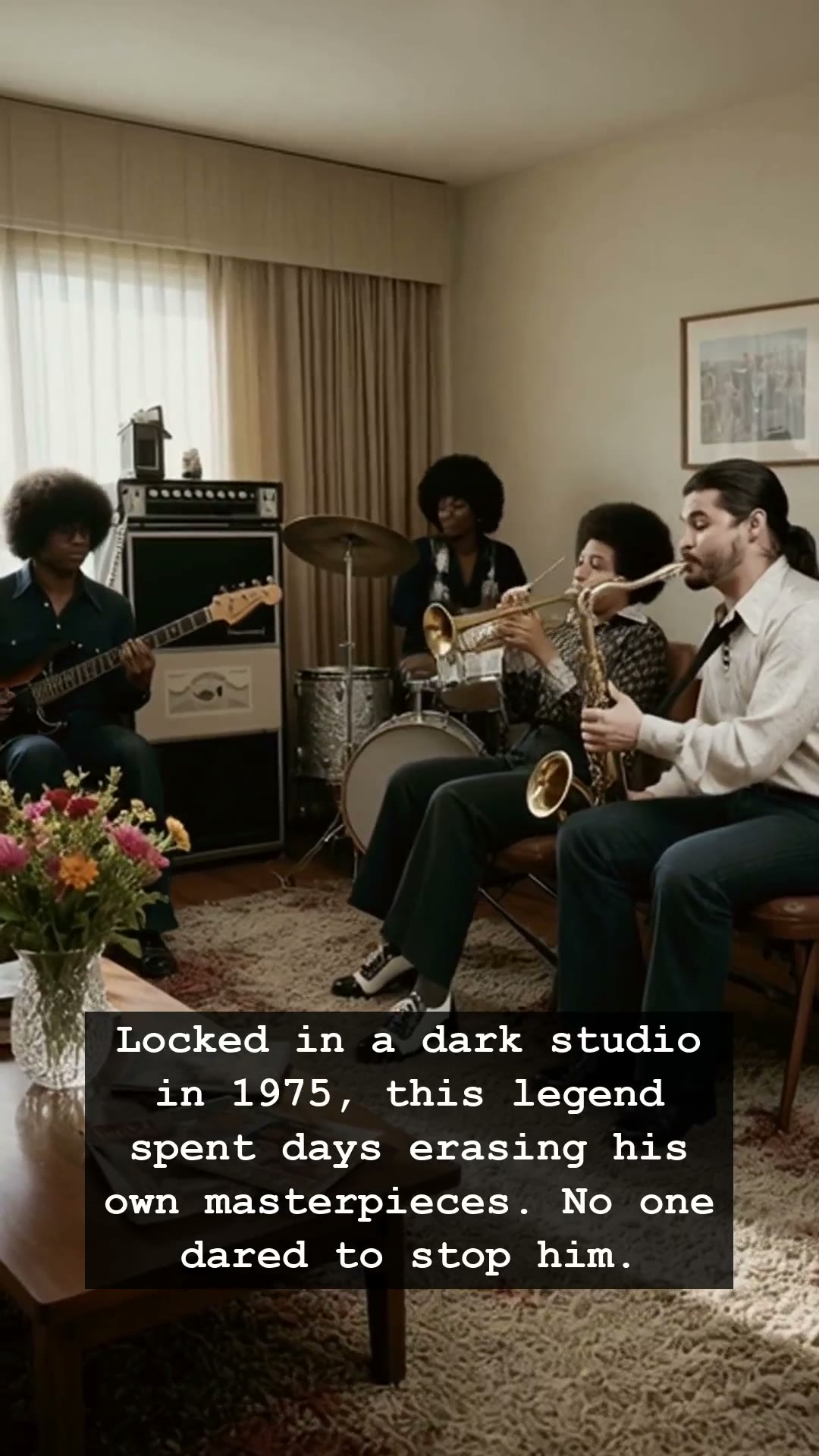
In the golden era of funk, there was no architect more brilliant or volatile than Sly Stone. By 1975, the man who had electrified the Woodstock stage with his genre-defying fusion of soul and psychedelia was trapped in a suffocating web of his own creation. While the world outside was transitioning from the gritty embers of the late sixties into the glossy excess of the disco age, Sly Stone retreated into the tomb-like isolation of the recording studio. What happened behind those soundproof walls remains one of the most haunting footnotes in music history, a descent into madness that saw the erasure of genius.
Locked away from the prying eyes of his label executives and the mounting pressure of his fading superstardom, Sly Stone became obsessed with a single track. Witnesses from the era describe a man consumed by an impenetrable drug-induced haze, viewing his own music not as a masterpiece, but as an enemy to be dissected and destroyed. In a fit of paranoid perfectionism, he spent days obsessively re-recording and, more tragically, erasing priceless master tapes. The staff stood by in paralyzed silence as countless hours of groundbreaking, rhythmic innovation were wiped into oblivion, leaving behind only the cold, hollow static of magnetic tape stripped bare.
To understand the magnitude of this loss, one must remember the weight of the name Sly Stone. He was the visionary behind the multi-racial collective that changed the face of American pop music. During the late sixties, his sound was the heartbeat of the cultural revolution, blending the defiant spirit of funk with an optimism that seemed destined to last forever. Yet, like many giants of the Arena Rock and soul era, the sheer velocity of his fame pushed him toward the edge of a cliff. The 1975 sessions were not merely a creative slump; they were the sound of a man trying to exorcise the ghosts of his own massive, insurmountable success.
This era was defined by the transition from the communal idealism of the hippie movement to the increasingly solitary, drug-fueled darkness of the mid-seventies. Studios like the ones where Sly worked were often sanctuaries of excess, where the lines between experimental genius and self-destruction became indistinguishable. By deleting his own work, Sly Stone was doing more than destroying audio; he was symbolically dismantling the legacy he had built. It serves as a stark reminder of the dark side of celebrity—how the very industry that demands perfection can eventually drive its creators to seek comfort in the void.
Even decades later, the story of those missing tapes resonates with fans and historians alike. It captures the raw, human fragility hidden beneath the polished veneer of classic radio hits. We often remember our musical heroes as static, god-like figures, forgetting that they were navigating the same turbulent emotional landscapes as the rest of us. Sly Stone eventually emerged from that dark period, but the silence he created in 1975 stands as a permanent scar in the history of soul music. It is a cautionary tale of how brilliance and shadow often dance hand in hand, leaving us to wonder just how much genius was lost in the silence of that studio.