
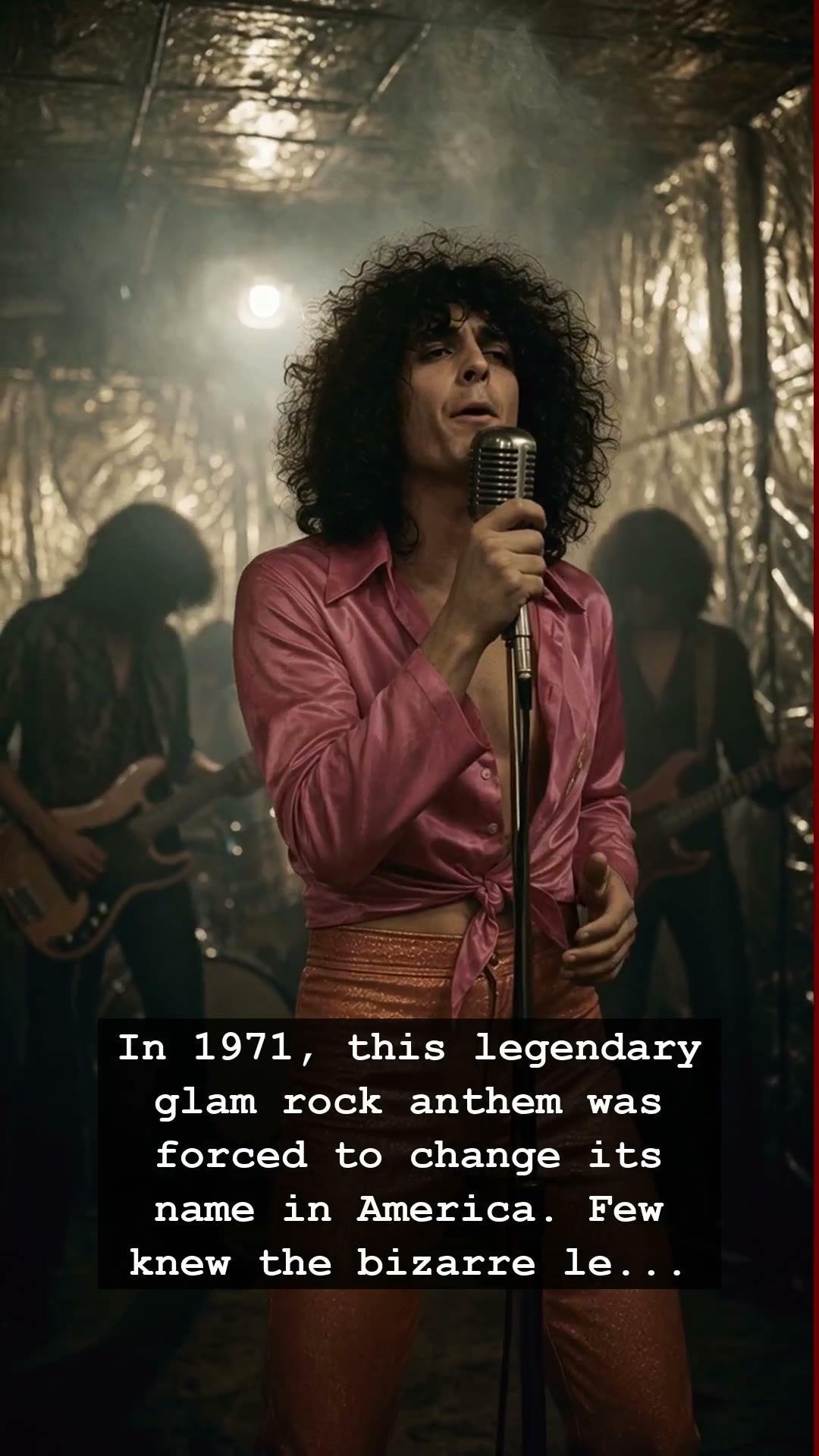
In 1971, the airwaves were dominated by the scent of glitter, the hum of amplifiers, and the rebellious spirit of the glam rock movement. If you were walking down a London street or tuning into the radio, you could not escape the infectious, stomping rhythm of T. Rex. Their frontman, Marc Bolan, was the undisputed king of this cosmic boogie, draped in satin and star-dusted makeup, leading a cultural revolution that was as much about fashion as it was about sound. Yet, behind the shimmering curtains of their success lay a cold, calculated legal struggle that forced them to strip away the original identity of their biggest American breakthrough.
It was the era of the Jukebox and the rise of the iconic Top of the Pops performances, where T. Rex became the face of a generation. Their massive hit, known globally as Get It On, was a masterclass in minimalist rock, featuring that unmistakable, grinding guitar riff that defined the sound of the early seventies. However, when the band prepared to conquer the United States, they hit a bureaucratic wall. An American group named Chase already held a song with the same title, leading to a copyright clash that forced T. Rex to rename their masterpiece to Bang a Gong (Get It On) for the American market. It was a bizarre, clinical adjustment to a song that was inherently raw, wild, and untamed.
This legal skirmish was merely a footnote in the turbulent life of Marc Bolan, a man who burned bright and faded too soon. The forced name change serves as a surreal window into the music industry of the 1970s, an era where the artistic vision of a pioneer could be dampened by the rigid laws of commerce. Despite this, the song resonated deeply with the youth of the day. Whether you heard it on a scratchy 45-rpm record or played through the speakers at a local dance hall, the track carried an energy that defied corporate labels and legal technicalities, cementing T. Rex as one of the most influential acts in rock history.
Looking back, the story of T. Rex and the great renaming reflects the wider chaos of the era—a time of transition between the idealistic experiments of the late sixties and the polished arena rock that would soon follow. The band was at the epicenter of this shift, bridging the gap with their velvet-clad charisma and simple, driving melodies. While the title change might seem trivial today, it highlights the intense pressure exerted on artists who were simply trying to bring their cosmic, glitter-fueled vision to a global stage.
Even decades later, the legacy of T. Rex endures in every band that dares to marry style with substance. When those first chords hit the air, the world still stops to dance. Perhaps the confusion surrounding the name only added to the band’s mysterious, rebellious allure, making the song feel like a forbidden treasure. As we look back at the golden age of glam rock, we are reminded that true legends are never defined by their titles, but by the indelible mark they leave on the heartbeat of music. Turn the volume up, and let the echoes of the seventies take you back to a time when rock and roll was truly alive.