
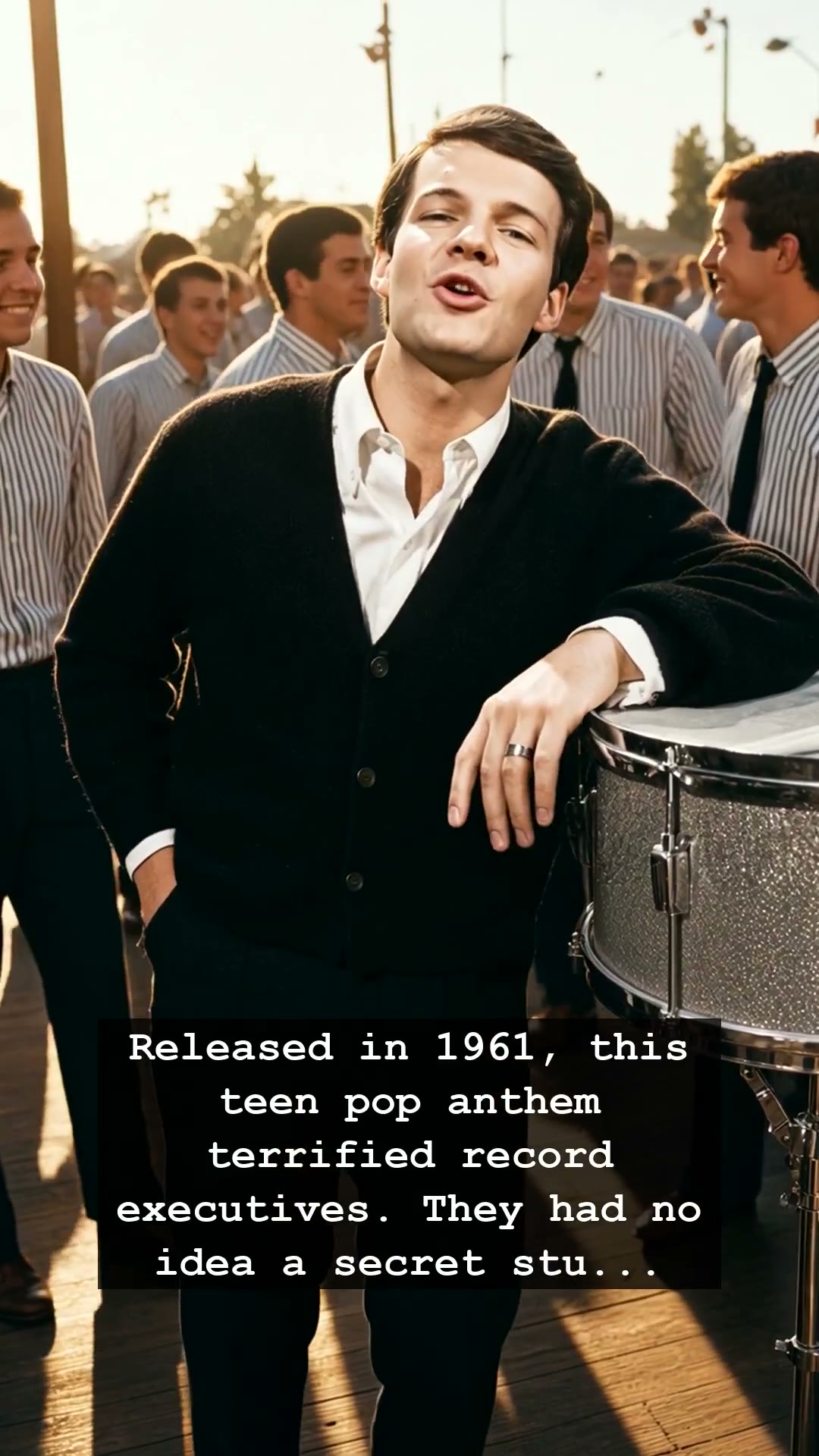
In the early months of 1961, the American airwaves were a delicate battlefield. Record executives, still reeling from the cultural shockwaves of early Rock ‘n’ Roll, were terrified of anything that hinted at chaos or rebellion. When a young, fresh-faced heartthrob named Bobby Vee walked into the studio to record a new track, the atmosphere was thick with tension. The suits were looking for a safe, marketable teen pop anthem, but what they got was a sonic experiment that bordered on the revolutionary. They had no idea that a buried, secret studio trick was about to turn this unassuming tune into a million-selling monster that would redefine the sound of the era.
Bobby Vee, born Robert Thomas Velline, had already carved his path into music history under the most tragic of circumstances—stepping in to perform after the plane crash that claimed Buddy Holly. Yet, by 1961, he was crafting his own identity. The song in question, Take Good Care of My Baby, wasn’t just another ballad; it was a masterclass in production. Beneath the polished vocal harmonies and the jangling guitars, the engineers experimented with heavy compression and layered overdubs—a technique that was surprisingly innovative for a simple pop song at the time. This secret layering created a wall of sound that made the radio speakers pulse with an intensity that listeners had never quite felt before.
As the needle dropped on the vinyl, teenagers across the country were hooked. The production trick allowed Bobby Vee to sound intimate, as if he were whispering directly into the ears of millions of listeners through their transistor radios. For the conservative executives who once feared the song’s reach, the commercial success was impossible to ignore. The record didn’t just climb the charts; it dominated them, cementing Bobby Vee as a titan of early sixties pop. It was a moment where the cold, calculating machinery of the music industry collided with the raw, heartfelt sincerity of a young artist hitting his stride.
Looking back from our digital age, it is easy to forget the tactile magic of the Jukebox era. Back then, a hit record was a physical entity, a piece of plastic that carried the collective heart of a generation. Bobby Vee was the voice of that transition, a bridge between the clean-cut innocence of the fifties and the complex, studio-driven arrangements that would eventually lead to the psychedelic experiments of the late sixties. His ability to deliver a tear-jerking performance while hidden studio innovations did the heavy lifting is a testament to the sophistication of the industry during the golden age of American music.
Today, when we spin these tracks, we aren’t just hearing a song; we are stepping back into a room filled with cigarette smoke, analog tape reels, and the nervous ambition of young dreamers. Bobby Vee left behind a legacy that transcended the teen idol labels he was often forced to wear. He was a craftsman who knew that a little bit of studio wizardry, when paired with an undeniable melody, could create an anthem that would stand the test of time. Take a moment to listen closely to the layers of his work, and you might just hear the ghost of a revolution hiding in the background.