
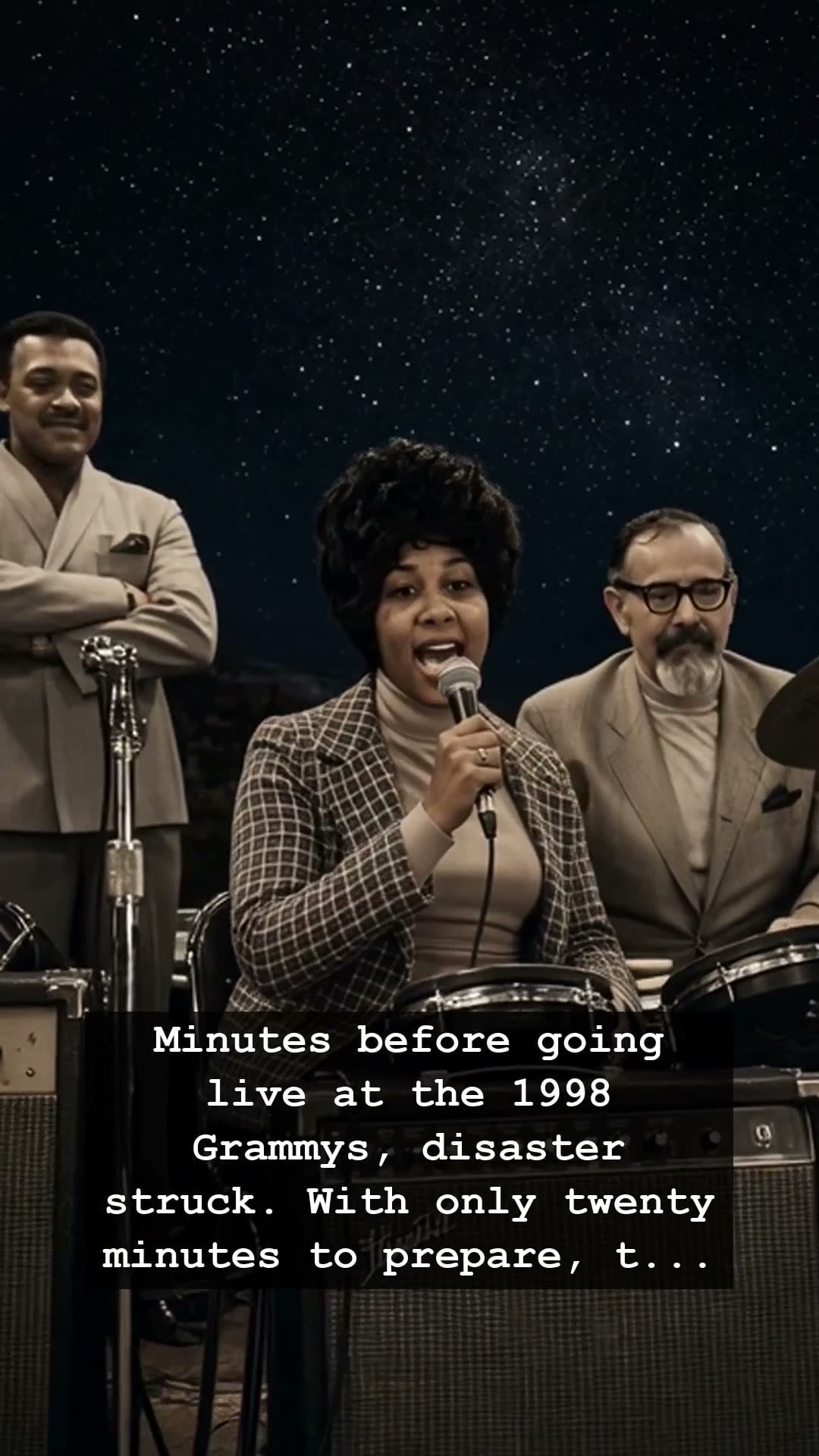
The year was 1998, and the music industry was gathered at Radio City Music Hall, buzzing with the electric anticipation that only the Grammys could conjure. For millions of viewers watching at home, the evening was supposed to be a seamless celebration of American sound. But behind the velvet curtains, chaos was brewing. Luciano Pavarotti, the titan of opera, had been scheduled to perform his soaring masterpiece Nessun Dorma, but a sudden, debilitating illness rendered him unable to stand. With only twenty minutes until the broadcast went live, the producers were staring into the abyss of a catastrophic technical and scheduling failure. The stage was set, the orchestra was ready, but the voice that was supposed to anchor the performance was gone.
Into this vacuum of panic stepped the Queen of Soul, Aretha Franklin. She was already backstage, preparing for her own segment, when the desperate plea for help reached her. Most artists would have crumbled under the sheer weight of such an impossible ask. Opera is a demanding, technical beast that requires months of rehearsal, yet Aretha Franklin, a woman whose soul was rooted in the gospel churches of Detroit and the gritty rhythm and blues of the 1960s, didn’t flinch. She had been a titan of the American music scene since the era of the Jukebox, surviving the shifting tides from Motown to the glitter-soaked disco nights of Studio 54. This moment was simply another testament to her untouchable musicality.
When she walked onto that stage, the air in the room seemed to shift. There was no time for vocal exercises or the comfort of a rhythm section. As the orchestra began the familiar, sweeping opening notes of the aria, Aretha Franklin took a breath, closed her eyes, and stepped into a realm few pop vocalists ever dared to touch. Her performance of Nessun Dorma wasn’t just a cover; it was a reclamation. She infused the classical piece with the raw, emotional weight of a lifetime spent singing about heartache, perseverance, and triumph. The audience, a mix of industry veterans and global icons, sat in a stunned, collective silence. It was as if time itself had stopped, turning a frantic live production into a singular, sacred moment of musical history.
In an era dominated by the growing influence of MTV and the encroaching digital shift, this performance reminded the world that raw talent remains the only currency that truly matters. Aretha Franklin transformed a potential disaster into a legendary display of versatility, proving that her voice was a force of nature that transcended any genre. The aftermath of that night lived on long after the broadcast ended, solidifying her status not just as a soul legend, but as an artist without boundaries.
Looking back, that night remains a bittersweet reminder of a time when live television felt genuinely dangerous and unscripted. It captures the essence of a woman who never shied away from the spotlight, even when the world expected her to fail. Today, the legend of Aretha Franklin continues to echo through the halls of music history, a testament to the fact that when the world goes silent, true greatness always finds a way to speak.