
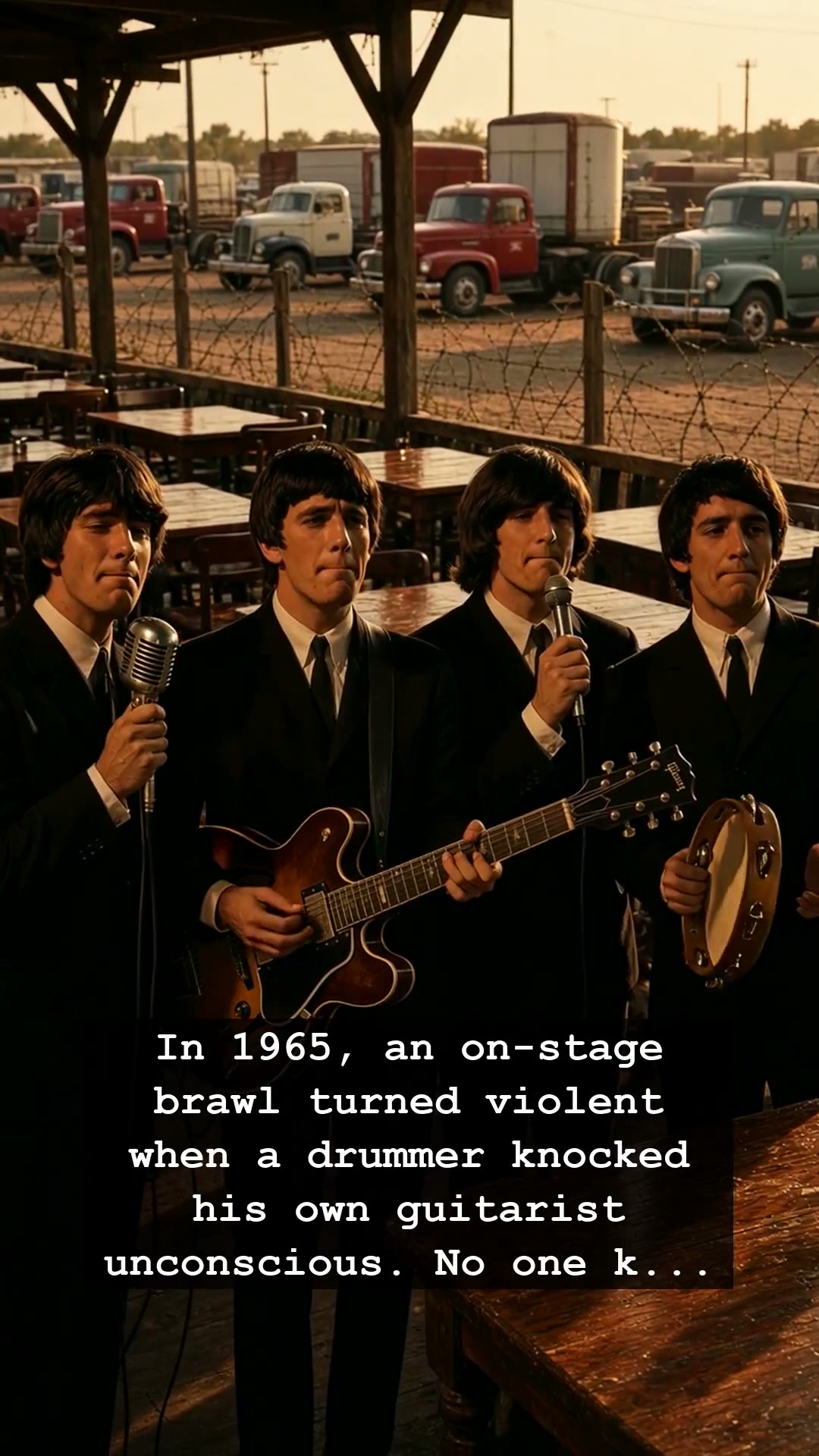
It was 1965, the height of the British Invasion, and the air was thick with the electric tension that defined the era. For the audience at the Capitol Theatre in Cardiff, it was supposed to be a night of classic rock and roll, defined by the sharp, biting chords of The Kinks. But as the band tore into their set, the chemistry behind the drum kit shifted from rhythmic precision to pure, unadulterated rage. In a sudden, explosive moment that remains etched in the annals of rock history, an on-stage brawl erupted, leaving a legendary guitarist unconscious and the future of The Kinks hanging by a fragile thread.
The volatile relationship between guitarist Dave Davies and drummer Mick Avory was no secret to those in the inner circle, but that night in Cardiff, it crossed a line. As the chaos escalated, a heavy drum pedal—a weapon of rhythm turned into a tool of destruction—flew across the stage, striking Dave Davies and sending him crumbling to the floor. The music stopped, the feedback whined, and the crowd stood in stunned silence. Panic set in almost immediately; terrified of potential arrest for the assault, Mick Avory vanished into the cold Cardiff night, leaving the band shattered and the venue in a state of absolute disarray.
To understand the magnitude of this incident, one must look at the pressure cooker that was the 1960s music scene. The Kinks were riding the massive wave of success following hits like You Really Got Me, but the grind of constant touring, the relentless demands of the press, and the claustrophobic proximity of hotel rooms and tiny stage platforms took a heavy toll. The Kinks were not just musicians; they were young men living in a whirlwind of fame, often fueled by exhaustion and the era’s frantic pace. This brutal collision was the inevitable breaking point of a band struggling to balance genius with genuine volatility.
Remarkably, The Kinks did not fold after that violent evening. They returned, scarred but resilient, to continue creating the songs that would eventually cement their legacy as one of the most influential groups in British rock. Yet, that night in Cardiff serves as a haunting reminder of the high price of creative passion. It is a story that resonates with every fan who has ever looked at a scratched jukebox or a faded concert poster and wondered about the darker, unspoken tensions brewing behind the hit records that defined our youth.
Today, we look back at this incident not just as a piece of sensational rock trivia, but as a window into the human reality of stardom. The Kinks survived the ego clashes, the flying equipment, and the internal fractures that claimed so many other icons of the 1960s. Their survival is a testament to the power of the music itself, a force strong enough to overcome even the most violent of domestic rivalries. When you listen to their timeless anthems today, remember the Cardiff night, and the fragile, chaotic pulse of a band that refused to quit.