
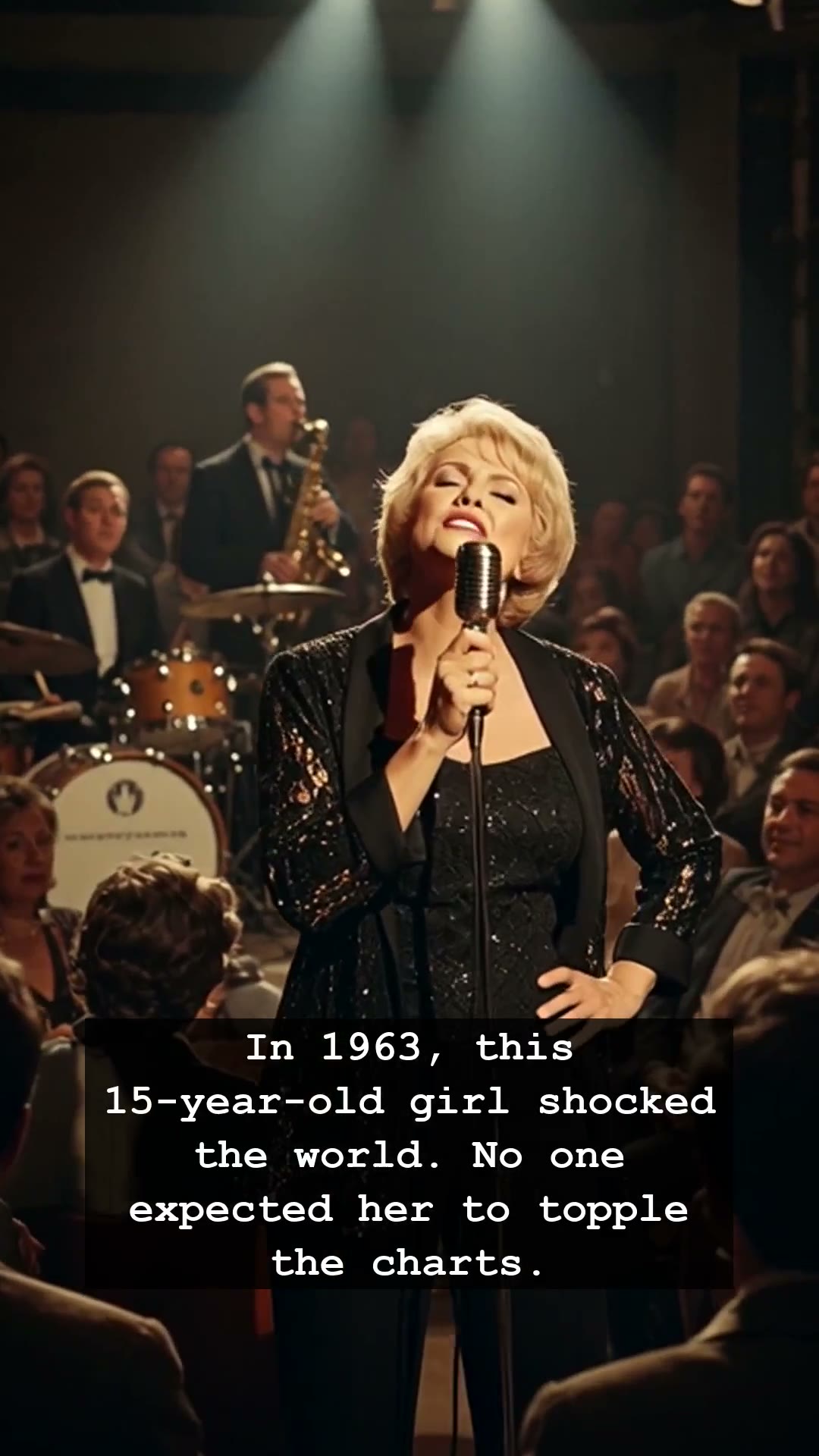
The year was 1963, a time when the airwaves were still vibrating with the innocence of the early sixties. While the world was caught in the golden glow of jukebox hits, a seismic shift occurred that no one saw coming. A fifteen-year-old girl, petite and unassuming, stepped into the studio and did the impossible. Little Peggy March, with a voice that seemed far too mature and emotionally resonant for her age, managed to topple the reigning giants of the Billboard charts. It was a moment that felt like a glitch in the matrix of music history, leaving industry titans stunned and teenage fans across America breathless.
The song, I Will Follow Him, became an anthem of unyielding devotion that defined a generation. For those who remember the crackle of a transistor radio or the sight of a 45-rpm record spinning on a turntable, Little Peggy March was not just a pop star; she was a miracle. The track didn’t just climb the charts; it obliterated the competition, turning this high-schooler into the youngest female artist to ever hit number one at that time. It was a meteoric rise that shattered the status quo, proving that the music industry, then dominated by seasoned crooners and established icons, was vulnerable to the raw, unfiltered talent of youth.
Behind the glitz of the success lay the pressure cooker of the early sixties entertainment machine. Little Peggy March was suddenly thrust from the normalcy of her teenage years into the blinding, often unforgiving spotlight of national television and grueling tour schedules. There was an inherent conflict between the innocence she projected and the cold, hard reality of the professional music world. While she delivered pitch-perfect performances, the industry was already beginning to change, moving toward an era of more complex soundscapes and artistic rebellion. Yet, despite the shifts that followed—the emergence of the British Invasion and the psychedelic revolution—her influence remained etched in the collective memory.
The magic of Little Peggy March lies in her enduring appeal. It wasn’t just about the chart statistics; it was about the way she captured the universal feeling of adolescent longing. In an era before the digital saturation of MTV or the global reach of the internet, her voice traveled through the airwaves, finding a home in the hearts of millions. Listening to her records today offers a bittersweet portal back to a more tactile age, where a single song had the power to define a summer or a first love, etched forever onto vinyl.
Today, we look back at the career of Little Peggy March as a testament to the lightning-in-a-bottle moments that make music so vital. Her story serves as a poignant reminder that even in an industry built on manufactured images and carefully polished personas, genuine talent can still shock the world. As the echoes of 1963 continue to resonate through modern playlists, we are reminded of why we remain eternally captivated by the golden age of American music. Do you remember where you were when you first heard that unforgettable melody?