
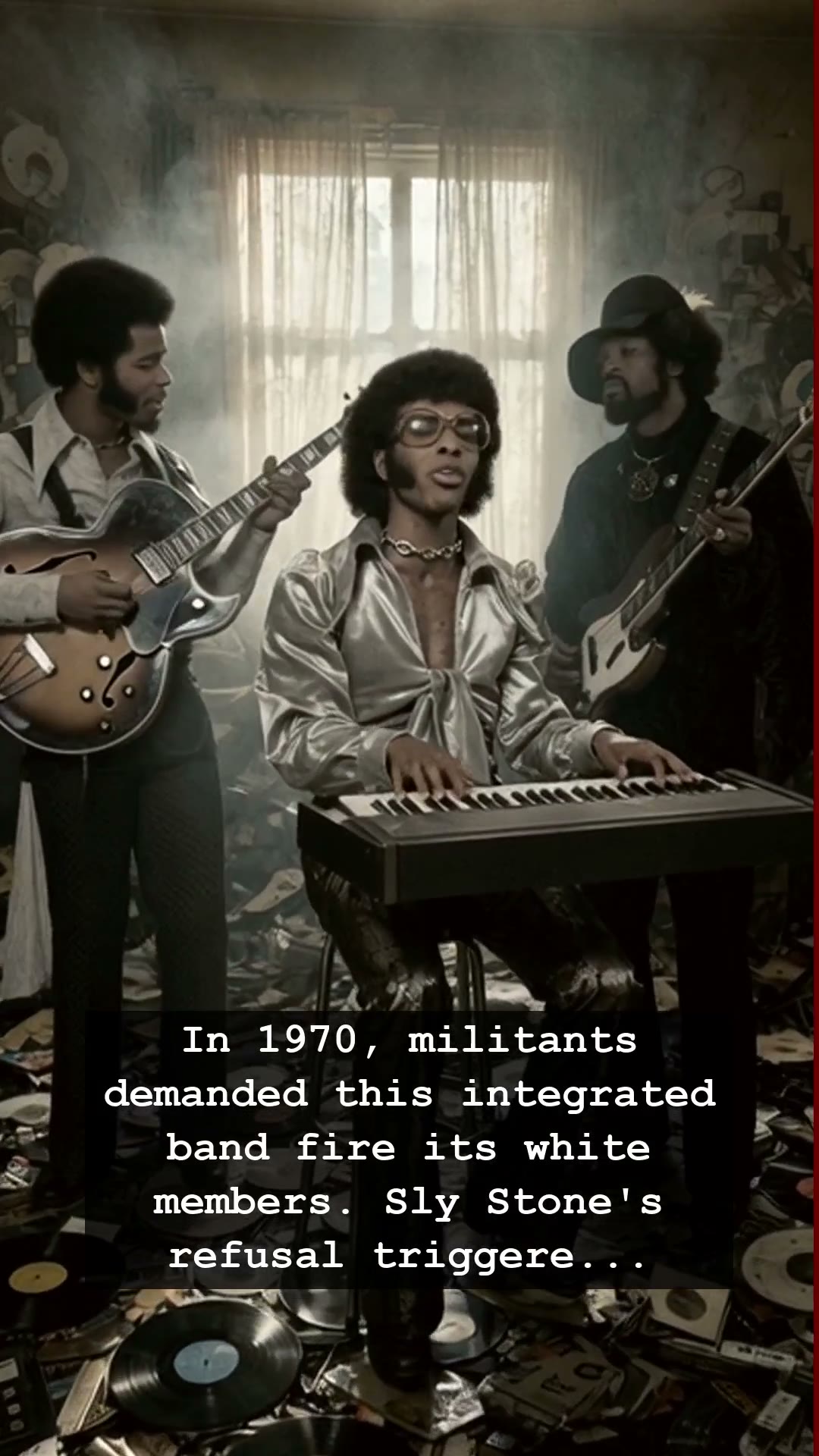
In the late 1960s, Sly and the Family Stone were the absolute embodiment of the American dream. With their infectious blend of funk, soul, and psychedelic rock, they preached a message of radical unity. They were a revolutionary, racially integrated ensemble that stood as a beacon of hope during a deeply fractured decade. From their electrifying performance at Woodstock to the chart-topping success of Everyday People, it seemed as though nothing could touch them. Yet, beneath the glitter of their stage costumes and the groove of their bass lines, a suffocating darkness was waiting to consume the band from the inside out.
The facade began to crumble in 1970, a year that would forever alter the trajectory of the group. As social tensions in America reached a fever pitch, Sly and the Family Stone found themselves in the crosshairs of extremist militants. Backstage, under the dim lights of a concert venue, the band was confronted by armed radicals who demanded that Sly fire the white members of his group. It was a terrifying ultimatum that struck at the very core of what the band represented. To his credit, Sly Stone stood his ground and refused, but the incident planted a seed of profound paranoia that would never truly leave him.
Following that chilling confrontation, the atmosphere within the studio and on the road shifted irrevocably. The once-vibrant camaraderie of Sly and the Family Stone gave way to suspicion and isolation. The death threats were real, and the weight of constant surveillance pushed Sly toward a dependency on illicit substances to numb the encroaching fear. The sunny, optimistic sound that defined the band began to darken, mirrored by the increasingly erratic behavior of their visionary leader. He became a recluse, often failing to show up for shows, leaving thousands of fans waiting in the dark as rumors of his decline spread through the music industry.
This era was marked by a descent into the shadowy underworld of rock stardom, where the pressure to maintain the image of a revolutionary band became too heavy to bear. The music produced during this time, such as the masterwork There’s a Riot Goin’ On, perfectly captured this sense of disillusionment. It was no longer the joyous funk of the Woodstock era; it was cold, claustrophobic, and deeply honest. Sly Stone had moved from being the architect of a musical utopia to a man trapped in his own private bunker, haunted by the very society he had once tried to heal.
Looking back today, the tragedy of Sly and the Family Stone serves as a somber reminder of the toll that fame and social friction can take on the human spirit. They were more than just a band; they were an experiment in what America could be, and their collapse felt like the ending of a beautiful, impossible dream. While the music remains immortal, the story of their disintegration is a ghost story of the 1970s. As we listen to their records today, we hear not just the evolution of funk, but the echo of a brilliant light that burned too bright, too fast, and was ultimately extinguished by the weight of a world that refused to change.