
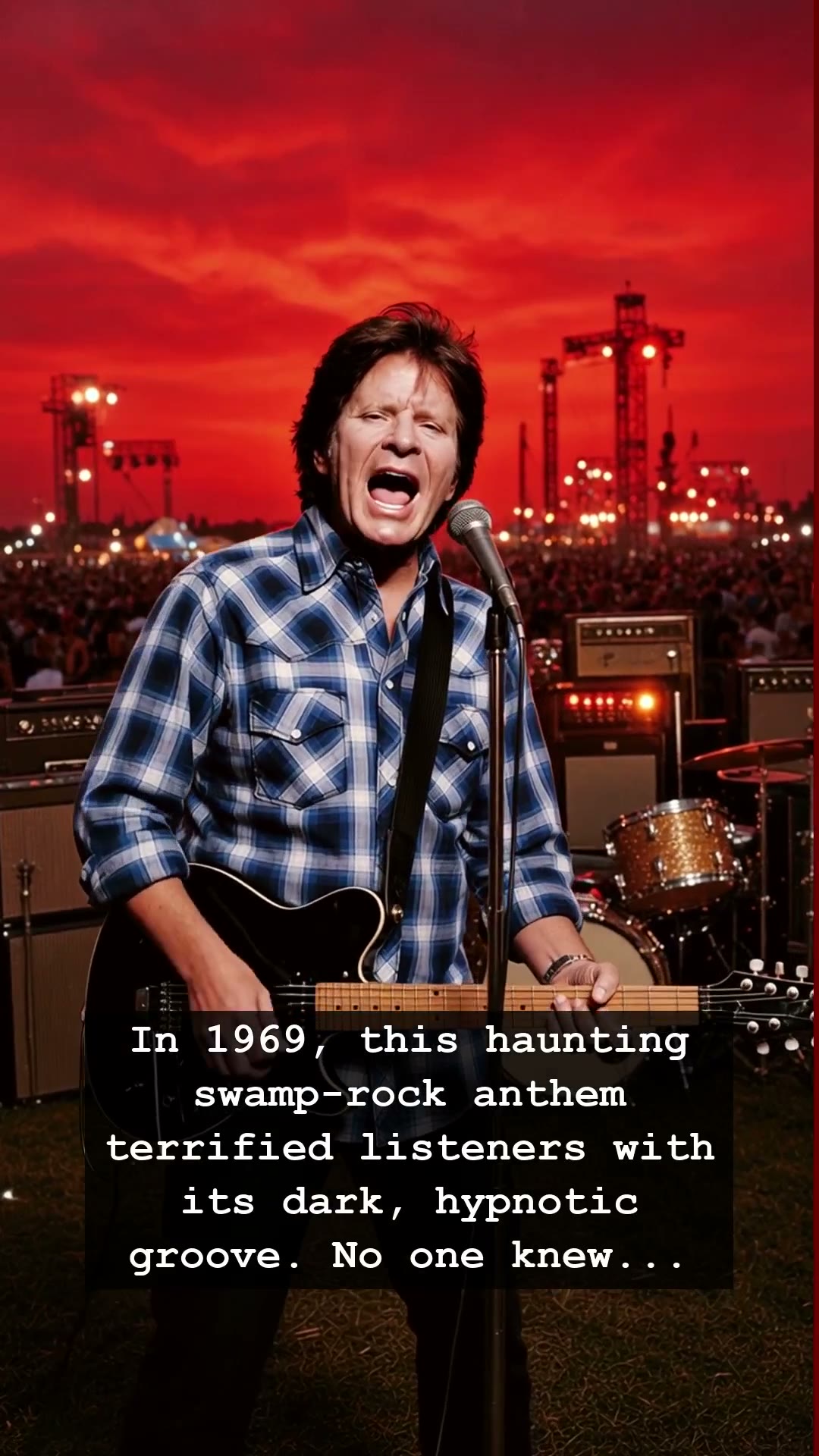
In 1969, a haunting, hypnotic swamp-rock anthem emerged from the humid shadows of the American South, gripping listeners with an ominous, relentless groove. As the Vietnam War raged and the innocence of the sixties splintered into chaotic disillusionment, this track captured the anxiety of a fractured nation. While audiences danced to the swampy beat of Creedence Clearwater Revival, no one could have guessed that the man behind the music, John Fogerty, was caught in a creative and personal storm that would soon tear his legendary band apart. This was not just a hit song; it was a testament to the suffocating pressure of fame and the heavy price of artistic perfection.
John Fogerty was the mastermind, the voice, and the engine room of CCR. With his gravelly, soul-drenched vocals and a guitar style that felt like the sticky heat of a Bayou night, he channeled the collective angst of an era. Yet, inside the recording studio, the camaraderie often projected on stage was a fragile illusion. Fogerty demanded total control, crafting every note and every percussive beat with a single-minded obsession. This relentless drive produced timeless hits, but it also sowed the seeds of bitter resentment among his bandmates, who felt sidelined and silenced by his creative tyranny.
By the time the seventies dawned, the cracks in the foundation of Creedence Clearwater Revival had widened into a canyon. The brotherhood that started in a California garage had been replaced by cold legal battles and stinging, public exchanges of vitriol. John Fogerty found himself isolated, locked in a struggle against the very industry he had helped define. It is a classic, tragic tale of rock and roll: the more successful the music became, the more the human spirit behind it frayed under the spotlight. The grit and darkness heard in his compositions were not just stylistic choices; they were the echoes of his own internal isolation.
Looking back from our modern vantage point, it is easy to forget the raw, unfiltered power of this music. Back when the Jukebox was the heartbeat of every roadside diner and the radio played a vital role in every teenager’s life, John Fogerty gave us anthems that felt both ancient and urgent. He tapped into a primal energy that resonates even today, long after the records have stopped spinning and the original venues have turned to dust. His ability to fuse blues, country, and rock into a singular, dark narrative remains unmatched in the annals of American music history.
To listen to his work today is to step into a time machine back to a period of radical cultural change. The tension that defined John Fogerty and his bandmates is still audible in the grooves of those classic vinyl pressings. It reminds us that behind every polished melody lies a human story, often marked by conflict, sacrifice, and the enduring desire to be heard. The next time you find yourself humming that familiar, swampy melody, remember the man who forged it in the fire of his own restless soul.