
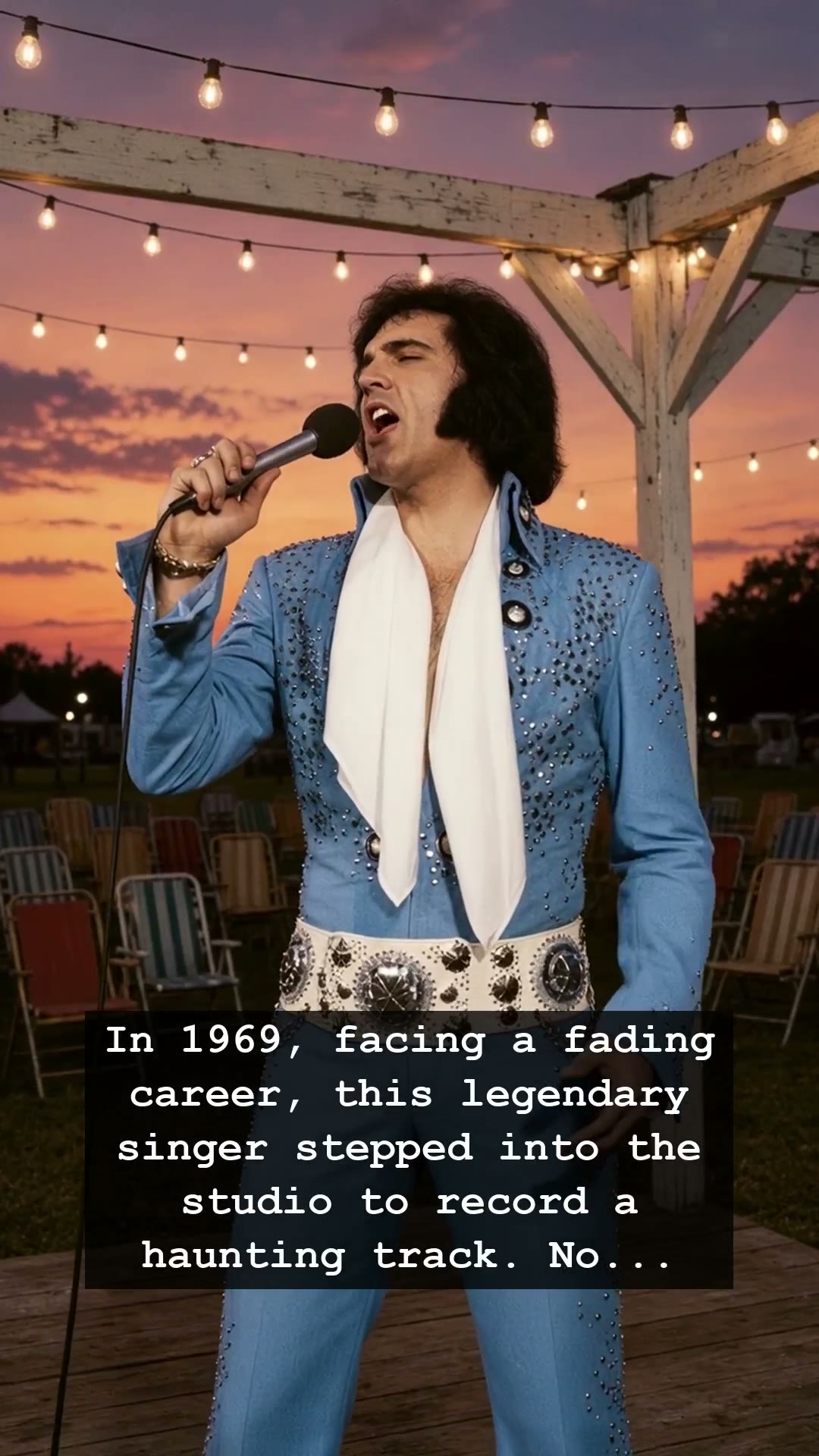
By 1969, the man who once shook the foundations of American morality was being relegated to the dusty corners of history. Elvis Presley had spent the better part of the decade trapped in a cycle of mediocre movie musicals and uninspired soundtracks, watching as the rise of psychedelic rock and the British Invasion pushed his brand of Rock ‘n’ Roll into the shadows. The Jukeboxes of the era were no longer screaming his name; they were playing the sounds of a changing social landscape that seemed to have no room left for the King. Elvis was desperate, his spirit restless, and his career hanging by a thread that felt ready to snap at any moment.
Then came the sessions at American Sound Studio in Memphis. Amidst the tension and the smoke-filled air, Elvis Presley stopped chasing the pop charts and started looking into the mirror of a fractured nation. He chose to record a song that was haunting, gritty, and undeniably raw: Suspicious Minds. This was not the lighthearted crooning of his early days; it was a desperate plea, a reflection of the paranoia and the emotional turbulence that had come to define his personal life and the societal anxieties of 1969. The song was a masterpiece of internal conflict, perfectly mirroring the tension between a man seeking redemption and a world that was rapidly drifting away from him.
Working with producer Chips Moman, Elvis Presley poured every ounce of his pent-up frustration into the vocal booth. There is a legendary story about the recording of the song’s infamous fade-out. As the track neared its end, Elvis began ad-libbing, his voice cracking with a mix of exhaustion and raw power. The engineers tried to fade it out, but the energy was so undeniable that they kept the tape rolling, capturing the essence of a man fighting for his legacy in real-time. It was this authentic, unvarnished struggle that allowed the song to cut through the noise of the late sixties, resonating with a generation grappling with its own identity.
When Suspicious Minds hit the airwaves, the impact was immediate. It wasn’t just a hit; it was a cultural resurrection. The anthem climbed to the top of the charts, silencing the critics who had written off the King as a relic of a bygone era. For a brief moment, the divide between the old guard and the new counterculture seemed to vanish, united by the sheer, undeniable charisma of a man who refused to be forgotten. The comeback was not merely a return to fame; it was a visceral demonstration of how talent, tempered by pain, can command the attention of millions.
Decades later, the haunting melody of that 1969 session still echoes in the halls of music history. It serves as a reminder that even the greatest stars are susceptible to the tides of change, yet true greatness can survive the darkest nights. Elvis Presley proved that by confronting his vulnerabilities, he could transform his tragedy into a triumph that would endure long after the final note faded. Whenever you hear those opening chords, remember that behind the sequins and the lights, there was a man who dared to reveal his own doubt, ultimately securing his place in our hearts forever.