
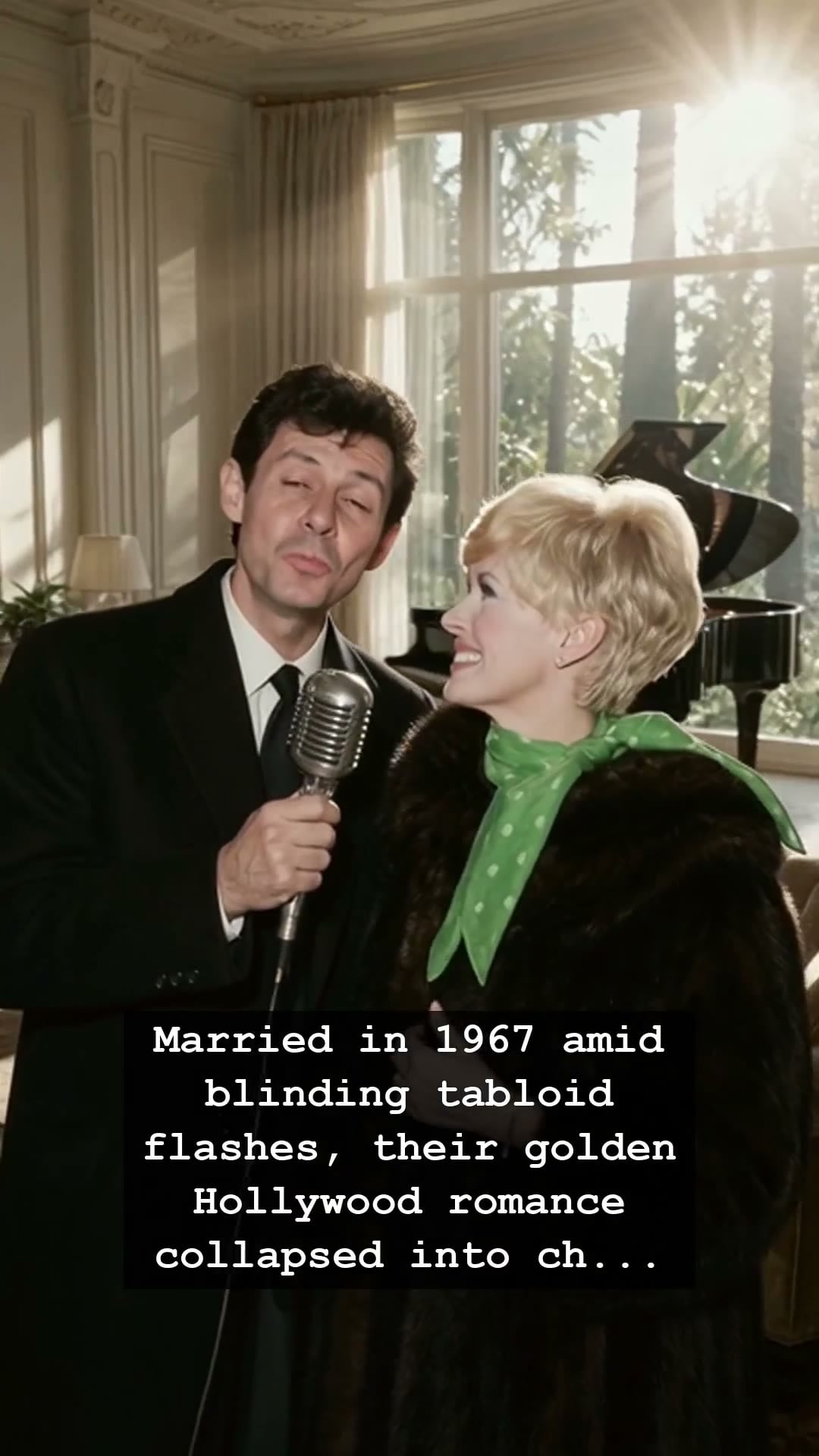
In the golden age of 1967, when the world was spinning to the tune of Motown and the first ripples of the psychedelic era were changing the landscape of music, a headline dominated the glossy magazines: the union of Eddie Fisher and Connie Stevens. It was the kind of romance that felt scripted in the backrooms of a major film studio. Eddie Fisher, the velvet-voiced crooner who had already survived the most public divorce in show business history, and Connie Stevens, the bright-eyed, rising star of television, seemed like the perfect power couple. Their wedding was bathed in the blinding white light of tabloid camera flashes, a moment of fleeting glamour that promised a fairytale ending. But beneath the velvet and the diamonds, the foundation was already beginning to crack under the weight of an industry that never slept.
To understand the magnitude of their union, one must look back at the era of the Jukebox and the burgeoning influence of televised celebrity. Eddie Fisher was a relic of a more traditional pop era, a man whose career was tied to the crooning standards of the fifties, while Connie Stevens represented the fresh, shifting identity of Hollywood in the late sixties. Their marriage was a collision of two different worlds, a desperate attempt to bridge the gap between old-school fame and the restless energy of a new decade. For two years, they lived under a microscope, their every move documented by paparazzi who hungered for a slip-up, a sour look, or a whispered argument that could be sold to the highest bidder.
The rot, however, came from within. Financial ruin is the silent killer of Hollywood dreams, and it struck their household with surgical precision. As the high-pressure lifestyle of international travel and extravagant parties drained their bank accounts, the mask began to slip. The public feuds that followed were not mere rumors; they were ugly, visceral, and played out in the cold light of the media. The same cameras that had captured their joyous wedding were now documenting the bitter resentment that grew in the shadows of their failed investments. The harmony that Eddie Fisher once mastered on record vanished, replaced by the dissonant chords of a collapsing life.
By 1969, the curtain had closed. The divorce was messy, public, and exhausting, serving as a dark cautionary tale for anyone chasing the spotlight. Looking back, their story resonates because it strips away the polish of fame to reveal the raw, human fragility beneath. It reminds us of a time when the lives of stars felt like cinematic tragedies, playing out on a stage where the audience expected constant perfection even as the set fell apart around the actors. It is a haunting reflection of the cost of fame in an era before the internet, where a secret could remain buried, but a public failure lived forever on newsstands.
Today, the memory of Eddie Fisher and Connie Stevens serves as a melancholic reminder of the fleeting nature of golden-age celebrity. We often look back at the late sixties with rose-colored glasses, focusing on the music and the cultural revolutions, yet we forget the personal casualties left in the wake of such intense scrutiny. Their brief, turbulent marriage remains a piece of Hollywood history that echoes with the loneliness of a life lived for the headlines. As the dust settles on these decades-old dramas, we are left to wonder what quiet happiness might have been possible if the world had simply stopped watching. Does the melody of their story still linger in your mind, or has the noise of history finally faded away?