
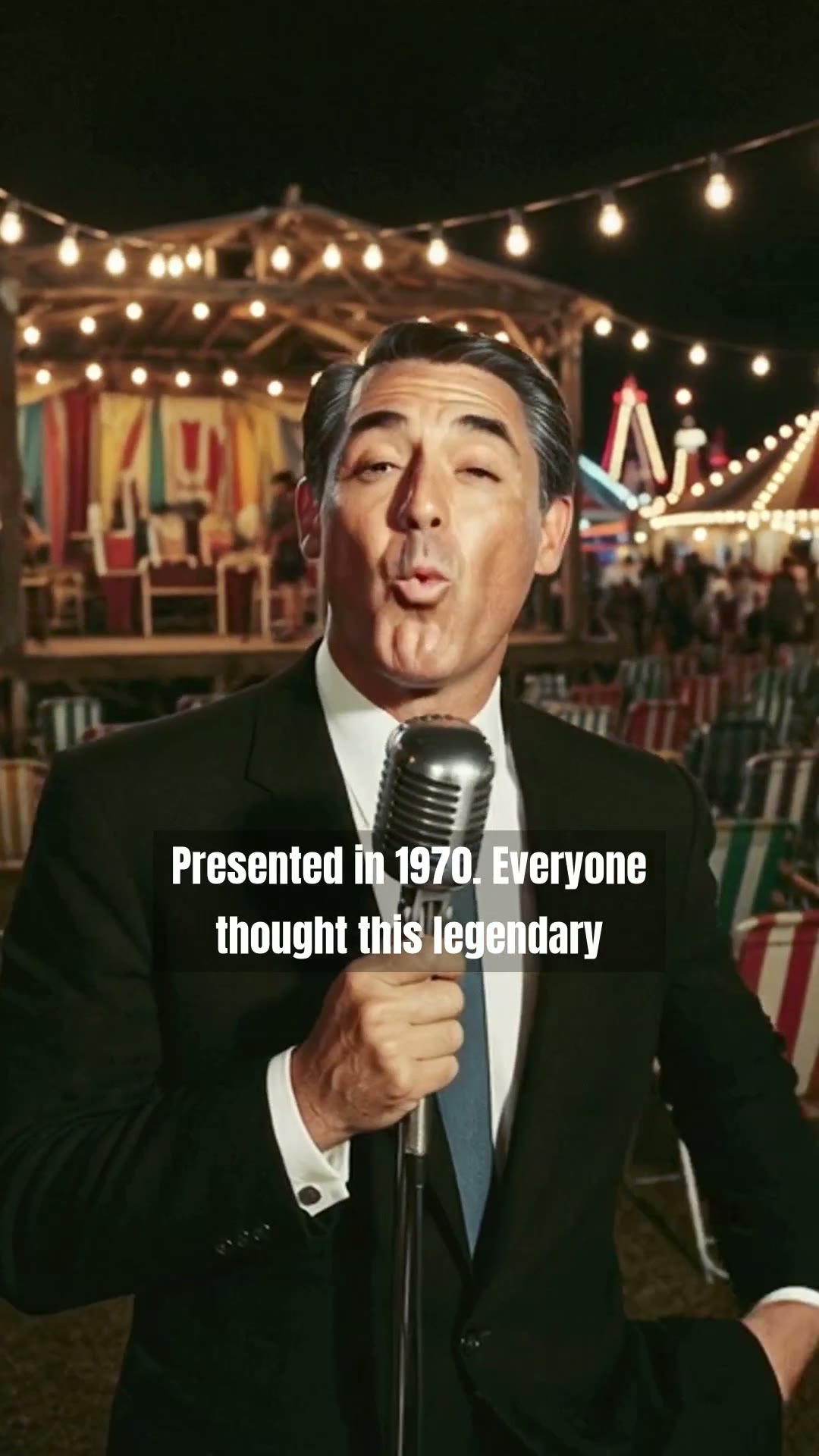
The year 1970 remains etched in the collective memory of cinema lovers as a moment when time seemed to stand still in the Dorothy Chandler Pavilion. For decades, the Golden Age of Hollywood had been defined by the debonair charm and unmatched elegance of Cary Grant. Yet, despite his status as an icon of the silver screen and a box office titan, he had famously never secured a competitive Academy Award. The industry often overlooked his comedic brilliance, perhaps blinded by his effortless grace. But as the Oscar night unfolded, the air was thick with the anticipation of a long-overdue tribute that would shift the narrative of a legendary career.
Cary Grant was more than just a face on a poster; he was the epitome of sophisticated masculinity. From his early days in the studio system to his collaborations with Alfred Hitchcock, he possessed a rare magnetism that few could replicate. However, the Academy had remained elusive, leaving his trophy shelf surprisingly sparse for a man of his stature. By 1970, the industry was undergoing a seismic shift toward the gritty realism of New Hollywood, making the tribute to Cary Grant feel like a bridge between the classic elegance of the past and the uncertainty of the future.
The most poignant detail of that evening was the involvement of his dear friend, Frank Sinatra. There is a deep, unspoken bond that forms among those who navigate the treacherous waters of fame, and seeing Sinatra step up to present the Honorary Oscar was a moment of profound vulnerability. When Sinatra announced the award, the applause was not merely a polite recognition; it was a roar of appreciation for a man who had given his life to the craft. Watching Cary Grant walk onto that stage, his signature smile reflecting a life of triumphs and silent sacrifices, felt like witnessing history settle its debts.
This moment transcends a simple trophy; it reflects the deep respect the industry held for someone who refused to play the game of public relations. Cary Grant maintained an air of mystery that protected his humanity even while he served the public imagination. His career serves as a masterclass in screen presence, teaching us that true artistry often lies in the restraint rather than the explosion. Even today, as we revisit his performances on flickering VHS tapes or restored digital masters, we find that the charisma of Cary Grant is timeless and immune to the decay of passing decades.
As we look back on the Hollywood of 1970, we are reminded that stars like Cary Grant carried the weight of an era on their shoulders. They were the architects of our childhood dreams, the voices that comforted us in the dark of a movie theater, and the silhouettes that defined style for a generation. To honor Cary Grant is to honor the very spirit of cinema itself. Let us continue to treasure these memories, for they are the golden threads that weave together the tapestry of our own personal histories.