
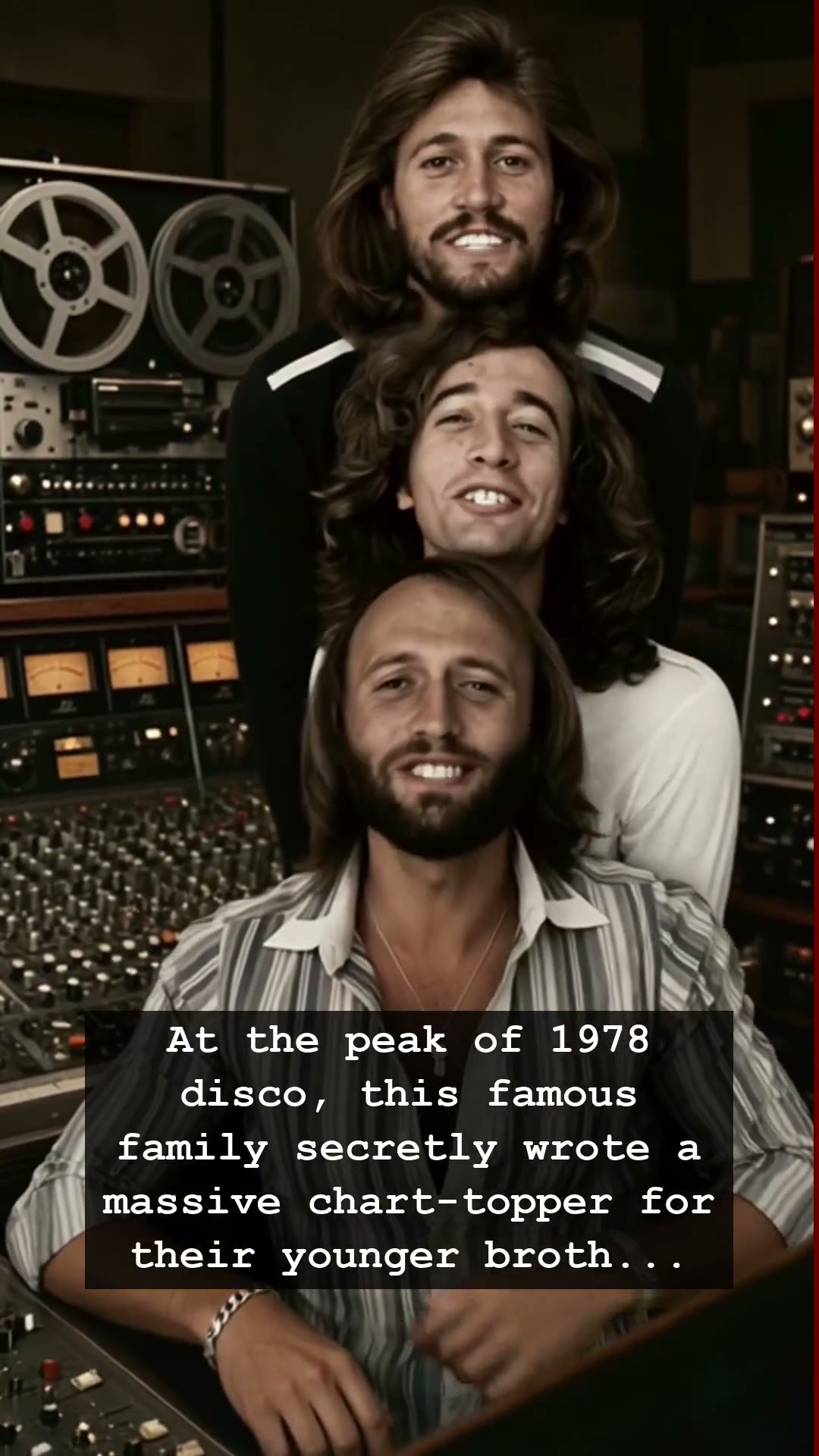
It was 1978, a year when the world seemed to spin exclusively to the relentless, syncopated rhythm of a mirror ball. From the pulsing lights of Studio 54 to the neon-soaked dance floors of suburban America, the Bee Gees reigned supreme, their falsettos etched into the very fabric of the decade. But behind the glitz of their white leisure suits and the chart-topping dominance of the Saturday Night Fever soundtrack, a quiet, intimate drama was unfolding within the Gibb family, one that would cement their status as the architects of the American pop landscape.
While the public was obsessed with the infectious harmonies of Barry, Robin, and Maurice, they were busy engineering a masterpiece for their younger brother, Andy Gibb. Andy was the teenage heartthrob, a solo sensation who carried the family’s golden DNA into the hearts of millions of screaming fans. In a move that showcased both their fierce loyalty and their unparalleled songwriting genius, the Bee Gees stepped into the shadows of the studio to craft a track that would catapult Andy to the top of the charts. They didn’t just write a song; they built a legacy of sound that effectively turned the Gibb name into an unstoppable music dynasty.
That song, Shadow Dancing, became a cultural touchstone that defined the late seventies. When the needle dropped on the vinyl, the airwaves crackled with that unmistakable, crisp production quality that only the Bee Gees could command. It was more than just a disco anthem; it was a testament to the complex, often turbulent bond of fame shared by brothers who were simultaneously each other’s greatest supporters and highest-reaching competitors. The song’s massive success proved that the Gibb brothers weren’t just icons of the era—they were masters of the hit-making craft who could manipulate the mood of a nation with a single chord progression.
Looking back, the late seventies feel like a fever dream of Walkmans, FM radio, and the lingering heat of summer nights. The success of Andy Gibb under his brothers’ watchful guidance highlights the high-stakes pressure of that golden age. Behind the velvet rope of fame, the cost of such perfection was often personal exhaustion and the relentless weight of maintaining a position at the pinnacle of the music industry. The Bee Gees were architects of a sound that felt like it would last forever, even as the walls were already closing in on the disco movement that had sustained them for so long.
Today, hearing those opening bars of a Gibb-penned hit brings an immediate, bittersweet rush of nostalgia. It is a reminder of a time when the radio was our primary window to the world and a family of brothers could dictate the soundtrack of an entire generation. As the disco era faded into the synth-pop landscape of the early eighties, the story of Andy Gibb and his brothers remained a quintessential Hollywood tale of brotherhood, talent, and the fleeting nature of the spotlight. Do you remember where you were when the rhythm took over?