
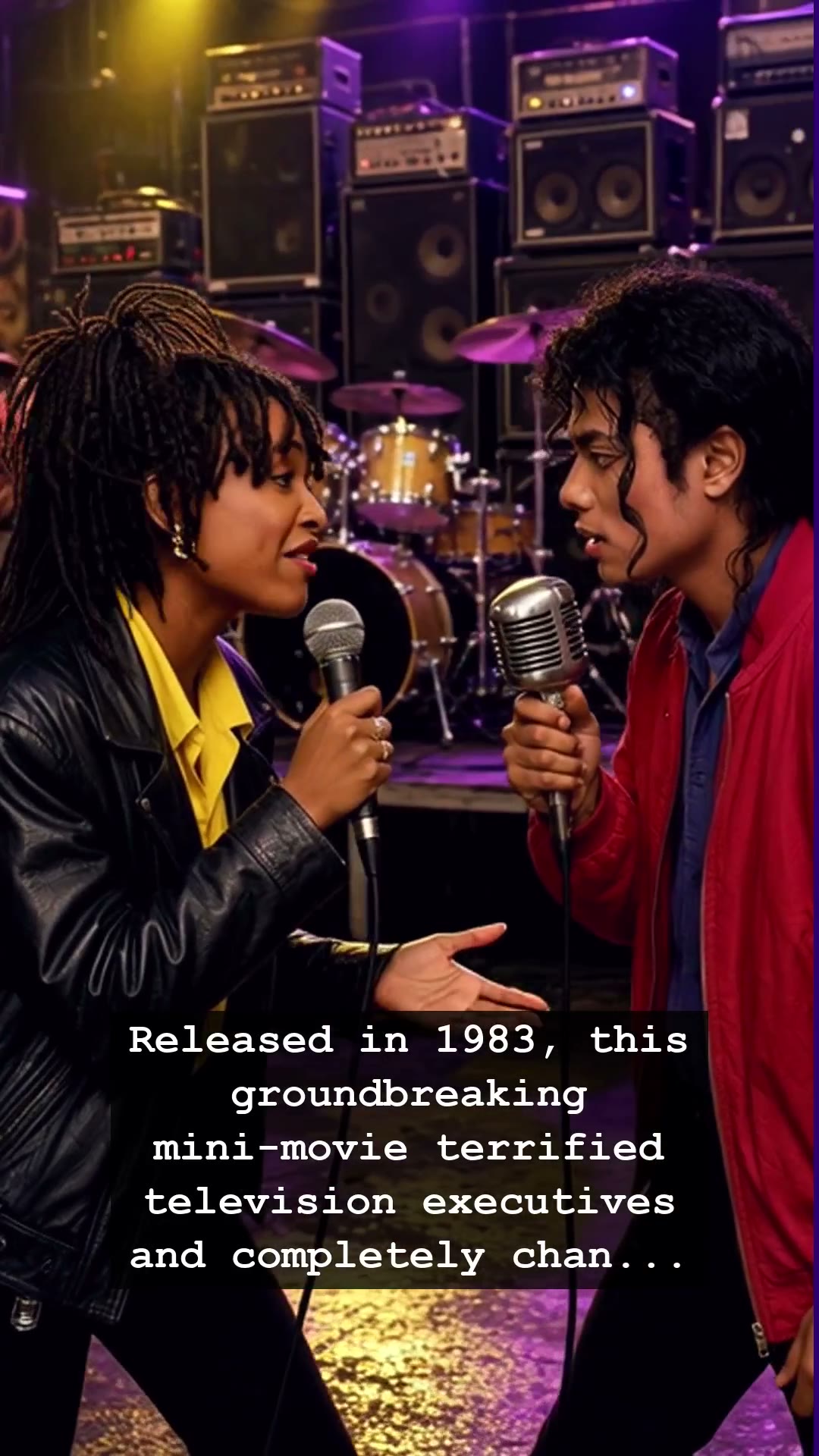
It was 1983, a year when the neon glow of the arcade and the heavy scent of hairspray defined the cultural landscape. Television executives sat in their dimly lit offices, watching a preview reel that made their blood run cold. They weren’t looking at a horror film from a major studio; they were staring at a fourteen-minute musical revolution. Michael Jackson, the boy wonder turned pop titan, had dared to push the boundaries of what was acceptable for the small screen. With the premiere of Thriller, he didn’t just release a music video; he shattered every rule of MTV history, forever altering how we consume sound and vision.
At the time, MTV was a fledgling network, primarily spinning three-minute tracks of white rock artists. When Michael Jackson approached the network with his cinematic vision, there was hesitation, skepticism, and even outright fear. The cost was astronomical—nearly half a million dollars for a single music video—and the subject matter featured werewolves and the undead. It was too dark, too long, and far too expensive. Yet, Michael Jackson knew his craft better than the suits in suits. He understood that the era of the Walkman and the jukebox was evolving into an age of visual spectacle, and he was ready to become the architect of this new reality.
When the premiere finally hit the airwaves, the world seemed to stop. Millions of households tuned in, glued to their living room sets. It was a cultural earthquake. The graveyard sequence, with its intricate choreography and haunting makeup, became the gold standard for production value. Suddenly, a music video wasn’t just an advertisement for a song; it was a mini-movie, a narrative experience that demanded undivided attention. Michael Jackson had effectively bullied MTV into becoming a destination for high-art storytelling, leaving the music industry scrambling to catch up with his vision.
Beyond the makeup and the choreography, there was a raw, undeniable tension. The dark, eerie atmosphere captured in Thriller reflected the pressures of superstardom that Michael Jackson faced daily. Surrounded by flashing cameras and the relentless scrutiny of the tabloid press, he channeled his internal anxieties into a masterpiece of gothic pop. The song itself, with its iconic Vincent Price narration, became an anthem that bridged the gap between radio airplay and the nascent obsession with televised music events. It was a moment of peak creativity, where the artist controlled the medium rather than being a slave to it.
Today, we look back at the 1983 premiere as the definitive turning point for the music industry. It paved the way for the elaborate, big-budget productions of the late eighties and nineties, setting a bar that few have managed to touch since. Even now, whenever the bassline kicks in and the zombies begin their iconic shuffle, we are transported back to that moment when Michael Jackson proved that pop music could be as terrifying as it was irresistible. Do you remember where you were when the world turned into a thriller?