
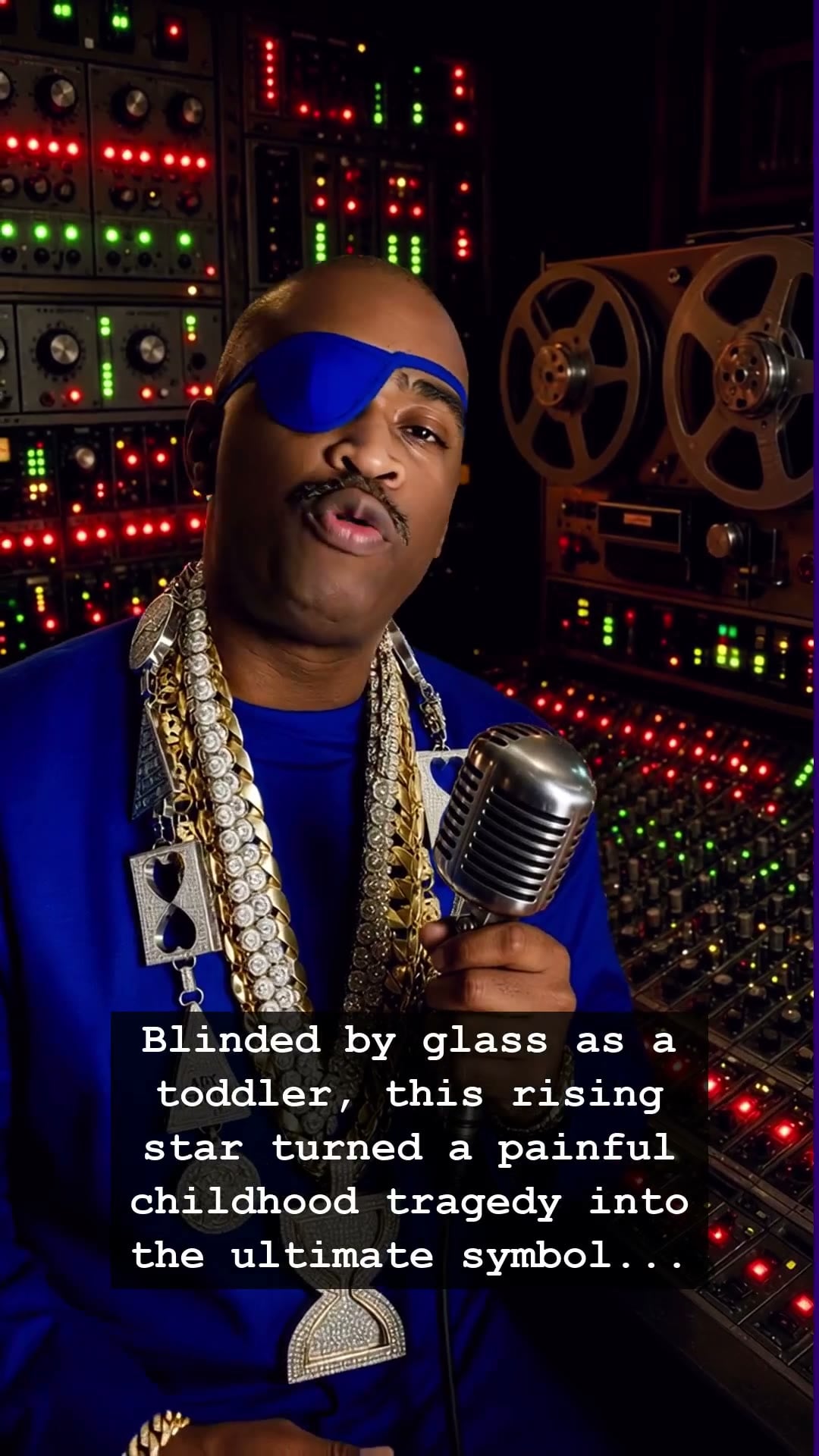
In the golden era of mid-80s hip-hop, when the streets were echoing with the raw beats of boomboxes and the culture was shifting toward an explosion of style, one figure stood out for more than just his impeccable storytelling. He was the king of the narrative, a rapper whose flow felt like a cinematic journey. But behind the glitz of gold chains and the rhythmic genius of his verses lay a painful childhood secret that became his signature. Long before Slick Rick became the royalty of rap, he was a toddler navigating a world that suddenly went dark in one eye due to a tragic glass-shattering accident. For years, this young boy lived in the shadow of insecurity, struggling to find his place in a society that often judged based on appearance.
However, by 1985, the narrative shifted from one of victimhood to one of untouchable confidence. Rather than hiding the damage, Slick Rick turned his eye patch into an iconic piece of royal armor. In an age dominated by the emergence of MTV and the rising influence of street fashion, he didn’t just wear an accessory; he redefined what it meant to be a star. That eye patch wasn’t a mask of shame; it was the crown of a pioneer. It transformed him into a mythic figure, a storyteller who could command any room with a smooth, British-inflected cadence that sounded like nothing else on the airwaves.
Slick Rick arrived on the scene during a time when hip-hop was finding its sophisticated voice. While others were shouting over minimalist drum machines, he was weaving intricate tales of love, crime, and morality. His music carried the weight of experience. He moved through the industry with a poise that suggested he had seen the worst of life and decided to rise above it with style. This transformation resonated deeply with a generation of listeners who were themselves navigating the turbulence of the 80s, finding solace in artists who were authentic, flawed, and ultimately triumphant.
Even decades later, the image of Slick Rick remains seared into the collective memory of music lovers. He proved that true artistry is not about perfection, but about the ability to repurpose your pain into something legendary. His journey from a childhood tragedy to becoming a fixture in the history of American music serves as a testament to the resilience of the human spirit. In a world of fleeting trends, his presence remains a constant reminder that our scars do not define us; they often provide the foundation for the masks we choose to wear as we conquer our own empires.
When we look back at the landscape of the 1980s, from the flicker of the Jukebox to the massive cultural impact of his debut, Slick Rick stands as a titan. He taught us that hip-hop was not just about the beat—it was about the soul behind the microphone. His story is a classic reminder that the most compelling artists are those who aren’t afraid to own their history. As we continue to celebrate the legends of the past, his tale remains one of the most poignant, proving that even in the darkest moments, you can find a way to shine brighter than all the gold around your neck.