
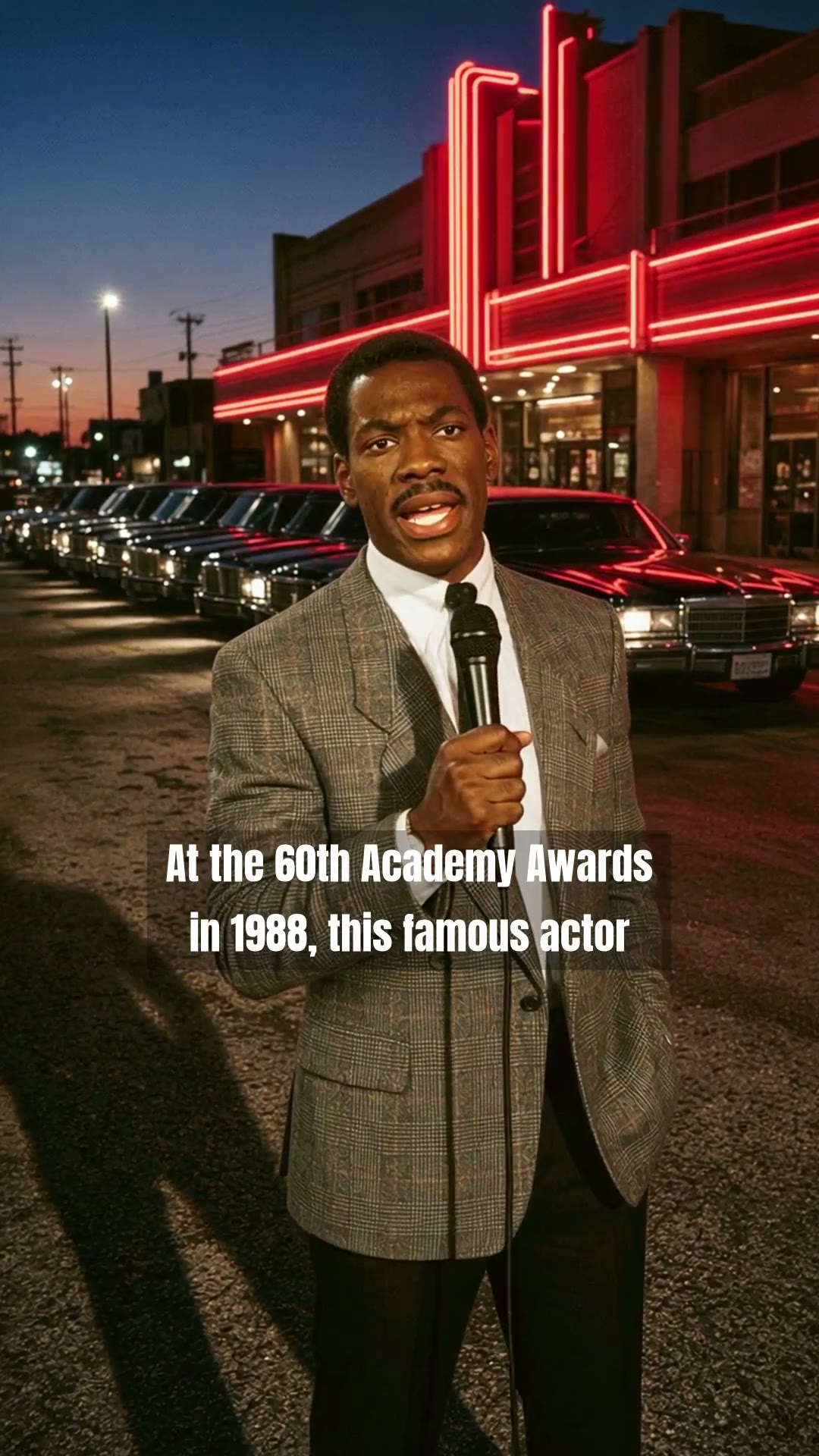
The year was 1988, and the 60th Academy Awards ceremony at the Shrine Auditorium was unfolding with the polished, predictable rhythm that defined the era of Golden Age Hollywood prestige. The industry was riding high on the momentum of massive VHS blockbusters, and the audience was filled with the titans of Method Acting and screen legends who carried the weight of decades of cinema history on their shoulders. Everyone expected the night to follow the traditional script, but then, Eddie Murphy walked onto the stage to present the award for Best Picture, and the atmosphere shifted in an instant. He was not there to deliver a rehearsed monologue; he was there to speak a truth that had been lingering in the corridors of the industry for far too long.
Eddie Murphy was already a cultural force by 1988, having defined the comedy landscape of the eighties with a charisma that transcended the screen. Yet, as he stood under the bright lights of the Oscar night stage, his tone was uncharacteristically serious and pointed. He famously addressed the Academy directly, calling out the lack of diversity among the nominees and winners with a bluntness that caught the entire room off guard. It was an unsanctioned, fearless moment that defied the usual polite decorum of the Academy Awards, leaving the audience in a stunned silence that quickly turned into a ripple of uneasy recognition.
Looking back at that moment today, it remains a poignant chapter in the history of cinema. While many recall the glitz of the red carpet or the classic winners of that year, the Eddie Murphy speech stands out because it prioritized substance over tradition. He was challenging an institution that had long been resistant to change, using his immense star power to force a conversation that was necessary for the progress of the film industry. It was a testament to his courage and his deep respect for the craft of acting, ensuring that the legacy of performers of color would not be silenced by the conventions of the time.
Beyond the headlines of that evening, Eddie Murphy represents the bridge between the old guard of Hollywood and the modern era of blockbusters. His career is a masterclass in versatility, from his rapid-fire comedic timing to his nuanced dramatic portrayals. That night at the Oscars was not just a viral moment before the age of the internet; it was a defining instance of an artist refusing to be a mere prop in the industry’s vanity, choosing instead to hold a mirror up to the establishment.
Today, as we look back on the archives of VHS tapes and the golden memories of 1980s cinema, we realize that the bravery shown by Eddie Murphy paved the way for a more inclusive future in film. His unsanctioned words still echo as a reminder that the true heart of Hollywood lies in the stories of those who possess the courage to speak their truth. It is a timeless lesson, and one that remains etched in the vibrant history of the silver screen, proving that the most memorable lines are often the ones that were never written in the script.