
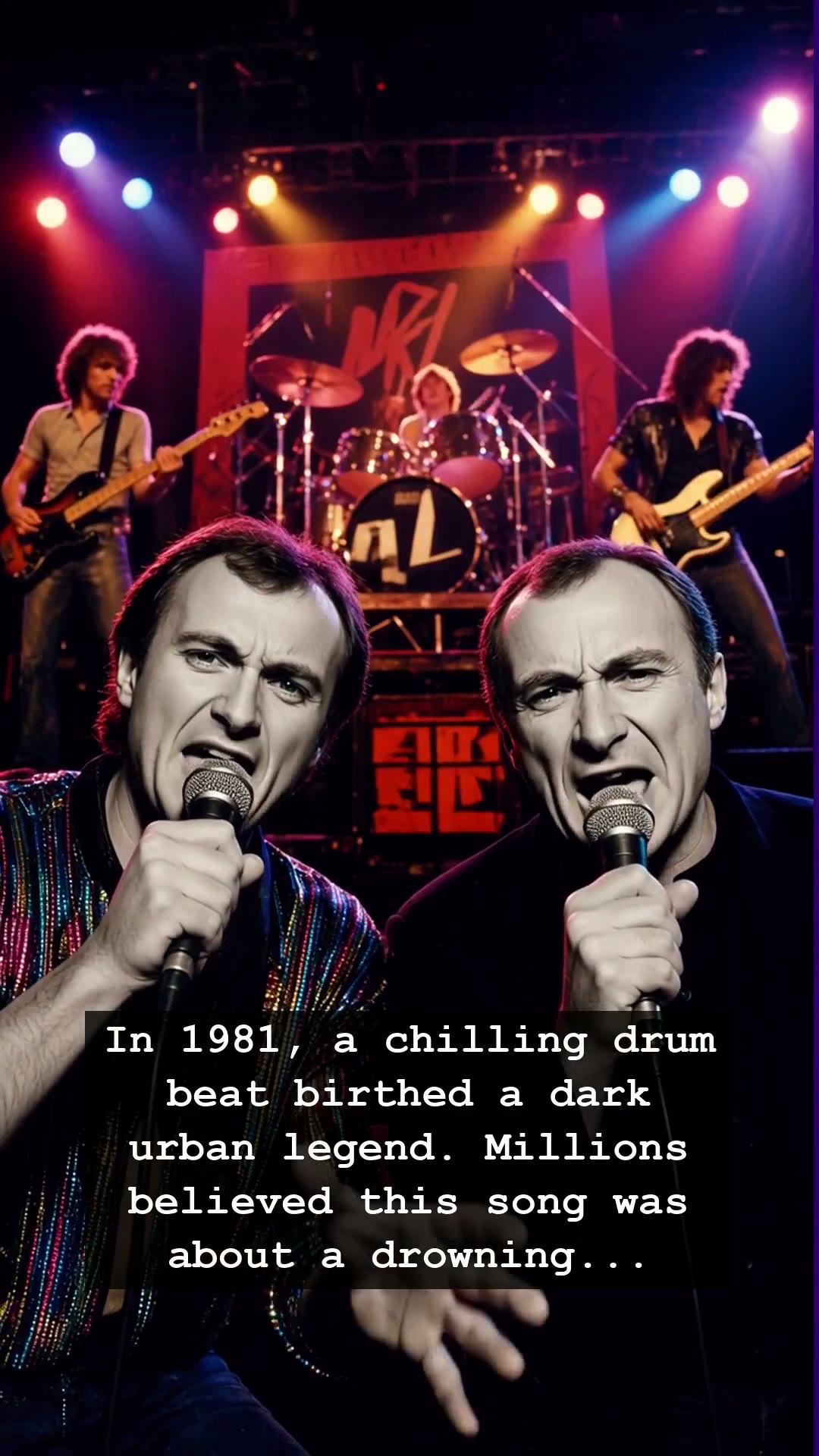
The year was 1981, and the airwaves were dominated by the sleek, synthesizer-driven sounds of a changing musical landscape. As the era of the Walkman began to take hold and the world prepared for the neon-soaked rise of MTV, a haunting, minimalist drum beat emerged from the shadows. Phil Collins, until then known primarily as the steady pulse behind Genesis, stepped into the spotlight with a solo debut that would change his life forever. That song was In The Air Tonight, a masterpiece of tension and release that did more than just top the charts; it ignited one of the most persistent and chilling urban legends in the history of rock music.
For decades, the rumor mill spun a macabre tale. Millions of listeners were convinced that the lyrics were not born from heartbreak, but from a gruesome real-life event that Phil Collins had allegedly witnessed from the shore. The story claimed he watched a man drown while another person stood by, watching idly without lifting a finger to help. As the myth went, Phil Collins later invited the bystander to his concert, spotlighting him in the crowd during the song’s climactic drum fill to exact a form of psychological justice. It was a story so vivid, so visceral, and so perfectly tailored to the darkness of the song that it took on a life of its own, far outpacing the reality of the artist’s life.
The truth, as Phil Collins has patiently explained throughout his career, was far more mundane yet deeply personal. The song was written during a period of immense turmoil following his divorce, a time when he was living in a flat in Hounslow, surrounded by cardboard boxes, processing the raw grief of a fractured family. He was simply improvising, letting the frustration and pain flow through his drum kit and his lyrics. There was no drowning, no witness, and no haunting retribution. Yet, the power of the song’s atmosphere was so intense that the public refused to let the ghost of the story die. It became a piece of folklore, proof of how a powerful melody can compel people to project their own fears and fascinations onto a superstar.
In the grand tapestry of the early eighties, this moment highlights the unique psychological connection between fans and their icons. We wanted Phil Collins to be a man with a dark secret, a brooding figure who could weaponize music to confront injustice. In reality, the success of the track showcased the transition from the communal, hopeful echoes of the seventies to the more introspective, moody aesthetic of the burgeoning decade. It stands as a testament to the fact that when music is sufficiently evocative, the truth becomes secondary to the feeling the listener experiences in the dark.
Today, listening to those iconic gated reverb drums still sends a shiver down the spine of anyone who grew up in the shadow of the analog era. Phil Collins eventually stopped trying to fight the rumors, realizing that the urban legend had become an inseparable part of the song’s legacy. It remains one of the most fascinating intersections of pop culture, myth-making, and pure emotional storytelling. The next time you hear that slow-burn build, remember the man behind the drums, and perhaps allow the legend to breathe for just one more chorus.