
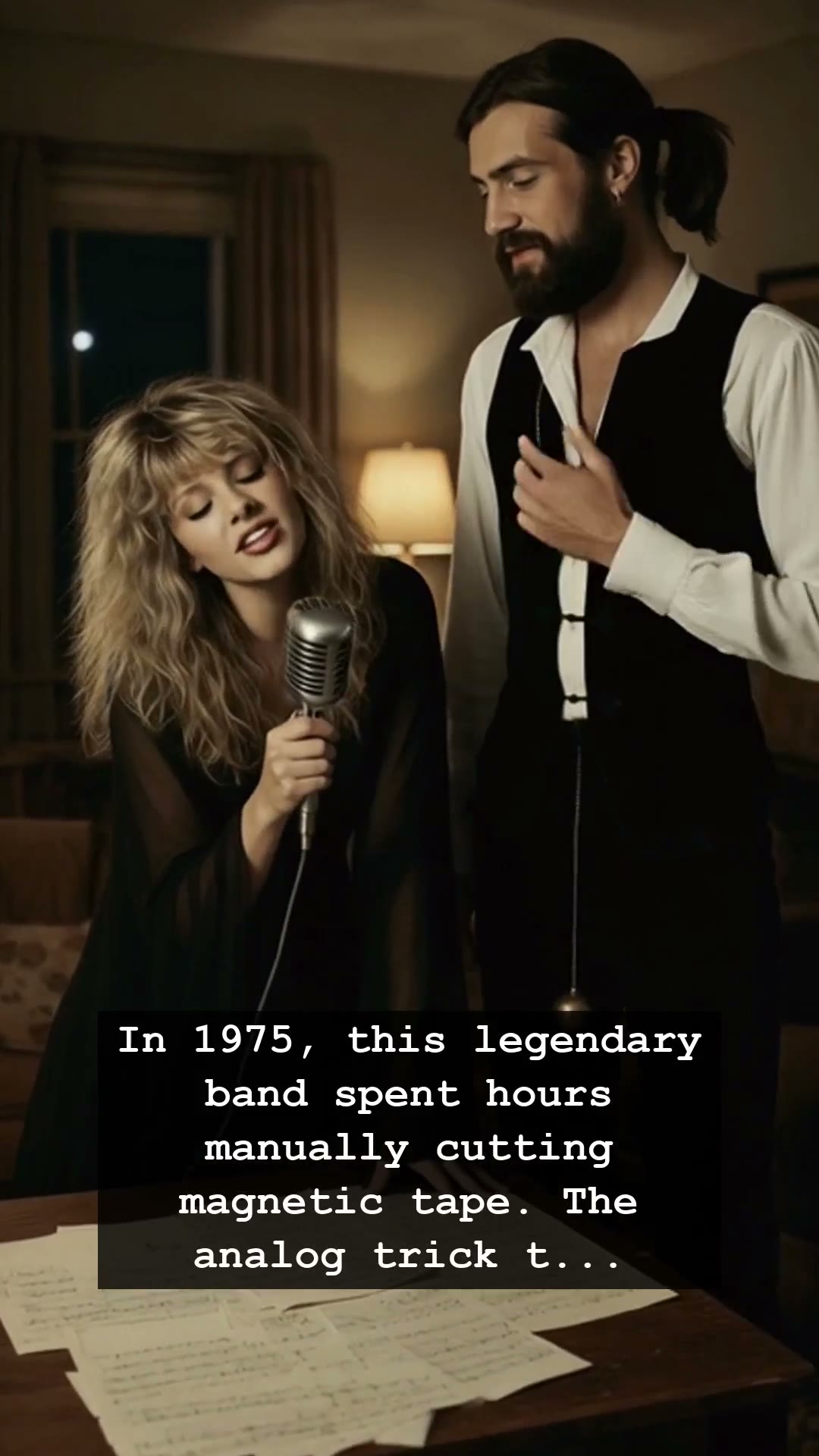
In the haze of 1975, while the world was distracted by the neon pulse of burgeoning disco, something far more visceral was happening behind the heavy soundproof doors of a dark studio. Fleetwood Mac was in the midst of a creative metamorphosis, locked away in an environment that felt less like a workplace and more like a pressure cooker of fractured hearts and fading dreams. It was here, in the tactile era of analog recording, that they performed an act of sonic surgery that would change the trajectory of rock music forever. To create the relentless, hypnotic heartbeat of their rhythm section, the band members and their producers spent grueling, sleep-deprived hours manually slicing physical magnetic tape by hand, frame by frame, to ensure the timing was nothing short of supernatural.
This wasn’t just technical precision; it was an act of desperation. The band was a social experiment gone wrong, a volatile mix of two couples on the brink of total collapse. Stevie Nicks and Lindsey Buckingham were unraveling, while Christine and John McVie were navigating the suffocating silence of a marriage that had already ended. Within the claustrophobic walls of the studio, the magnetic tape became a metaphor for their lives. Every physical splice was a jagged attempt to hold the pieces together, to create a cohesive rhythm from the chaos of infidelity, resentment, and raw, unfiltered creative tension. The result was a sound that felt dangerous, precise, and hauntingly human.
Looking back from our digital age, where perfection is a mere mouse click away, the dedication of Fleetwood Mac feels like a relic from a lost civilization. We live in an era where we can digitally erase flaws, but the brilliance of that mid-seventies period was born from the struggle against the medium itself. They didn’t have the luxury of auto-tune or software loops; they had razor blades, sticky tape, and a terrifying amount of patience. When you hear the rhythmic backbone of their classic tracks, you are listening to the sound of people literally cutting themselves into the music, forcing a steady pulse out of a band that was falling apart at the seams.
This analog trick became the secret weapon of the era, elevating Fleetwood Mac from a struggling blues-rock outfit to the architects of the definitive sound of the late seventies. It captured the zeitgeist perfectly, a blend of polished pop production and the dark, underlying sorrow that defined the decade. The fans who crowded into stadium tours and spun their LPs on heavy turntables felt that phantom heartbeat without ever knowing the manual labor behind the curtain. It was the sound of a band pouring their collective misery into a singular, unwavering groove that would eventually define the landscape of Arena Rock for a generation.
Today, the legacy of that manual tape-slicing remains a testament to the power of human obsession. It serves as a reminder that the greatest art is rarely the product of comfort, but rather the result of individuals pushed to their limits, working in the dark to find a rhythm that can transcend their own broken realities. Even now, decades later, when we drop the needle on these records, we aren’t just listening to songs; we are witnessing the fragile, physical labor of Fleetwood Mac, a band that proved that even in the middle of a total breakdown, you can create something that lasts forever. Next time you listen, try to find that hidden heartbeat—it is still pulsing just as steadily as the day they first cut it.