
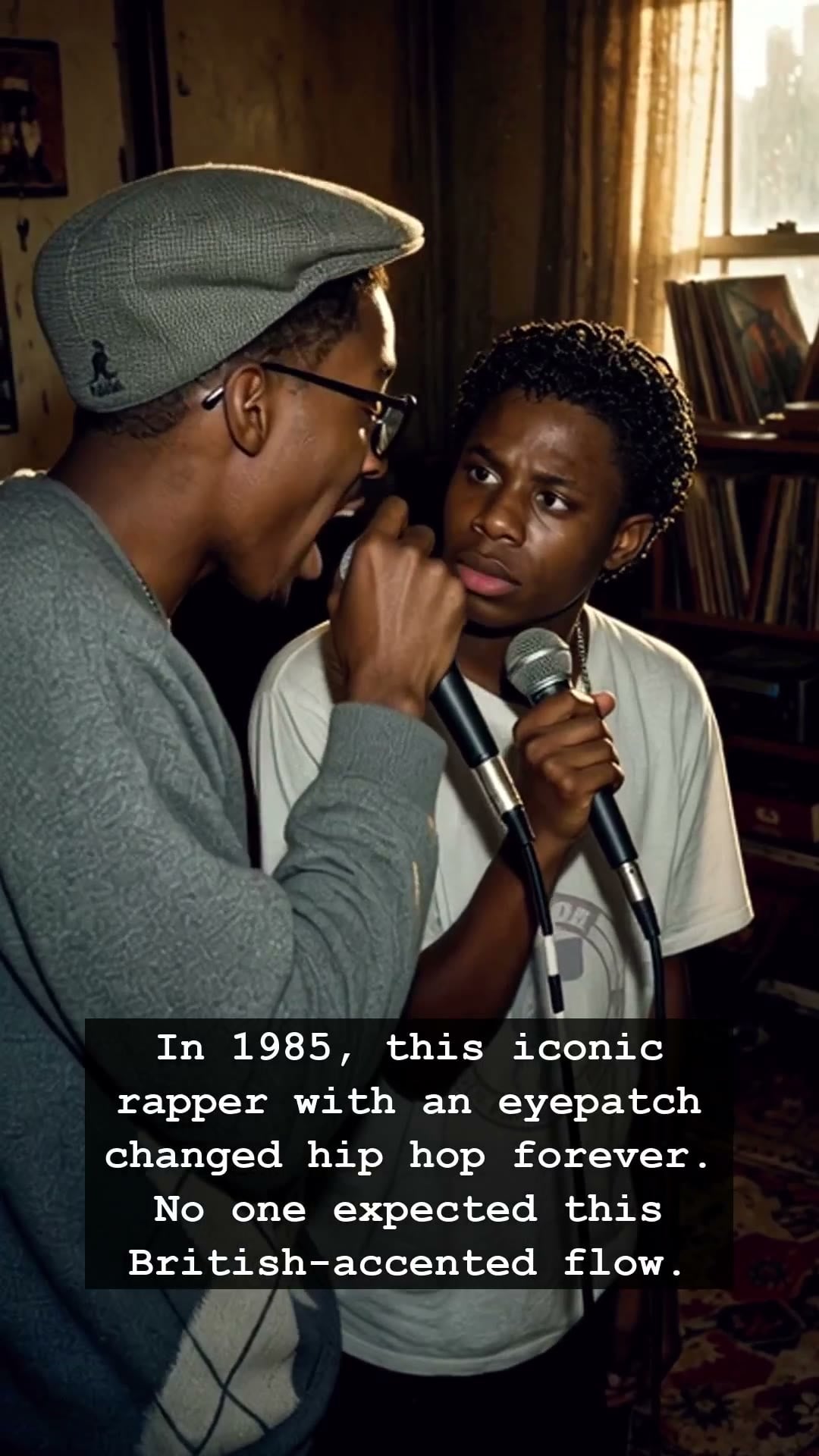
It was 1985, a time when the hum of the city was dominated by the portable crackle of the boombox and the neon pulse of the emerging MTV culture. Hip-hop was still finding its identity, transitioning from the raw park jams of the Bronx to the polished, sophisticated studio sounds that would define the Golden Era. Then, a duo stepped into the booth, carrying a sound that felt like it had been whispered from another dimension. Doug E. Fresh, the human beatbox, provided the rhythmic heartbeat, but it was the arrival of Slick Rick—a man with a signature eyepatch and an unmistakable British-accented flow—that shattered every preconceived notion of what a rapper could be.
Before Slick Rick, the art of the emcee was largely about rhythmic cadences and party-starting bravado. But Rick brought something entirely different to the table: the art of the storyteller. When he grabbed the mic alongside Doug E. Fresh, he didn’t just rap; he spun intricate, cinematic narratives that felt like short films unfolding in your ears. The classic track La Di Da Di was not just a hit; it was a cultural pivot point. It proved that hip-hop could be theatrical, charismatic, and deeply personal. Audiences were mesmerized by his delivery, which was cool, collected, and layered with a swagger that felt like a bridge between the street corners of New York and the sophisticated storytelling of global folklore.
The eyepatch was not just a fashion statement; it was an icon of mystery. It added a layer of intrigue to an artist who already seemed to be operating on a higher plane of creative consciousness. While the era was defined by the rise of disco remnants and the early, aggressive shifts toward more complex urban poetry, Slick Rick stood apart. He wasn’t chasing the trends of the burgeoning radio hits; he was setting them. Watching him perform with Doug E. Fresh felt like witnessing a quiet revolution, a moment where the genre realized it had the capacity for nuance and literary depth that would eventually inspire generations of lyricists.
Beyond the glitz and the studio sessions, the 1980s were a turbulent time of evolution. The transition from the analog grit of the previous decade to the digital precision of the late eighties created a sonic landscape where artists were constantly fighting for their own identity. Doug E. Fresh and Slick Rick succeeded because they leaned into their authentic selves. They didn’t need the heavy production of arena rock or the synthesized gloss of pop to capture the soul of the people. They just needed the human voice and a beat that hit exactly right.
Today, the legacy of that 1985 surge resonates every time a rapper uses a narrative voice to paint a picture of their reality. Slick Rick became more than just an artist; he became a blueprint for the storyteller rapper, proving that the most powerful weapon in music is a unique perspective. As we look back at the era of cassettes and neighborhood cyphers, we are reminded that some voices never fade. They are frozen in the gold-plated history of a culture that started on the streets and eventually moved the world.