
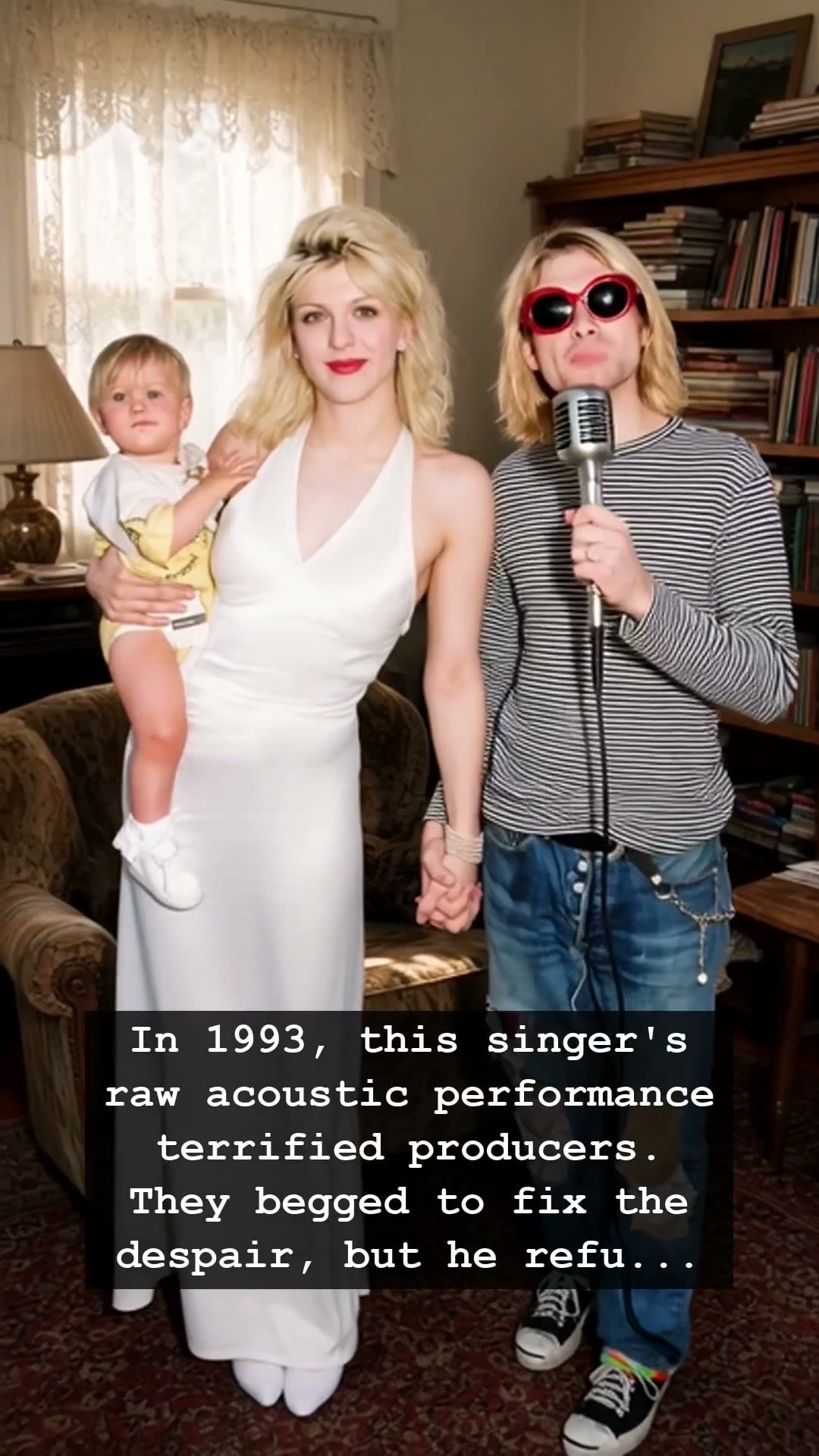
In November 1993, the world sat hushed in front of their television screens, witnessing a performance that felt less like a concert and more like a haunting. Nirvana, the band that had defined the angst of a generation, stripped away their wall of distortion for an MTV Unplugged session that would go down as one of the most chilling spectacles in music history. While the industry expected a polished promotional set, Kurt Cobain and his bandmates delivered something raw, bruised, and dangerously fragile. Producers were terrified. They begged for a second take, a glossier mix, or a more upbeat tempo to mask the profound despair echoing through the studio. They wanted the comfort of a radio hit; what they got was a man baring his soul on the edge of a breakdown.
To understand the gravity of that night, one must look at the climate of the early nineties. The era of hair metal was dead, buried by the dirty, flannel-clad explosion of Grunge. Nirvana had become the reluctant prophets of a culture that felt betrayed by corporate excess. Yet, standing on that stage in New York, surrounded by lilies that reminded many of a funeral parlor, Kurt Cobain did not look like a rock star. He looked like a man standing on the precipice of an abyss. The acoustic guitars and the cello accompaniment did not soften the edges of the music; they sharpened them, turning familiar anthems into haunting laments that felt like intimate confessions whispered in the dark.
Behind the scenes, the friction was palpable. The studio engineers and executives fought to sanitize the performance, terrified that the lack of production value would alienate the masses. But the band remained stubborn. They refused to fix the stray notes or the cracks in Cobain’s voice, understanding that the beauty of the performance lay in its imperfections. It was a rejection of the high-gloss aesthetic that MTV had spent the eighties perfecting. By refusing to polish the sound, Nirvana reminded the audience that rock and roll was never meant to be pretty; it was meant to be true.
The impact of that performance resonates decades later because it captured the exact moment when fame and mental exhaustion collided. It was the antithesis of the stadium rock grandeur that defined the previous decade. When Kurt Cobain let out that final, gravelly breath on the last song, the silence that followed felt heavy, almost suffocating. He was not performing for the crowd; he was exorcising ghosts that had haunted him for years. The world didn’t know it then, but this was a farewell, a final document of a genius struggling to find peace in a world that refused to let him be anything other than an icon.
Today, we look back at Nirvana through the lens of nostalgia, seeing their MTV Unplugged set as a masterpiece of vulnerability. It reminds us of a time when music could still shock us with its honesty. The flowers, the candles, and that singular, mournful acoustic guitar remain etched in our collective memory. It stands as a testament to the fact that when an artist refuses to compromise, the resulting art doesn’t just entertain—it leaves a scar on the soul that time can never truly heal.