
In the vast gallery of Hollywood history, few stories possess the raw, aching honesty of Mickey Rourke’s journey. During the 1980s, Rourke was the quintessential magnetic force of the screen, a man who possessed a natural, brooding intensity that rivaled the icons of the Golden Age. He was the brooding heartthrob of Diner and the dangerous soul in Angel Heart, a talent so potent it seemed he would reign over the silver screen for decades. Yet, as the industry shifted toward the era of flashy blockbusters and shifting paradigms, Mickey Rourke found himself cast into the shadows, his reputation bruised by a life lived as fiercely as his performances.
For many who grew up frequenting local video stores, renting VHS tapes that captured the raw grit of Method Acting, Mickey Rourke was a name that faded into the quiet corners of nostalgia. Years passed in relative obscurity, marked by personal turmoil and a retreat from the polished lights of the Walk of Fame. The industry, often unforgiving to those who refuse to play by its rules, seemed to have moved on entirely. By the early 2000s, the consensus was clear: the man who once held the promise of the next Brando had been lost to the unforgiving machinery of the Hollywood machine.
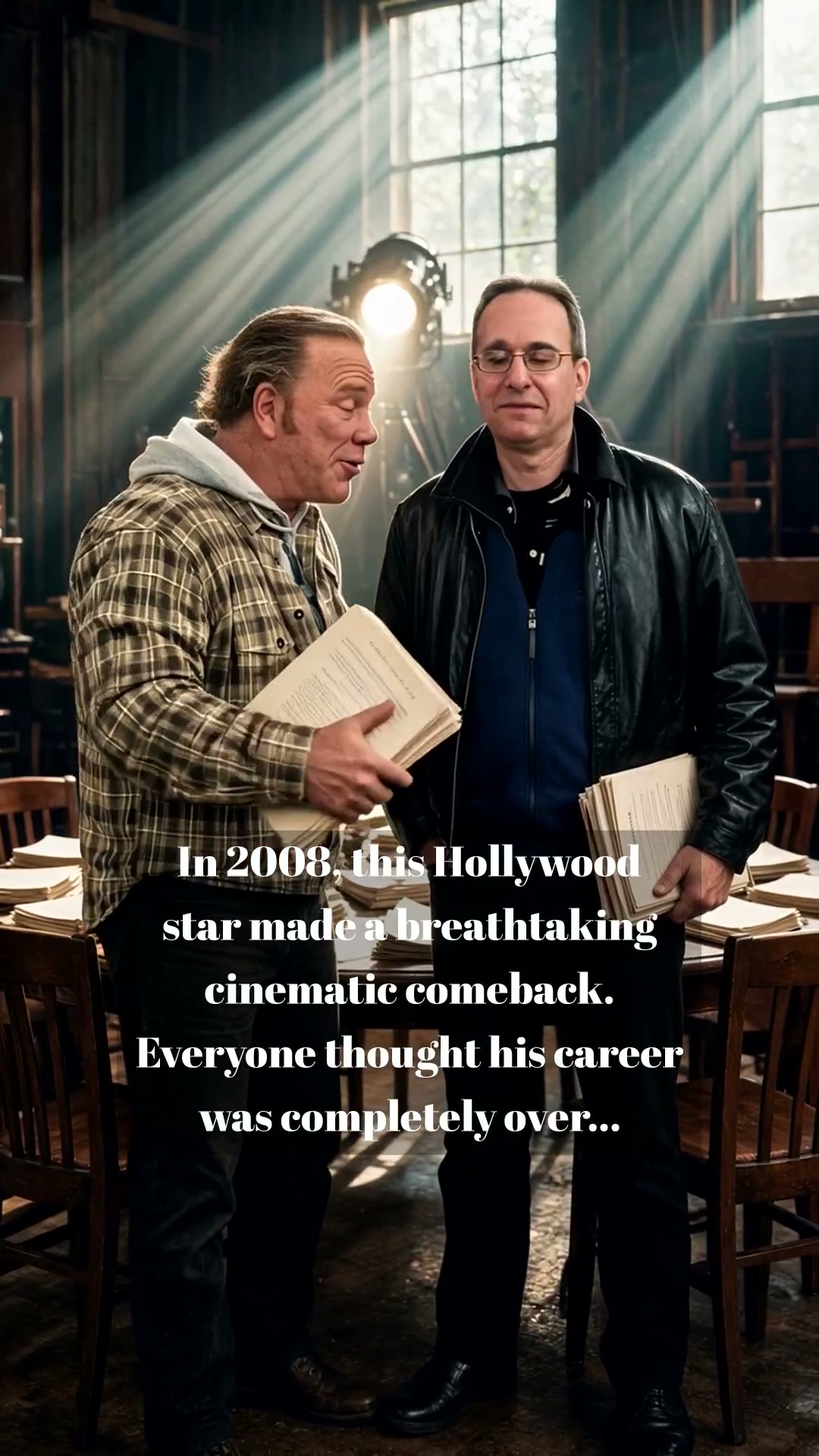
Then came 2008, a year that would forever alter the narrative of his legacy. When Darren Aronofsky cast him in The Wrestler, it wasn’t just a role; it was a mirror held up to a life of sacrifice and resilience. Mickey Rourke stepped into the skin of Randy the Ram, a fading athlete clinging to the ghost of his glory days. There was no artifice in that performance, only the profound vulnerability of a man who understood exactly what it felt like to be forgotten by the world he once dominated. It was a breathtaking, visceral cinematic comeback that left audiences in total silence.
Watching Mickey Rourke on screen during that period felt like witnessing a haunting. He brought a weight to the character that only a lifetime of hard-won experience could provide. He wasn’t just acting; he was channeling the exhaustion of every dream deferred and every bridge burned. The performance was a masterclass in emotional gravity, reminding us why we fall in love with the art of cinema in the first place. It was the kind of vulnerability that Oscar night usually reserves for its most poetic tributes, proving that true artistry is not just about technique, but about the courage to be seen.
Today, the story of Mickey Rourke remains a testament to the idea that no career is ever truly finished. He reminds us that the human spirit, much like the celluloid legends we cherish, can withstand the most grueling tests of time. His resurgence in 2008 was more than just a critical success; it was a human triumph that echoes through the halls of Hollywood history. As we look back on those decades, we find that the most enduring legacies are rarely the ones that climb the highest, but the ones that find the strength to rise again after the fall.