
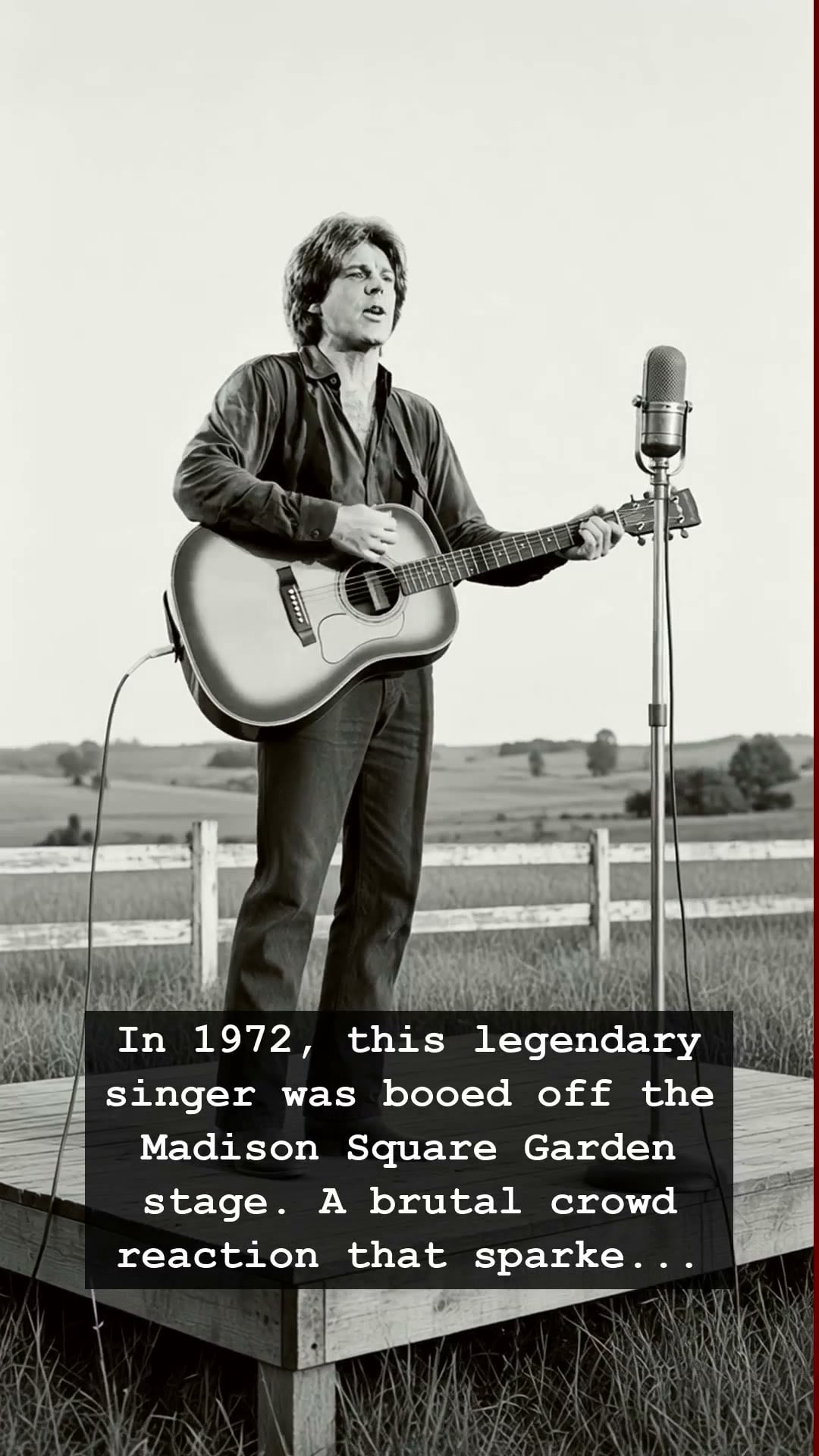
The year was 1972, and the iconic Madison Square Garden was a cauldron of anticipation. The crowd, fueled by the nostalgia of the jukebox era, had gathered for a rock and roll revival show. They came expecting the pompadour-haired teen idol of the fifties, the boy next door from The Adventures of Ozzie and Harriet who sang sweet, safe melodies. But when Rick Nelson stepped into the spotlight, he wasn’t the relic they wanted; he was a musician evolving in real-time. He dared to play his new material, music that felt current, raw, and honest. The reaction was visceral. Within minutes, a chorus of jeers and boos echoed through the arena, a brutal rejection that felt like a physical blow. The audience didn’t want the man; they wanted the ghost of his past.
Most artists would have crumbled under the weight of such public humiliation, but Rick Nelson channeled that sting into something immortal. He left the stage wounded, but the experience ignited a creative fire. The result was Garden Party, a song that turned his painful experience into a witty, defiant, and ultimately classic anthem of self-respect. As he famously crooned in the hit, You can’t please everyone, so you’ve got to please yourself. It was a declaration of independence for a performer who had spent his entire youth trying to live up to the expectations of millions.
To understand the magnitude of that night at the Garden, you have to look back at the era. This was a time when the world was changing rapidly. The cultural tectonic plates were shifting from the clean-cut innocence of the fifties to the turbulent, reflective sounds of the early seventies. Rick Nelson had lived through the birth of Rock ‘n’ Roll, becoming one of the first true television-to-radio crossovers. He grew up on screen, and the public felt they owned a piece of his identity. When he stepped out of his designated box, he wasn’t just breaking a contract with his fans; he was shattering their collective memory of a simpler, golden time.
Garden Party went on to become one of the most beloved tracks of the decade, a bittersweet reminder of the fickle nature of fame. It serves as a time capsule, capturing the tension between the commercial pressures of the music industry and the internal integrity of an artist. Even today, the song resonates with anyone who has ever felt the pressure to repeat the past instead of forging a future. It stands as a testament to Rick Nelson, a man who refused to be defined solely by his teenage years, proving that even a booing crowd couldn’t silence his evolution.
Reflecting on that night decades later, we can see it for what it truly was: a turning point. It marked the moment a teen idol stepped into his power as a songwriter and a man. The echoes of Madison Square Garden eventually faded, but the anthem that rose from the silence still plays on radios and in the hearts of those who appreciate the cost of authenticity. The next time you spin a vintage record, remember the artist behind the melody. Do you remember where you were when you first heard the story behind the song?