
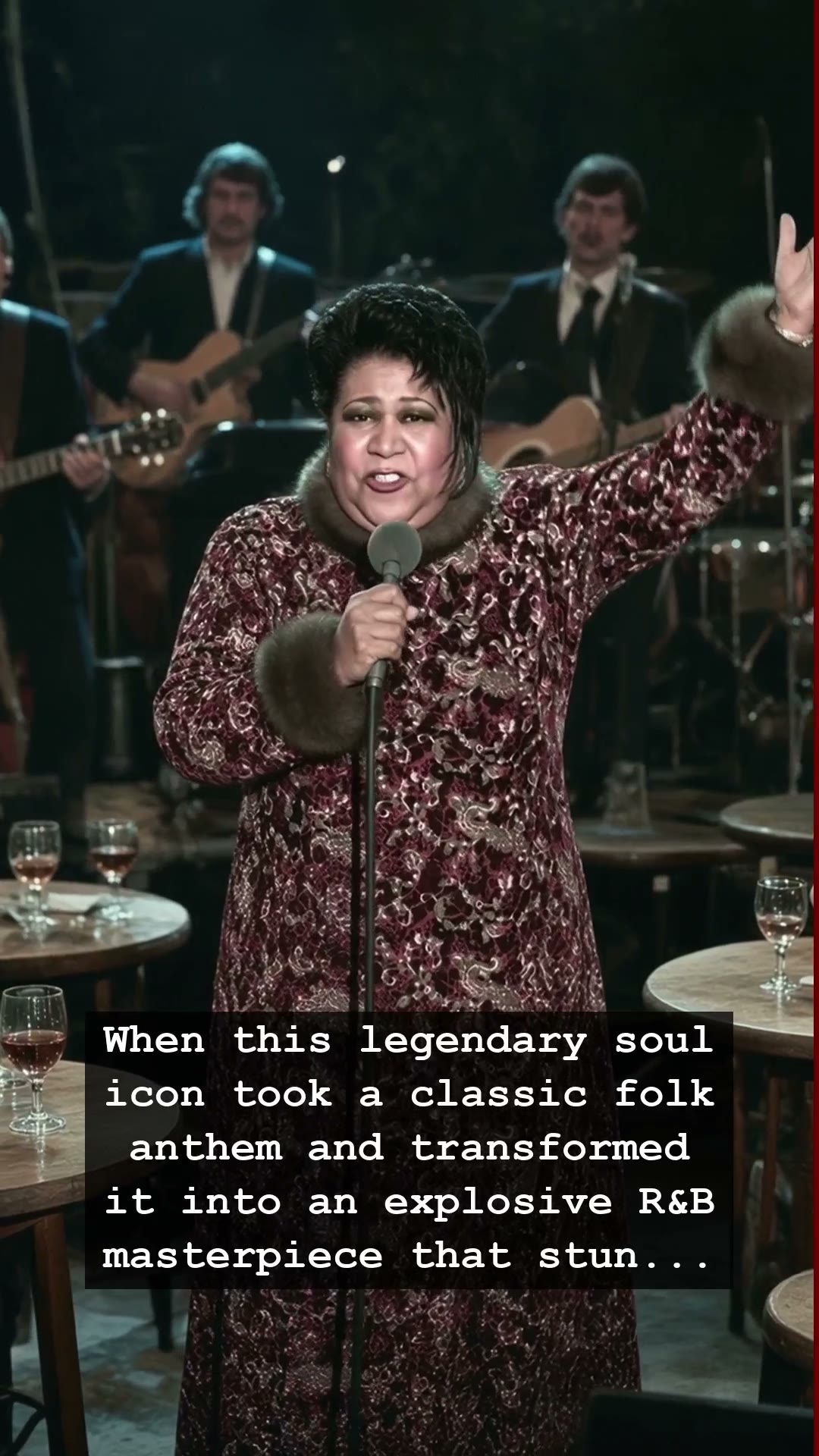
The year was 1970. The world was changing, the Vietnam War was tearing at the American fabric, and the gentle, acoustic sensibilities of the folk era were beginning to surrender to the raw, pulsating heart of soul. In the midst of this shifting cultural landscape, a queen stepped into the recording studio. Aretha Franklin, already a titan of the charts, decided to take a gamble that would have crippled a lesser artist. She turned her sights toward Simon & Garfunkel’s delicate, fragile masterpiece, Bridge Over Troubled Water, and transformed it into a gospel-drenched, explosive R&B anthem that shook the very foundations of the music industry.
At the time, the original song was a tender prayer, a whisper of comfort delivered with folk simplicity. But Aretha Franklin did not just sing a cover; she inhabited the composition, repossessing it with a vocal ferocity that stunned the songwriters themselves. Paul Simon and Art Garfunkel were reportedly left speechless, unable to fathom how their acoustic hymn could be imbued with such blistering, earth-shattering power. When Aretha Franklin opened her mouth, the song ceased to be a folk ballad and became a visceral experience—a testament to human endurance, struggle, and the transcendent nature of the soul.
This transformation happened in an era where the Jukebox was still the king of the corner diner and the radio was our primary window into a wider, more volatile world. While the psychedelic rock movement was pushing boundaries in experimental directions, Aretha Franklin chose to ground us in the sheer force of the human voice. She stripped away the polite, polished veneer of the mainstream and replaced it with a grit born from years in the Detroit gospel circuit. It was a bold, artistic collision that defined the transition from the introspection of the sixties to the bold, expansive sound of the early seventies.
What makes this performance resonate decades later is the authenticity that only the Queen of Soul could provide. Every piano chord she struck seemed to vibrate with the history of the struggle she had navigated to reach the top. It was the sound of a woman who had seen the darker side of fame, the isolation of the road, and the constant pressure of a rapidly changing cultural climate. Aretha Franklin didn’t just perform the song; she fought it, she blessed it, and she ultimately claimed it as her own personal manifesto for resilience.
Today, listening to that recording feels like a direct transmission from a different era, a time when singers were truly the architects of our emotional lives. Whether you experienced it through a crackling vinyl record or heard it echoing through the streets in the golden age of AM radio, the impact remains undeniable. Aretha Franklin reminded us that a bridge isn’t just a structure; it is the courage we find to pull someone else through the fire. Does the sheer power of her delivery still bring a shiver to your spine?