
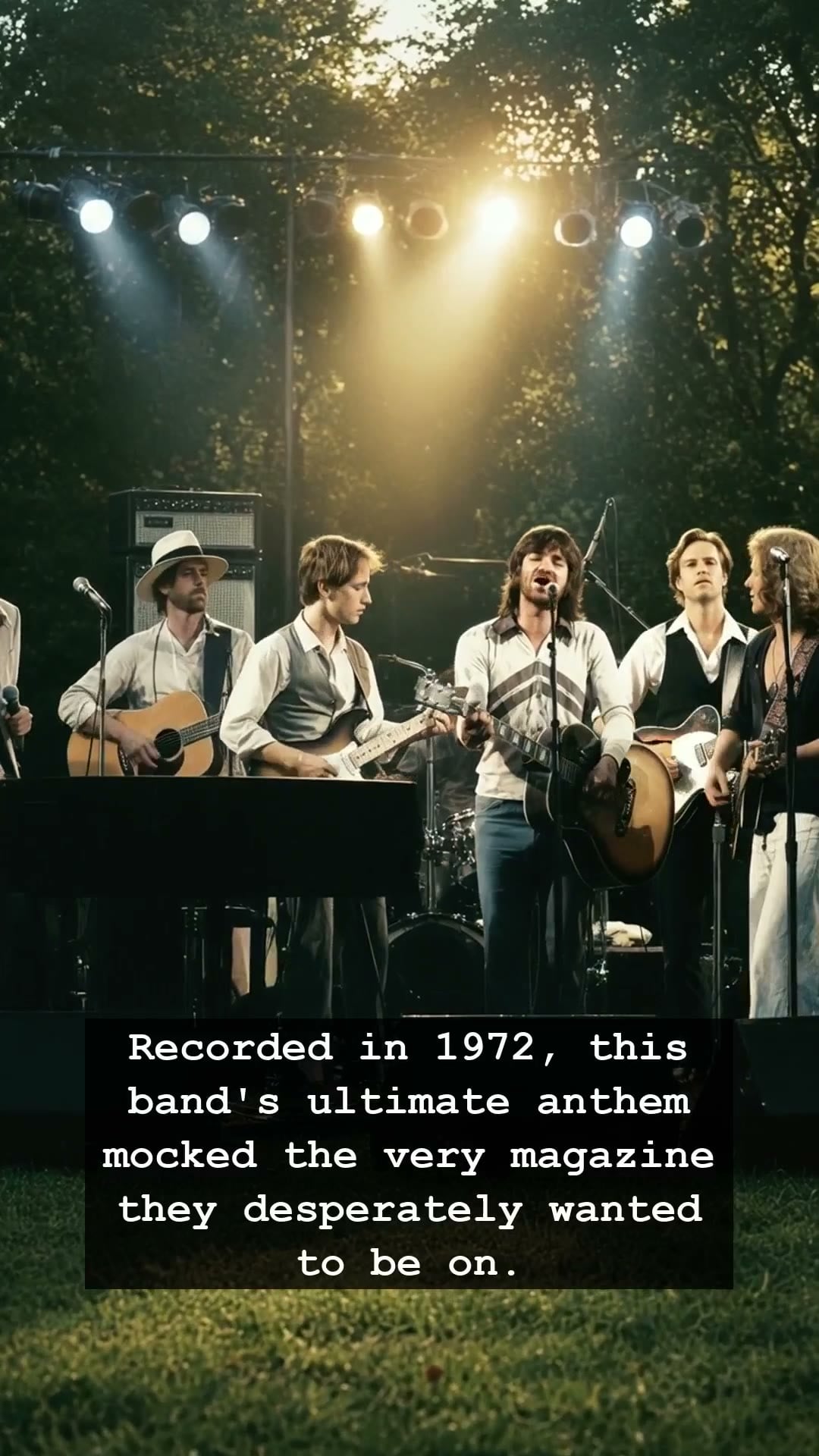
In 1972, the airwaves were dominated by the polished, manufactured sounds of radio pop, but a group of scruffy, eccentric outcasts known as Dr. Hook and the Medicine Show was about to pull off the ultimate irony. Their smash hit, The Cover of Rolling Stone, became an anthem for every garage band that ever felt rejected by the industry elite. It was a song that begged for validation while simultaneously mocking the very publication that served as the gold standard of music credibility. To the record executives in their glass towers, it was a catchy, chart-topping novelty track. To the band, it was a middle finger to the superficiality of fame that they were simultaneously desperate to achieve.
Led by the charismatic and gritty Shel Silverstein and the gravel-voiced Ray Sawyer, Dr. Hook and the Medicine Show were far from the clean-cut images projected by the MTV era that would soon follow. They looked like they had wandered off a bus from Woodstock, carrying the scent of cigarette smoke and dive bars rather than the high-fashion aesthetic of Studio 54. When they sang about wanting to see their ‘smiling faces’ on the cover of Rolling Stone, they weren’t just writing a lyric; they were exposing the raw, aching ambition that fueled every musician struggling in the shadows of the early seventies. The song was a meta-commentary before that term even existed in pop culture, a clever, sarcastic bite at the hand that fed them.
The genius of the track lay in its brutal honesty. Music history is filled with bands who clawed their way out of obscurity only to find that the industry treated them like disposable commodities. Dr. Hook and the Medicine Show understood this dynamic better than anyone. They leaned into their ‘ugly’ persona, embracing a look that defied the traditional glamour of the era. By turning their insecurities into a comedic sing-along, they captured the hearts of a generation tired of being told that rock stardom was only for the beautiful and the pristine. It was a masterpiece of defiance that resonated with anyone who felt like an outsider in their own life.
Years later, looking back at the juke-joint energy of their performance, the song remains a time capsule of a grittier era. The irony, of course, is that they eventually got their wish. Rolling Stone did put them on the cover, albeit in caricature form, proving that the music industry loves nothing more than a rebel who is willing to play the game while poking fun at it. That specific moment in 1973 remains a pivotal bookmark in the archives of music journalism, highlighting the surreal intersection between legitimate artistry and the desperate hunger for media approval.
Today, the story of Dr. Hook and the Medicine Show serves as a poignant reminder of why we fall in love with these bands. We aren’t just listening to melodies; we are listening to the struggle, the drama, and the beautiful, messy contradictions of human nature. Whether you were spinning their vinyl on a worn-out turntable in your bedroom or just discovering them now, the song remains a timeless, stinging critique of vanity. Next time you hear those familiar opening chords, listen closely—it is not just a song about a magazine; it is a story about the price of fame and the pride of being exactly who you are.