
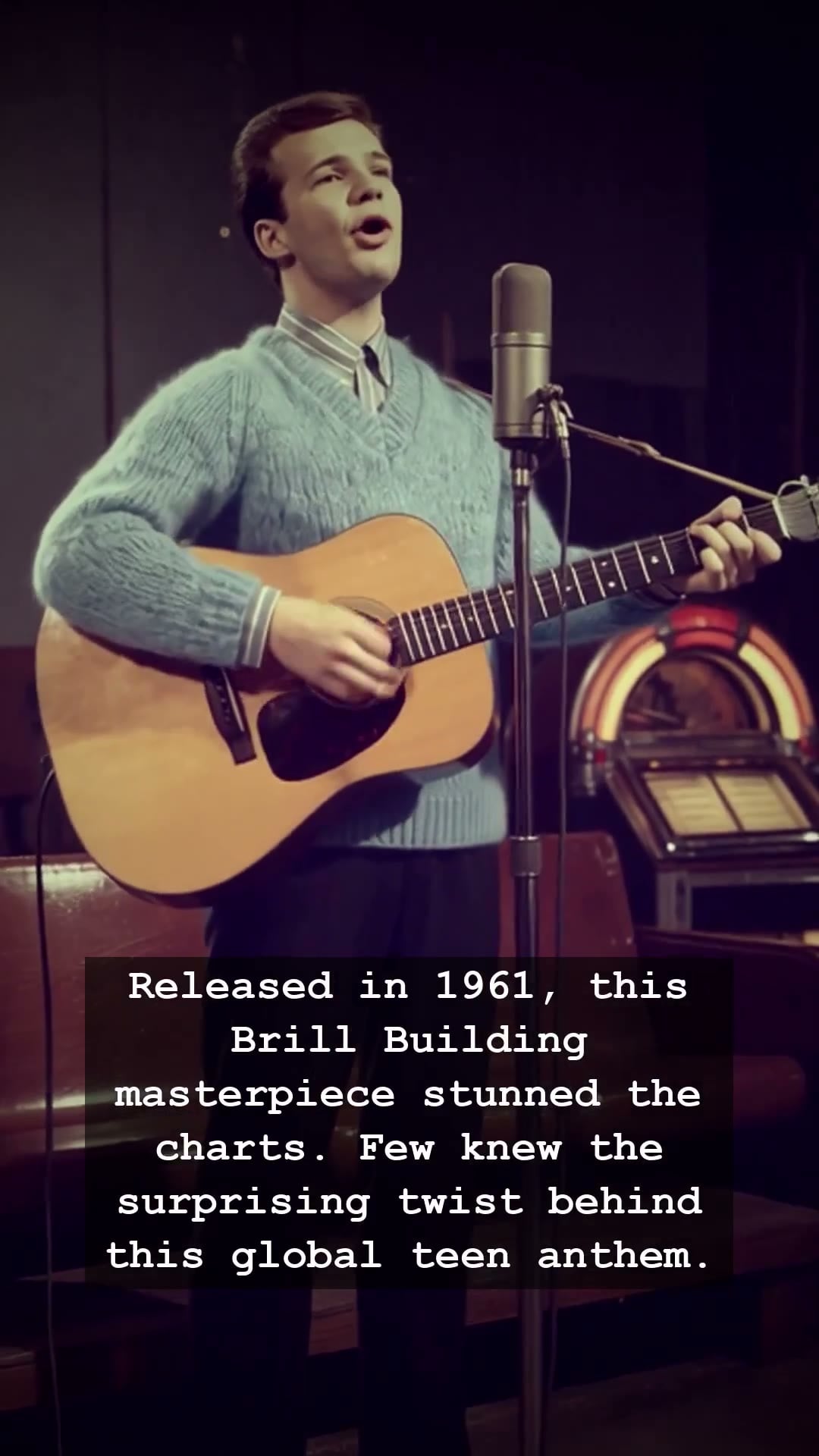
Picture the early 1960s, a golden era when a clunky Jukebox in a smoky diner could dictate the emotional pulse of American youth. Teenagers across the country were slipping coins into slots just to hear the latest romantic pop melodies spun out by the legendary Brill Building machine. But beneath the shiny surface of harmless teenage pop anthems, the American music industry was a ruthless battleground where songs were treated like stolen territory and up-and-coming vocalists fought desperately for survival under the glaring studio lights. It was a time when a single rushed recording session could make you a global superstar or cast you into bitter, permanent obscurity overnight.
Into this high-stakes world stepped Bobby Vee, a clean-cut teenager from Fargo, North Dakota, whose life changed forever following a horrific tragedy. Just days after the heartbreaking 1959 plane crash that claimed the lives of Buddy Holly, Ritchie Valens, and The Big Bopper, a hastily assembled local band needed a young singer to fill the stage for a fateful show. Bobby Vee answered that desperate call, launching a career that would soon intersect with some of the most cutthroat publishers and songwriters in New York City. He was young, fresh-faced, and utterly unprepared for the ruthless machinery of the mid-century music business.
The real storm broke in 1961 when a sparkling, upbeat track came out of the Brill Building, a song that everyone in the industry assumed belonged to Tony Orlando. The brilliant demo had already been recorded, and the buzz was undeniable. But behind closed doors, a sudden scheduling conflict and ruthless industry maneuvering left the track wide open. Seizing the chaotic moment, music executives handed the master tape directly to Bobby Vee, effectively pulling the rug out from under his fierce rival. The resulting power struggle sparked a bitter feud that left raw wounds and forever altered the trajectory of early sixties pop music.
When Bobby Vee stepped into the studio to record that disputed track, the tension was palpable. The melody was undeniably infectious, driven by a jingling tambourine and a desperate teenage plea, but the atmosphere behind the glass was thick with tension and betrayal. As the song hit the airwaves, crackling out of countless portable radios and spinning on every local Jukebox, it exploded into a massive global teen anthem. Yet, for all its cheerful innocence, every single note carried the heavy baggage of a stolen opportunity and a deeply bruised ego in the New York songwriting scene.
Decades have passed since Bobby Vee first lent his smooth, earnest vocals to that chart-topping masterpiece, yet the story behind its chaotic creation still fascinates music historians. It serves as a stark reminder of the dark underbelly of the Golden Age of Pop, where fame was manufactured in frantic boardrooms and friendships were casually sacrificed for a shot at the Billboard charts. The vinyl records may have gathered dust in attics, and the iconic recording studios have long since faded, but the drama remains etched in American musical lore forever.
Today, when that classic 1961 track drifts out of an old speaker, it carries listeners straight back to a simpler, more innocent America of bobby socks, malt shops, and teenage heartbreak. Yet true fans listening closely can still hear the faint echoes of the fierce rivalry that brought it to life. The legacy of Bobby Vee reminds us that behind every cheerful radio hit of the twentieth century lies a human story filled with ambition, conflict, and the relentless pursuit of immortality. Take a moment today to drop a digital coin in your own musical time machine and let the haunting, complicated history of this legendary teen anthem wash over you all over again.