
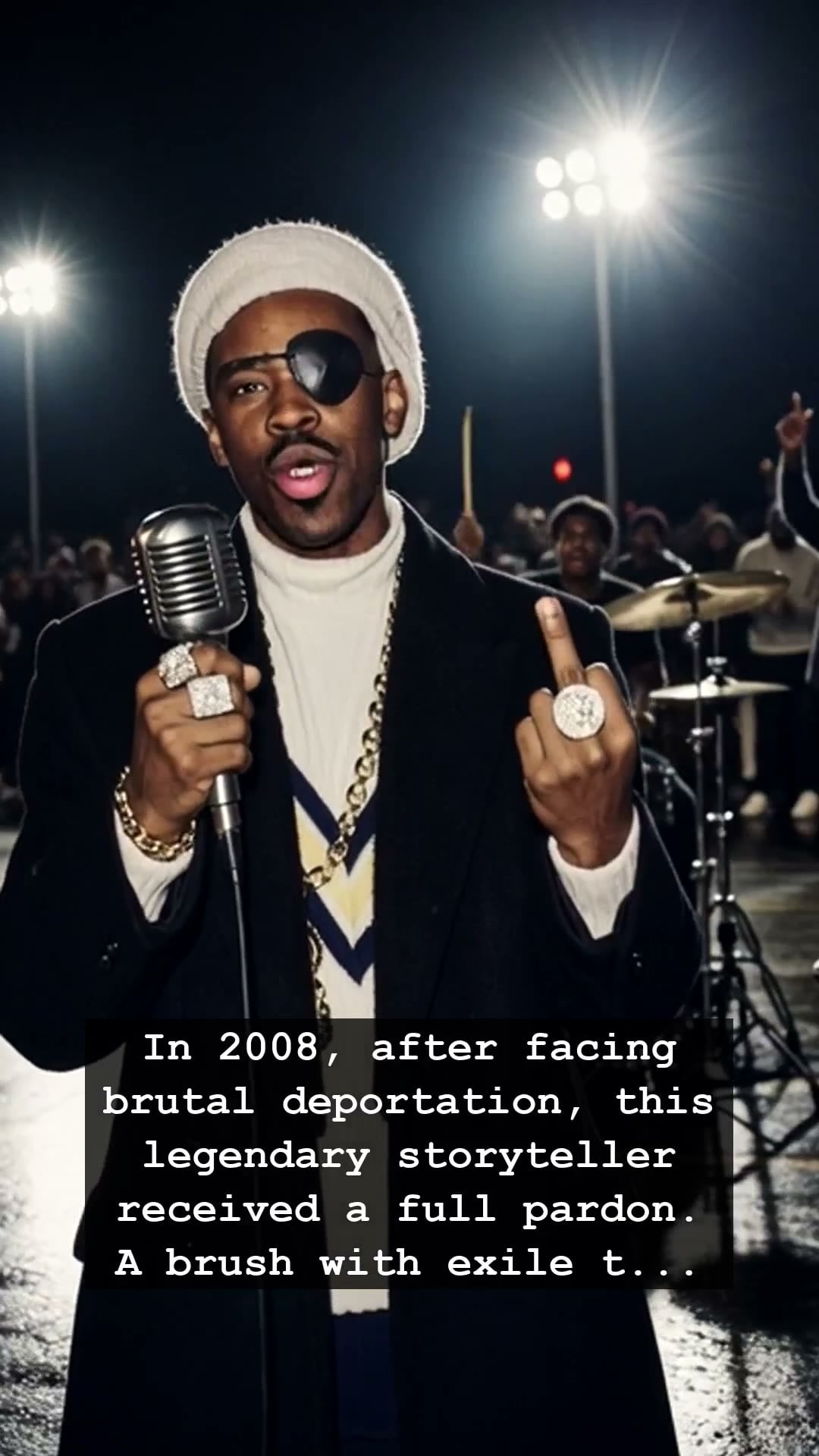
In the golden era of the late 1980s, before digital algorithms and streaming services dictated our playlists, the rhythmic, melodic storytelling of Slick Rick defined the sound of the streets. With his trademark eye patch and gold-drenched charisma, Slick Rick did not just rap; he spun intricate, cinematic tales that turned hip-hop into a literary art form. Tracks like La Di Da Di became the foundation for a thousand samples, cementing his status as a pioneer who walked the line between urban reality and imaginative fable. He was the voice that lived in the back of our heads, a cultural icon whose influence remains etched into the fabric of modern music.
Yet, behind the glamorous persona and the rhythmic flows, a harrowing shadows loomed. In the early 1990s, the trajectory of his life took a dark, unexpected turn, leading to a long and agonizing legal battle that threatened to permanently silence his voice. Following a conviction related to a shooting incident, Slick Rick faced the terrifying specter of deportation. For years, the man who shaped the childhoods of countless fans lived in the shadow of exile, caught in a Kafkaesque nightmare where his right to remain in the country he helped define was constantly being questioned. It was a stark reminder of the fragile line between superstardom and institutional erasure.
For nearly two decades, the music world watched as one of its brightest stars fought a grueling war against the immigration system. It was not just a legal battle; it was a desperate struggle to reclaim his identity and his home. While the rest of the world danced to the beat of new trends, the specter of the Jukebox and the Walkman era seemed to be fading, and Slick Rick himself appeared to be slipping toward an invisible exit from American history. The drama of his legal plight captivated those who knew that his absence would leave a void in the hip-hop pantheon that could never be filled by mere imitators.
The turning point finally arrived in 2008, a moment that felt like a cinematic resolution to a long, tragic arc. Slick Rick was granted a full gubernatorial pardon by New York Governor David Paterson, effectively ending the threat of deportation and granting him the stability he had lacked for so long. It was a massive sigh of relief for fans who had grown up with his flow, a validation of his rehabilitation, and a recognition of his monumental cultural contribution. For a man who had faced the prospect of being cast out, the pardon was not just a legal document; it was a homecoming.
Looking back today, the story of Slick Rick serves as a poignant reminder of the human cost behind our favorite hits. He survived the pressure, the legal scrutiny, and the potential loss of his life in the states, emerging as a resilient survivor. As we reflect on the echoes of those classic beats, we realize that Slick Rick is more than just a pioneer; he is a testament to perseverance. His journey remains a vital chapter in the history of American music, proving that even the most celebrated voices can face the threat of silence, yet still find their way back to the spotlight.