
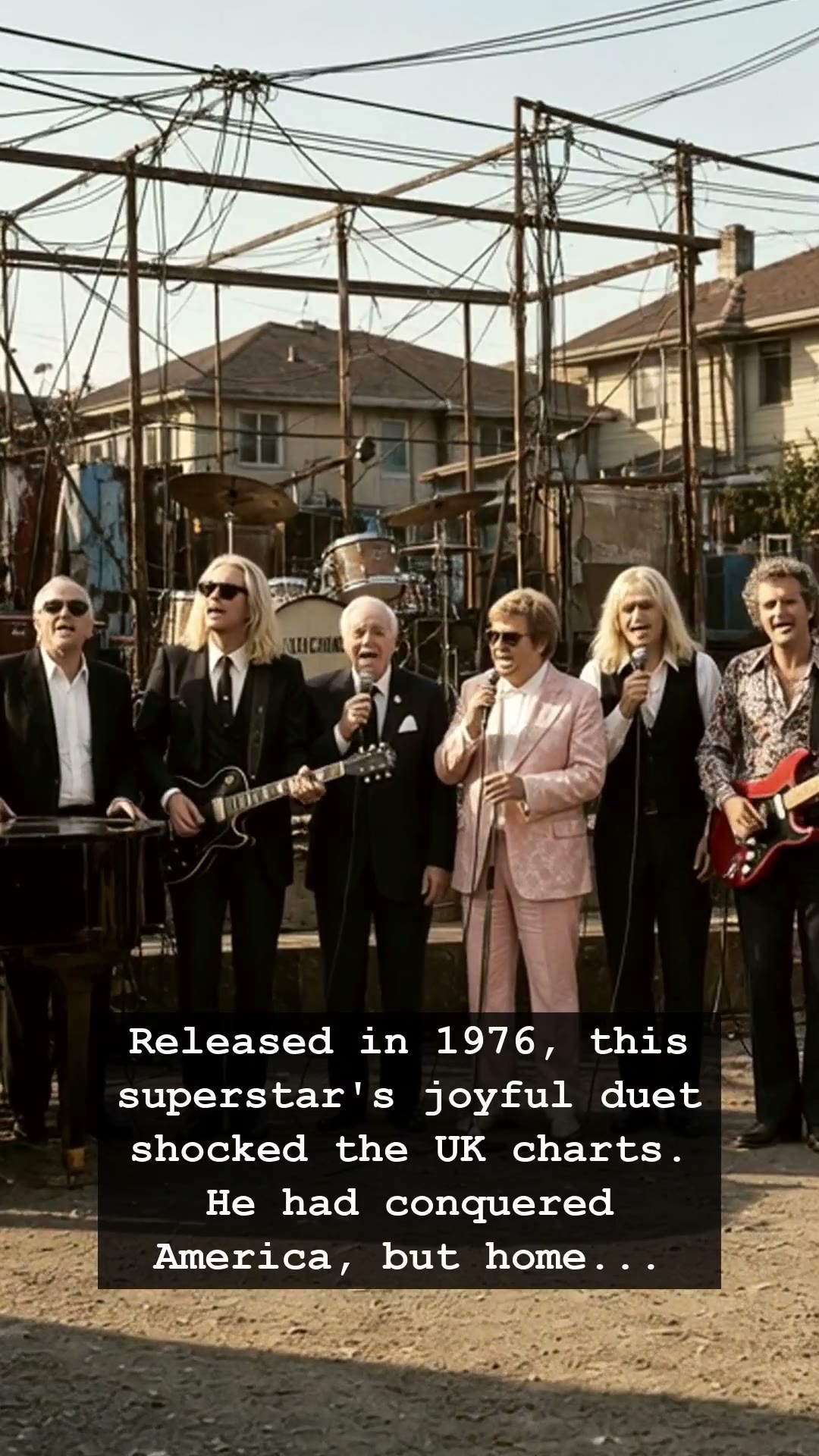
It is hard to believe that by 1976, Elton John had already conquered the world but remained a prophet without honor in his own land. He had sold out stadiums across America, his glittery boots had walked the halls of fame, and his records were spinning on every jukebox from New York to Los Angeles. Yet, despite his astronomical success, the elusive UK number one single had slipped through his fingers time and again. That all changed on a sun-drenched afternoon when the infectious rhythm of Don’t Go Breaking My Heart hit the airwaves. This wasn’t just another track; it was the jubilant masterpiece that finally cemented Elton John as the undisputed king of British pop.
At the center of this musical phenomenon was an unlikely partnership with Kiki Dee. Kiki was the first British artist signed to Elton John’s own label, The Rocket Record Company, and their chemistry was immediate. While the world saw two friends laughing and dancing in a studio, the reality was a high-stakes gamble. Elton was under immense pressure to maintain his momentum after the massive success of Captain Fantastic and the Brown Dirt Cowboy. The music industry was shifting, with the glitz of disco beginning to dominate the charts, and Elton needed a song that felt both timeless and current. When they recorded this playful, upbeat anthem, they captured a spark of pure, unadulterated joy that felt like a breath of fresh air in the mid-seventies.
Recording sessions for the track were surprisingly relaxed, a stark contrast to the grueling, cocaine-fueled studio marathons that characterized much of the rock and roll excess of the era. The song felt like a vacation in the middle of a war zone of artistic expectations. For Elton John, it was a rare moment of lightheartedness, a chance to shed the heavy, introspective weight of his previous albums. Kiki Dee brought a soulfulness and vocal precision that complemented Elton’s boisterous energy perfectly. When the song topped the charts in the summer of 1976, it wasn’t just a win for the duo; it was a vindication for a superstar who had finally proven he could dominate his home turf.
Decades later, Don’t Go Breaking My Heart still resonates with that same electric nostalgia. Every time the piano riff kicks in, listeners are transported back to a time of Walkmans, flared trousers, and the dawn of the MTV generation. It reminds us of a simpler era of radio dominance where a single melody could unite a nation. The track remains a staple of wedding dance floors and karaoke bars, a testament to the enduring power of a well-crafted pop hook. It stands as a beautiful artifact of a time when Elton John was truly untouchable, standing on the pinnacle of his creative powers.
Beyond the chart success, the legacy of this song is one of genuine friendship and musical synergy. It serves as a reminder that even the biggest stars are defined by their human connections and the moments of levity they share with their collaborators. As we look back at the golden age of seventies pop, this duet stands out as a shimmering beacon of triumph. Does the opening beat still make you want to get up and dance like it is 1976 all over again?