
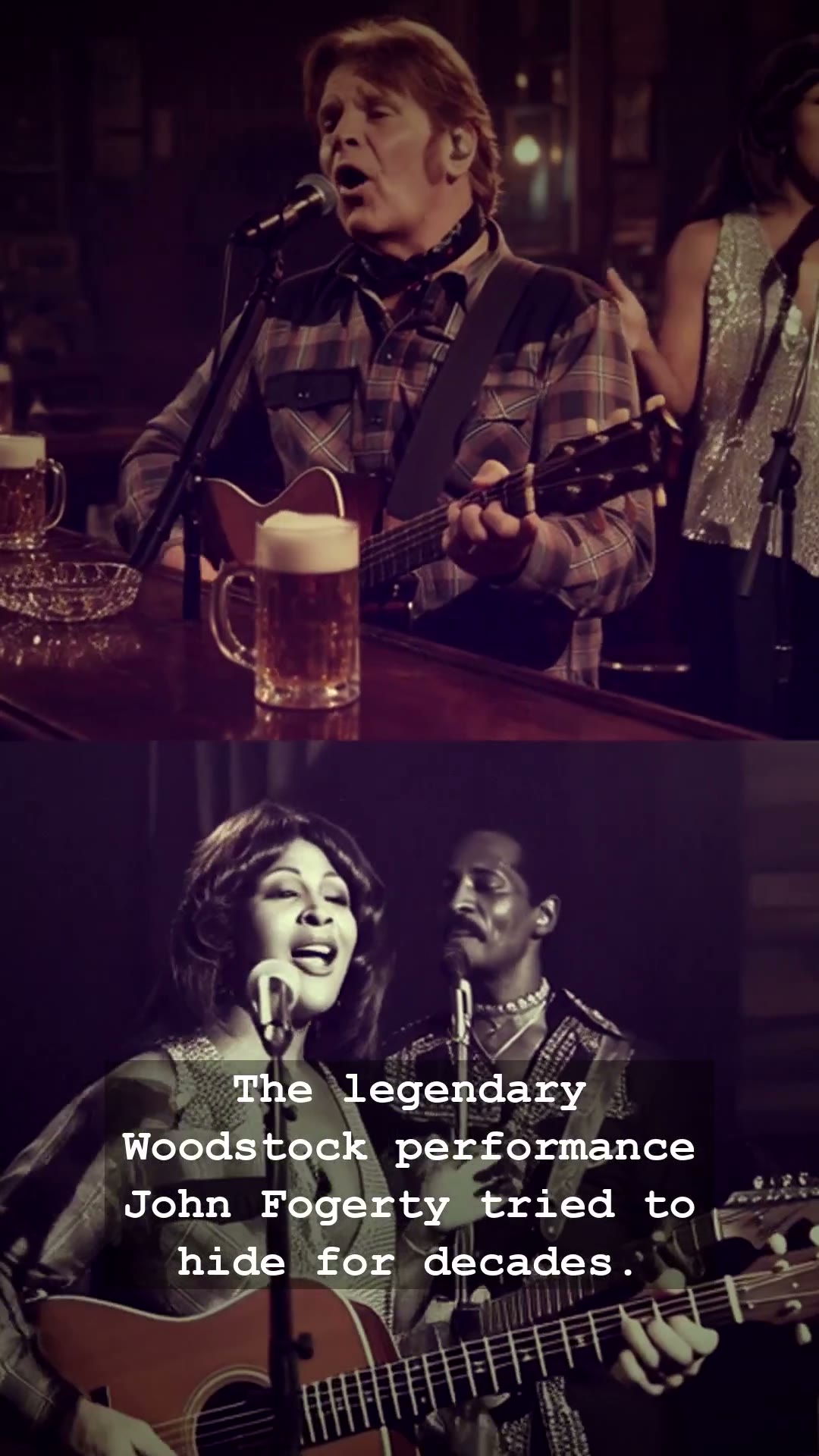
The year was 1969, and the air in Bethel, New York, was thick with the scent of rain, mud, and the electric hum of a generation defined by Woodstock. As the clock struck midnight, Creedence Clearwater Revival took the stage. John Fogerty, the gritty voice of American rock, prepared to deliver a performance that would solidify his status as a musical titan. Yet, for decades afterward, this legendary set remained a ghost, hidden from the public eye. While the rest of the world caught glimpses of Jimi Hendrix or The Who in the iconic documentary, John Fogerty fought tooth and nail to keep his own footage buried deep within the vaults. Why would an artist hide his finest hour from the fans who idolized him?
The answer lies in the murky, high-stakes world of music industry contracts that haunted the golden age of rock. John Fogerty was a man who lived and breathed his music, possessing a perfectionist streak that clashed violently with the chaotic, unrefined reality of the festival. For Fogerty, the performance was marred by technical failures and a fatigue that felt personal. He believed the band’s set did not capture the tight, muscular sound they had carefully crafted in the studio. To John Fogerty, showing that footage was not a celebration of legacy; it was an insult to the art form he spent his life perfecting. It was a clash between raw historical documentation and an artist’s uncompromising vision for his own image.
Beyond the technical grievances, there was a deeper, more bitter resentment. John Fogerty felt that the festival’s chaotic atmosphere did not align with the professional rigor he demanded. He saw the shift toward a messy, drug-fueled counterculture as a dilution of the music itself. While fans looked back at Woodstock as a utopian dream, Fogerty looked back at the muddy stage and saw a nightmare of mismanagement and artistic compromise. This deep-seated frustration kept the tapes under lock and key for years, turning a legendary moment into a phantom that fueled rumors and speculation among die-hard CCR fans across the globe.
This story is a haunting reminder of the darker side of fame during the late sixties. While the Walkman and the Jukebox would eventually bring the sounds of John Fogerty into every household, the man behind the microphone was often trapped in legal and emotional warfare. The struggle for ownership—both of his tapes and his own narrative—defined much of his career. It serves as a poignant look at how the pressures of the industry can turn a career-defining moment into a source of long-term trauma, stripping the magic away from the music for the very person who created it.
Ultimately, the eventual release of the footage proved that John Fogerty had nothing to fear. History viewed the performance through a different, more forgiving lens than he did. Watching the restored reels today, we see not a failure, but a powerhouse in his prime, pouring his soul into every chord. The mystery of the locked-away tapes reminds us that even our greatest musical heroes are human, wrestling with insecurities and the heavy burden of their own legends. Perhaps it is time to revisit the music of John Fogerty and listen to the story he was finally ready to tell.