
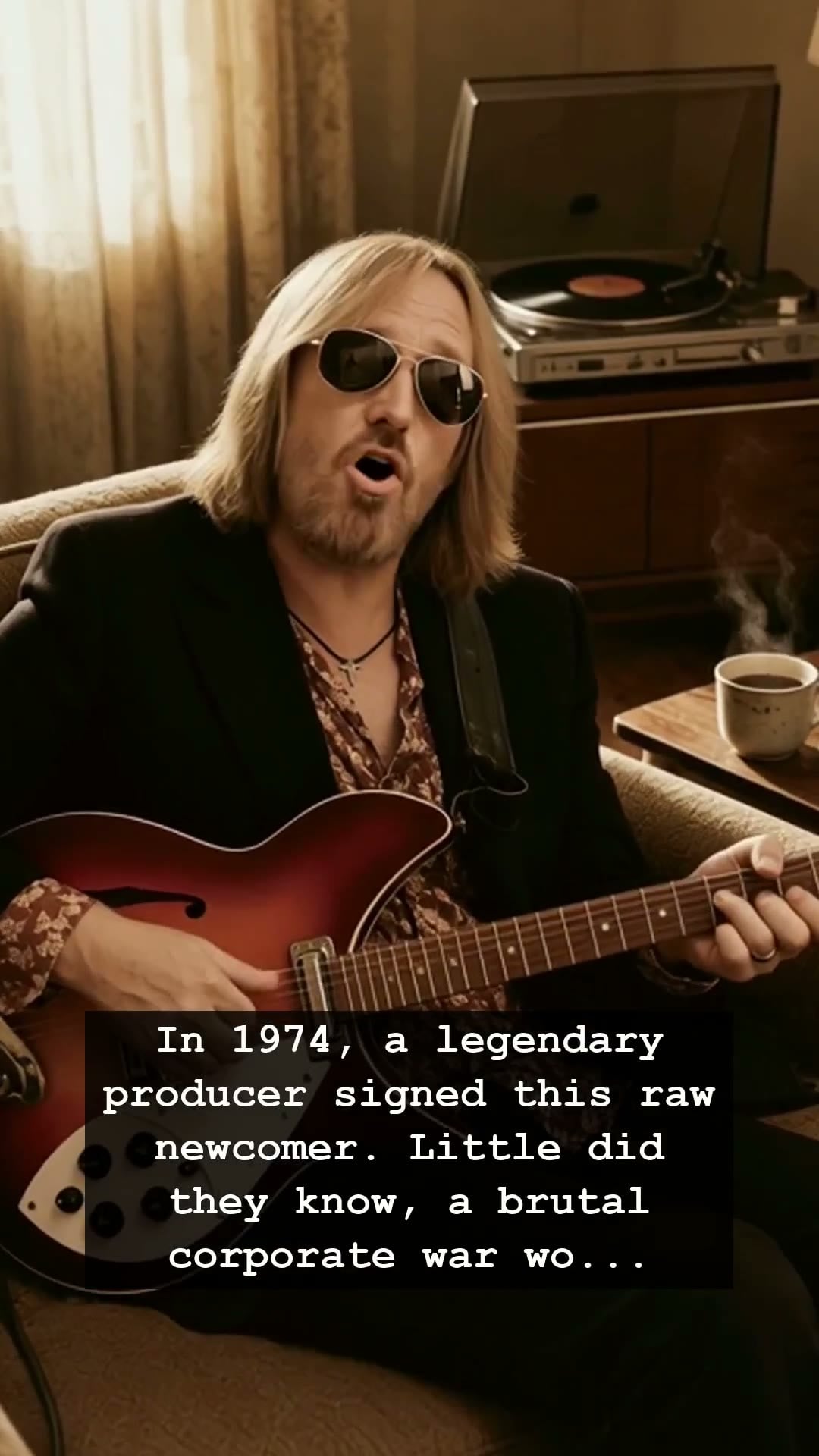
The year was 1974, and the airwaves were dominated by the polished, overproduced sounds of a changing industry. Amidst the chaos of the post-Woodstock era, a legendary British producer named Denny Cordell discovered a raw, unassuming newcomer from Florida named Tom Petty. Cordell saw something in Petty that the corporate suits missed—a gritty, defiant authenticity that felt like a punch to the gut of the mainstream. It was a partnership destined for greatness, but it also placed them directly in the crosshairs of a ruthless industry that viewed musicians as mere commodities rather than artists.
As the band Mudcrutch evolved into Tom Petty and the Heartbreakers, the corporate sharks began to circle. In the late 1970s, Petty found himself trapped in a labyrinthine web of label acquisitions and predatory contracts. His music was being traded between conglomerates like a piece of property, leaving him with little control over his own creative output. The tension turned into a full-scale corporate war. Petty was told that his voice and his songs were no longer his to command, a realization that felt like a betrayal of everything he had stood for since he first picked up a guitar.
Rather than folding under the immense pressure, Tom Petty made the most daring move of his career. In a desperate bid to escape his contract and reclaim his artistic freedom, he filed for bankruptcy. It was a move that shocked the industry and sent a clear, thunderous message to the executives sitting in their high-rise offices: he was not for sale. This wasn’t just about money; it was a battle for his musical soul. He was willing to lose everything he had earned just to be able to sing his own songs on his own terms.
The resilience he displayed during that dark period eventually paved the way for his legendary status. When he returned with anthems that seemed to capture the very essence of American longing and defiance, the world listened differently. Fans who had carried his records home in paper sleeves, played them on their crackling turntables, and listened to them on the brand-new Walkman devices of the era understood the struggle. They heard the scars of the corporate war in every chord of his hits, recognizing a man who had stared down the industry and refused to blink.
Today, we look back at the career of Tom Petty and Denny Cordell with a sense of awe. Their story is a reminder of a time when rock and roll was a fight, not just a product. It serves as a testament to the fact that true art often requires a willingness to face ruin. As we spin those classic tracks today, we aren’t just hearing catchy melodies; we are listening to the sound of a man who fought a brutal war and won back the right to be himself. It is a story that remains as electrifying and relevant as it was the day the needle first dropped.