
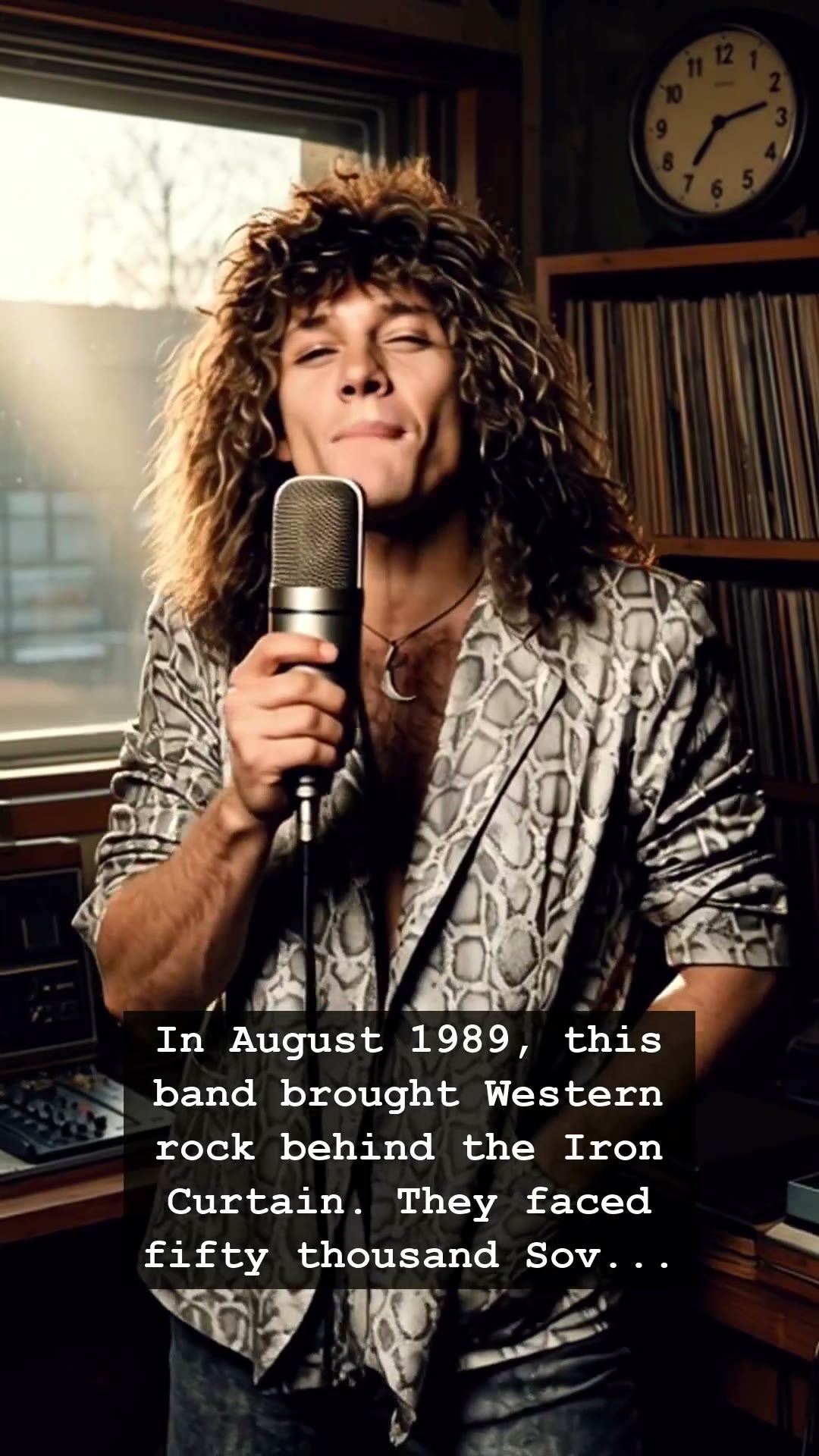
In the sweltering heat of August 1989, a massive shift in human history was happening, but it wasn’t just in the halls of government. It was unfolding at the Lenin Stadium in Moscow, where fifty thousand Soviet youths stood in anticipation, waiting for a sound that had been strictly forbidden for decades. Among them, a surge of adrenaline pulsed through the crowd, all eyes fixed on the stage where Bon Jovi was about to do the impossible. As the first notes of hair metal echoed across the stadium, the Iron Curtain didn’t just rattle; it began to crack under the sheer weight of freedom and electric guitars.
The context of the Moscow Music Peace Festival is almost surreal to look back on today. At the time, Bon Jovi was at the absolute peak of their global dominance, representing everything the Soviet establishment feared: Western decadence, flamboyant hairspray, and the unbridled spirit of rock ‘n’ roll. As Jon Bon Jovi walked onto that stage, there was a genuine, lingering tension in the air. Would the authorities pull the plug? Would the concert end in chaos? For a band used to the glitz of MTV and sold-out American arenas, this was no ordinary stop on a tour. This was a cultural frontline.
Everything about the atmosphere that night felt defiant. The stadium was a sea of denim and leather, a stark contrast to the gray uniformity of the era. Bon Jovi brought the infectious energy of their anthems to a generation that had only ever heard these sounds on smuggled cassette tapes. For those fifty thousand kids, the music wasn’t just entertainment; it was a revelation. It was the sound of a closing chapter for the Cold War, amplified through Marshall stacks and the grit of a New Jersey band that refused to play by the rules of international boundaries.
Looking back, it is easy to forget how dangerous the spectacle of Bon Jovi felt at that moment. The band faced immense pressure to maintain decorum, yet they delivered a performance that was raw, loud, and unapologetically American. Behind the scenes, the tension was palpable, with security and state officials watching every move, ready to shut down the performance at the slightest sign of dissent. Yet, Bon Jovi pushed through, cementing their legacy not just as arena rock icons, but as unexpected ambassadors of a new cultural order that would soon reshape the map of the world.
The ripples of that night in Moscow still resonate with us today. It serves as a poignant reminder of a time when rock music was a legitimate force for social change, capable of traversing walls that even diplomats could not touch. When we look back at the eighties, we often remember the Walkmans, the hairspray, and the stadium tours, but the true spirit of the decade was found in moments like these. Bon Jovi managed to turn a simple concert into a historical pivot point, proving that even in the darkest shadows of the Iron Curtain, the rebellious spirit of rock music could find a way to thrive.