
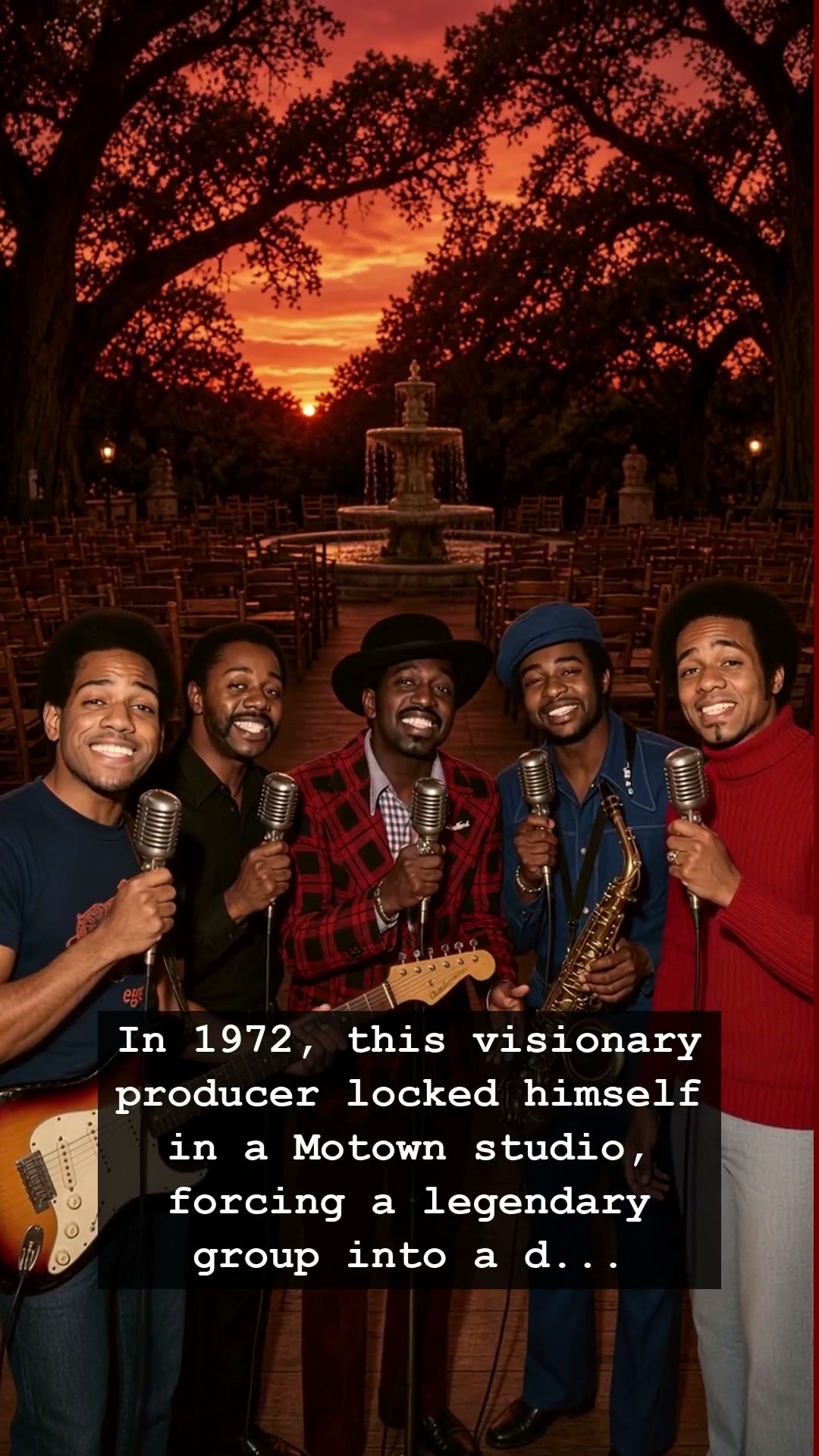
The year was 1972, and the air inside the Motown studios in Detroit felt heavy, thick with the scent of stale coffee and the palpable tension of creative friction. Norman Whitfield, a production genius with a vision that extended far beyond the polished, upbeat pop formulas that defined the label, was onto something dangerous. He had a track in mind—a sprawling, haunting odyssey that didn’t just push the boundaries of R&B; it shattered them completely. He locked the doors of the studio, turning the recording space into a pressure cooker, and forced The Temptations to step into a dark, psychedelic landscape they initially despised. They were used to choreographed steps and smooth harmonies, not the grit and paranoia that Norman Whitfield was demanding from their souls.
The resulting masterpiece, Papa Was a Rollin’ Stone, was unlike anything heard on a transistor radio or a local jukebox at the time. It was a nine-minute descent into shadow, defined by a bassline that seemed to vibrate with the uncertainty of the post-Vietnam era. While Motown had spent years perfecting the art of the perfect three-minute hit, Norman Whitfield was interested in something deeper, perhaps even uncomfortable. He utilized orchestral strings that mimicked the feeling of a cold wind blowing through an empty alley, stripping away the comfort of traditional soul to expose the jagged edges of human struggle. The band members reportedly hated the repetitive, monotonous recording process, yet Norman Whitfield remained unmoved, convinced that the hypnotic tension would eventually capture lightning in a bottle.
Looking back at that era, it is clear that Norman Whitfield was a pioneer of the psychedelic soul movement. He understood that the late 60s and early 70s were shifting toward a grittier, more introspective reality. Outside those studio walls, the world was changing rapidly; the innocence of the early Motown years was fading into the complex social tensions of the 70s. Norman Whitfield acted as an architect of this mood, channeling the frustration and the artistic ambition of his collaborators into a soundscape that felt cinematic, bleak, and undeniably profound. It was a risky gamble that transformed the trajectory of soul music forever.
When the track finally hit the airwaves, the public was captivated. It wasn’t just a song; it was a moody, atmospheric statement that proved R&B could hold its own against the most experimental rock of the period. Even today, decades after the vinyl era, that iconic bassline remains a masterclass in tension and release. It stands as a testament to the uncompromising nature of Norman Whitfield, a man who pushed his artists past their comfort zones to create music that echoed the internal lives of his listeners.
We often look back at the golden age of music with a soft, romanticized lens, forgetting the intense, sometimes volatile battles that occurred behind closed studio doors. But it is precisely because of that conflict—the clash of visions between a perfectionist like Norman Whitfield and his legendary subjects—that we have records that still move us to our core. Next time you hear that familiar, haunting beat, remember the locked doors, the long hours, and the visionary who dared to drag soul music into the dark.