
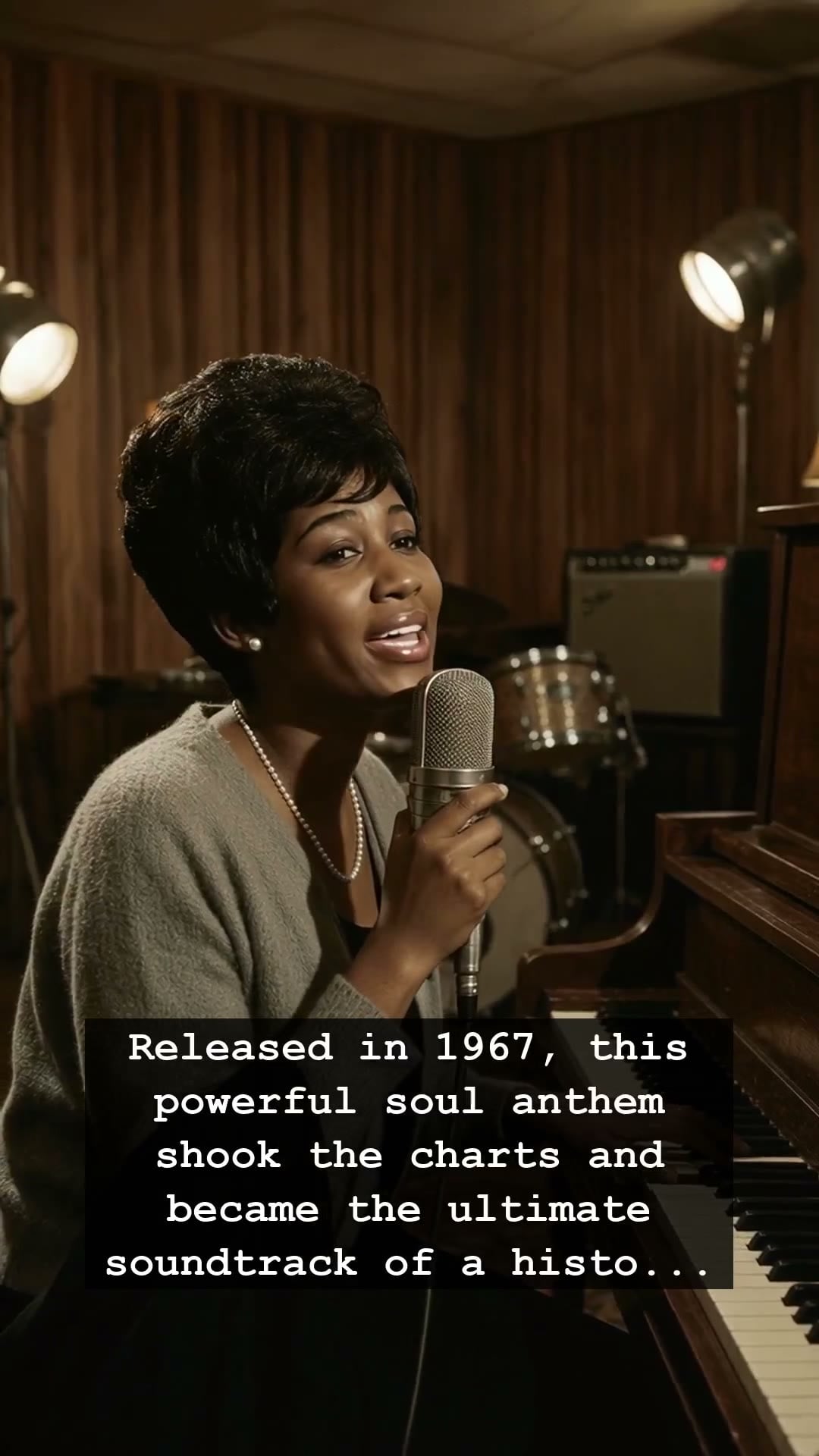
The year was 1967, and the air across America felt like a live wire ready to snap. In the smoky corners of neighborhood bars and the vibrant glow of local jukeboxes, a sound began to resonate that was far more than just a melody. It was the voice of Aretha Franklin, delivering a raw, uncompromising masterpiece that would soon define a generation. When she belted out the word Respect, she wasn’t just singing a catchy tune; she was demanding a shift in the cultural gravity of the United States. For millions of listeners, that record became the unofficial heartbeat of the Civil Rights Movement, an anthem that fueled the fight for dignity with every single note.
Behind the legendary success of this track lies a history as complex as the woman who sang it. Aretha Franklin was already a veteran of the music industry by the time she hit the studio for Atlantic Records, but she was searching for the spark that would ignite her true potential. Otis Redding had written the original version as a song about a man wanting his wife to come home and serve him, but Aretha completely dismantled his perspective. She took the song, rearranged the rhythm, added the iconic R-E-S-P-E-C-T spelling, and injected it with a fierce, feminine strength that turned the narrative upside down. It was a bold artistic rebellion that transformed a domestic plea into a global demand for social equity.
The cultural impact was instantaneous. As the sounds of Motown and Soul music dominated the airwaves, Aretha Franklin stood at the center of the storm. Her voice provided the soundtrack to a turbulent era marked by protests, Woodstock aspirations, and the constant friction of societal change. Listening to the song today, one can almost feel the static of a vintage transistor radio or the heavy thrum of a record player needle dropping on a vinyl disc. It captures the specific, electrifying tension of the late 1960s, a time when music served as the primary vessel for collective hope and defiance.
Yet, the brilliance of Aretha Franklin went beyond the anthem itself. She navigated a cutthroat industry where the studio system often demanded compliance, yet she maintained a creative sovereignty that few of her contemporaries could match. While others were carefully polished for the pop charts, Aretha brought the authentic soul of the gospel church to the mainstream. She understood that music could be a weapon for justice, and she wielded her vocal power with the precision of a master craftsman. The legacy of that 1967 recording remains etched in the bedrock of American history, reminding us that true art doesn’t just entertain—it challenges the world to be better.
Even decades later, whenever the opening chords of that song fill a room, the atmosphere shifts instantly. It is a testament to the enduring influence of Aretha Franklin, a woman who didn’t just top the charts, but changed the way we listen to each other. Whether you were there in 1967 or are discovering the magic of this era for the first time, the message remains as urgent and powerful as it was the day it was released. We still live in the shadow of the movement she helped define, and perhaps, that is the greatest tribute we can pay to the Queen of Soul.