
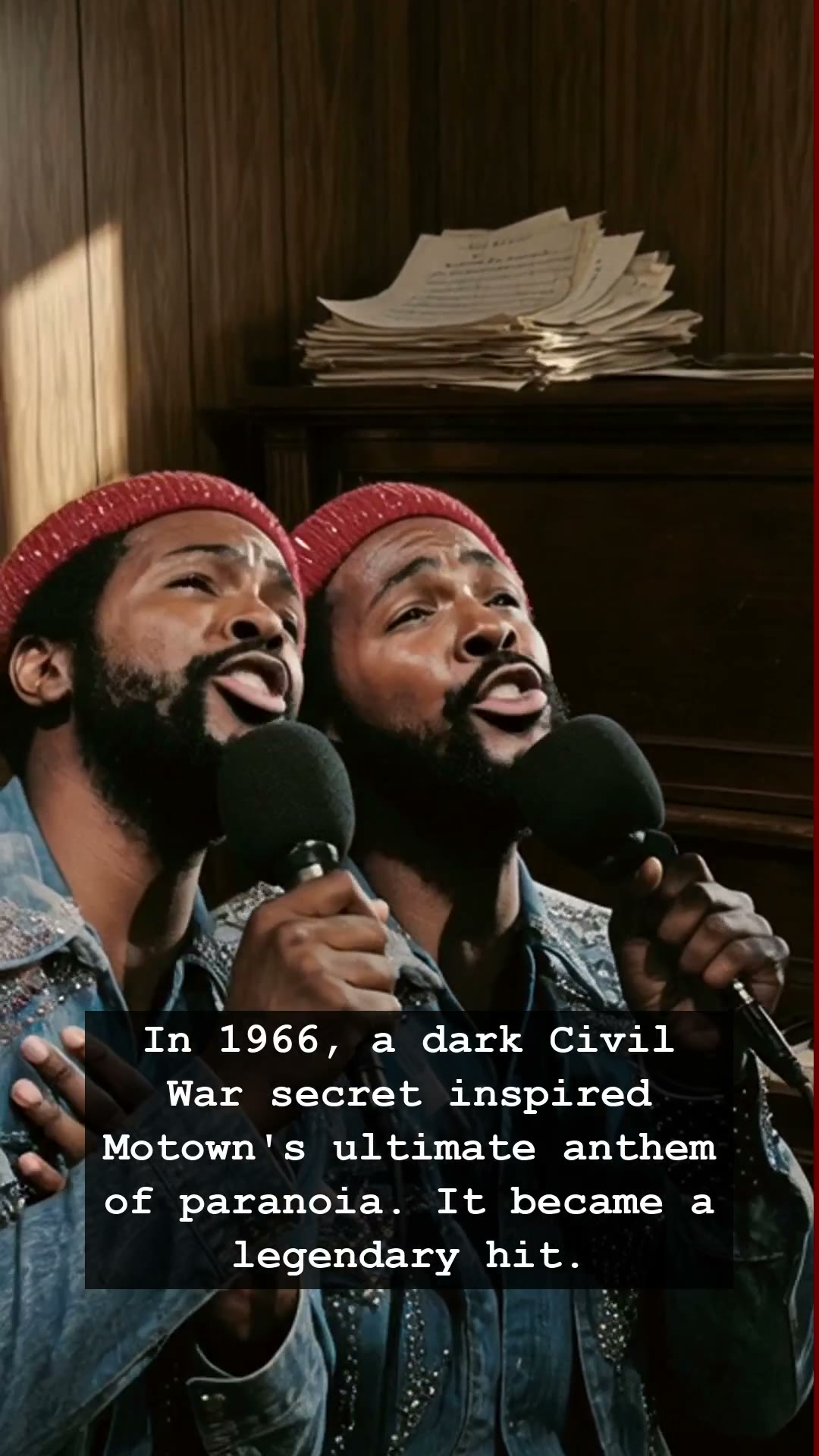
It was 1966, a year when the airwaves were thick with the promise of change and the lingering shadow of the Vietnam conflict. Inside the cramped, creative furnace of Hitsville U.S.A., a song was being forged that would eventually become the definitive anthem of suspicion and psychological unrest. Many remember Marvin Gaye for his silky, soulful delivery, but the genesis of his legendary hit, I Heard It Through the Grapevine, was far more jagged and unsettling than the polished Motown production suggests. It was a track built on the architecture of paranoia, a masterpiece that captured the feeling of a world unraveling behind closed doors.
The phrase through the grapevine itself holds a dark, historical weight that few listeners ever stop to consider. It traces its ancestry back to the Civil War era, where it served as a telegraph idiom used by soldiers and civilians alike to describe the unreliable, often cryptic nature of intelligence passed along the lines. It was the language of betrayal and half-truths, a way to whisper secrets that could destroy lives before the sun went down. When songwriters Norman Whitfield and Barrett Strong brought this concept to Marvin Gaye, they tapped into something primal, a societal anxiety that mirrored the internal fractures of the American dream in the mid-sixties.
Marvin Gaye was not the first to attempt the song, but his rendition was the one that bled soul. While others had approached the track with a frantic pace, Gaye brought a cold, calculated sense of dread to the microphone. The arrangement, with its iconic, menacing bassline and that haunting, shimmering keyboard, created a claustrophobic space where the listener felt like they were eavesdropping on a private tragedy. He didn’t just sing the lyrics; he lived the crushing realization of a partner’s infidelity, projecting the heavy weight of an era where truth was becoming increasingly elusive.
Recording at the height of the Motown dominance, Marvin Gaye struggled with the perfectionism that defined his career. He would spend hours in the studio, pacing the floor, searching for the exact vocal inflection that could convey the visceral shock of hearing the news that his love was fading. This was an age of analog tapes and tape-hiss, where the mechanical limitations of the studio somehow added to the desperate, lonely quality of his voice. The song eventually became a cultural phenomenon, a jukebox staple that echoed in diners and radio stations across the nation, yet it remained, at its core, a song about the fragility of human trust.
Decades later, the song remains a haunting testament to the genius of Marvin Gaye and the dark, rhythmic heart of the Motown sound. It bridges the gap between the battlefield telegraph lines of the 19th century and the sophisticated R&B landscape of the 1960s. When you listen to it today, on a crackling record player or through modern streaming, the paranoia feels as fresh as it did the day it was recorded. It serves as a reminder that even the most beautiful melodies are often born from the deepest, most uncomfortable secrets we carry.