
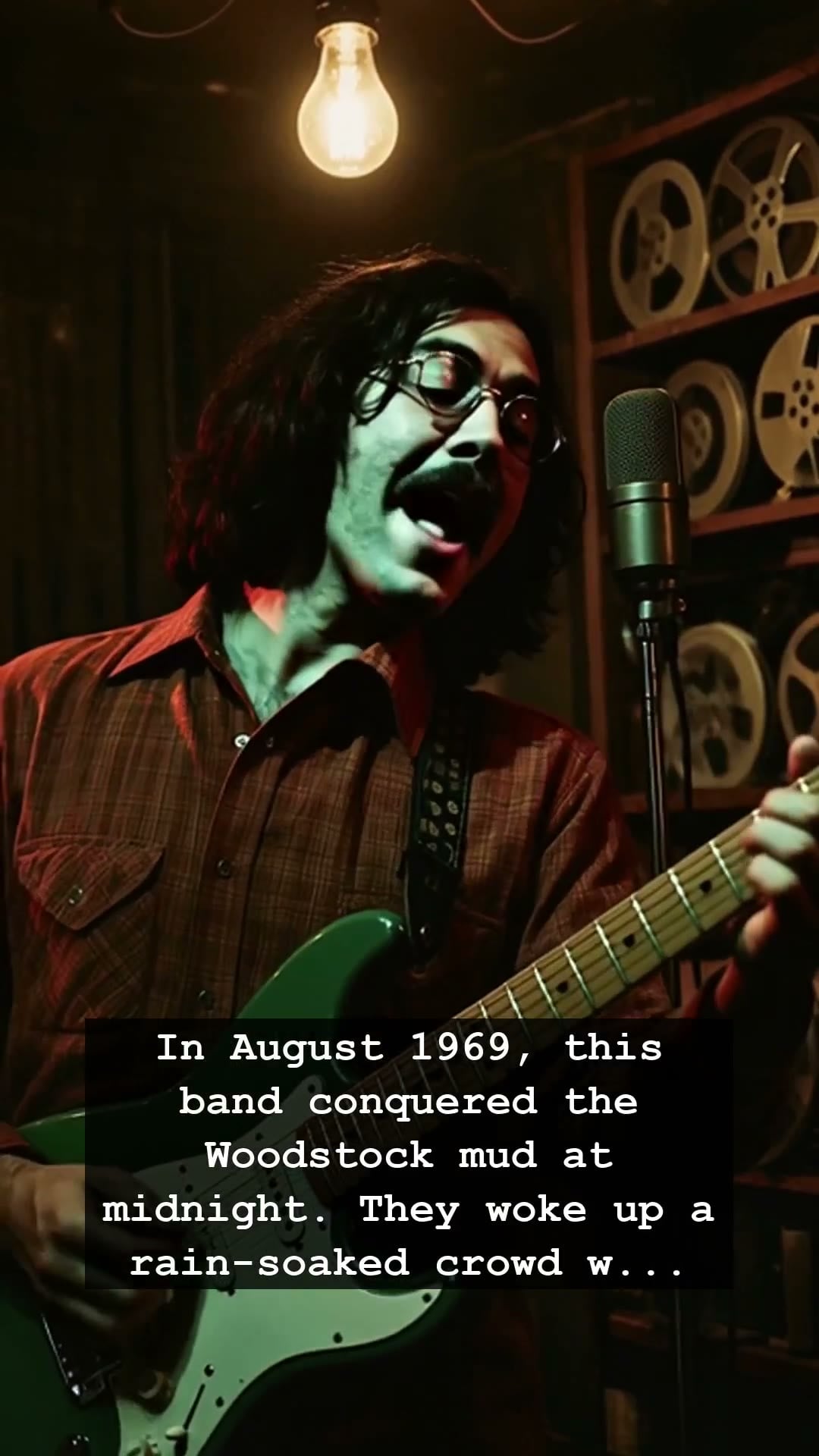
The air at Bethel was thick with the scent of damp earth, unwashed bodies, and the suffocating weight of three days of chaos. It was August 1969, and the legendary Woodstock festival had largely devolved into a muddy, surreal fever dream. As the clock crawled past midnight, the audience lay sprawled in a half-conscious stupor, exhausted by the rain and the aimless psychedelic wandering of the acts that had preceded them. The festival was effectively asleep, paralyzed by the elements and the sheer exhaustion of the counterculture. Then, a raw, swampy, and unmistakably American sound tore through the darkness. Creedence Clearwater Revival stepped onto that iconic stage, not as flower children, but as a gritty working-class machine ready to drag the crowd back to reality.
John Fogerty and his bandmates, Creedence Clearwater Revival, were an anomaly in the hazy landscape of late sixties rock. While their peers were experimenting with lengthy, indulgent guitar solos and spacey synthesizers, the band delivered blue-collar, punch-in-the-gut rock and roll. When they opened their set, the atmosphere shifted instantly. The mud didn’t matter anymore; the rain was just a backdrop to the blistering rhythm of songs like Born on the Bayou and Proud Mary. They didn’t need elaborate stage shows or acid-drenched light effects. They relied on the pure, unfiltered tension that had been building within the band—a tension that would eventually tear them apart, but that night, it served as a weapon of musical mass mobilization.
Historians often overlook the Creedence Clearwater Revival set at Woodstock because the band famously insisted they be left out of the original documentary film. Perhaps it was a tactical error, or perhaps it was their own internal friction, but that exclusion only added to the mythology of their midnight performance. They were the bridge between the fading rockabilly era and the oncoming storm of the seventies. Seeing the crowd transform from a soggy, lethargic mass into a cheering, stomping army was a testament to the band’s raw power. They were the heartbeat of an America that was rapidly changing, providing a gritty soundtrack for a generation lost in the transition between the dream of the sixties and the cynicism of the decade to come.
Looking back, the success of Creedence Clearwater Revival during that midnight hour serves as a reminder of how powerful honest music can be when the lights go out and the crowd is at its most vulnerable. Their presence was a grounding force in a weekend that often felt like it was floating away into space. The internal drama that plagued the brothers and bandmates behind the scenes is legendary, a dark cloud that grew as their fame skyrocketed, but for those few hours in the dark, their unity was absolute.
Decades later, the echoes of that performance still resonate in the dusty grooves of old vinyl records. When you play their tracks today, you aren’t just hearing rock music; you are hearing the sound of a band that refused to let the lights go out on their moment. Do you remember where you were when you first heard their rhythm take hold of your soul?