
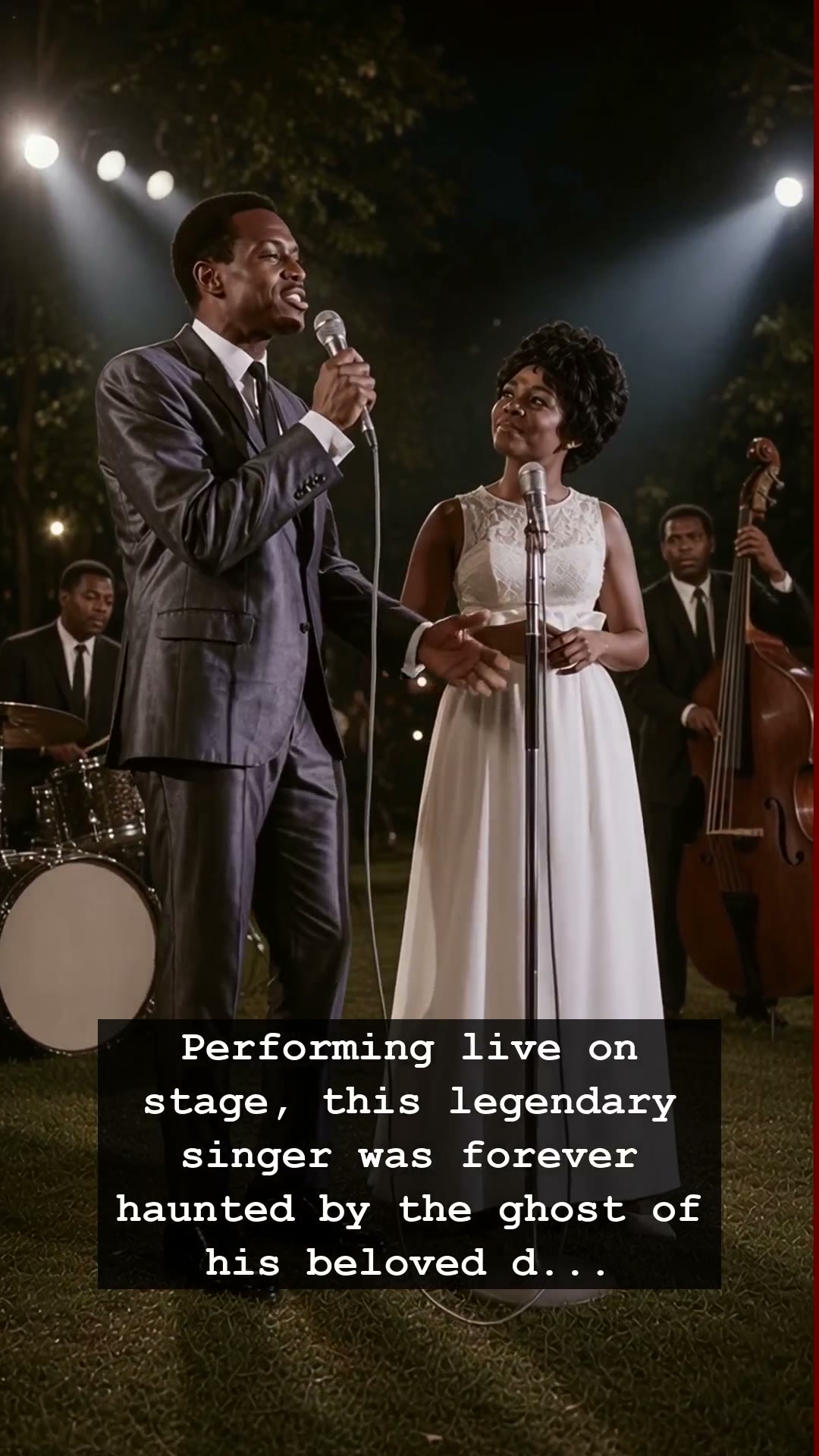
The stage lights at the Motown revue were never just instruments of illumination; for Marvin Gaye, they were often portals to a devastating past. By the late 1960s, the golden era of soul music was defined by the electrifying chemistry between Marvin Gaye and his duet partner, Tammi Terrell. They were the faces of love on every transistor radio, their voices intertwining with a seamless, honeyed perfection that felt destined. But behind the shimmering curtain of their hits, a tragedy was unfolding that would leave a permanent scar on the soul of American music.
It began on a night in 1967 when Tammi Terrell collapsed into Marvin Gaye’s arms during a performance. The world thought it was exhaustion, but the truth was a cruel diagnosis: a brain tumor that would eventually claim her life. As her health spiraled, the studio became a sanctuary where their spirits could still dance together. Marvin Gaye was reportedly devastated, struggling to record their final tracks as Tammi’s physical presence waned. He carried the weight of her fading light, turning their duets into a haunting eulogy for a woman who was the vibrant heartbeat of his professional and personal world.
Even after Tammi Terrell passed away in 1970 at the heartbreaking age of 24, her ghost remained a constant specter in Marvin’s life. During his subsequent performances, spectators often noted an eerie, distant quality in his eyes whenever he reached the parts of their songs once sung by her. It was as if he were not singing alone, but dueting with a phantom frequency that only he could hear. For Marvin Gaye, every note of Ain’t No Mountain High Enough became an act of profound mourning, a desperate attempt to summon the grace of a partner who had been stolen by fate far too soon.
This era of Motown was defined by a polished, sophisticated charm, yet the story of Marvin Gaye and Tammi Terrell serves as a raw reminder of the human cost behind the vinyl grooves. While listeners were lost in the rhythmic joy of the Jukebox era, these two artists were navigating the fragile intersection of fame and mortality. Their music became a testament to a connection that transcended the physical realm, echoing through the empty spaces of recording booths and onto the grand, glowing stages that felt hollow without her presence.
Decades later, the tragedy of their partnership continues to resonate with those who look beyond the upbeat soul melodies. It is a story of artistic devotion and the lingering echo of a voice that refused to be silenced by death. When we listen to their records today, we aren’t just hearing a song; we are hearing a man haunted by the ghost of his greatest musical love. Marvin Gaye eventually moved into his own complex, tortured genius, but he never truly stopped sharing the microphone with the memory of Tammi Terrell. Sometimes, the most beautiful music is the kind that carries the heaviest ghosts.