
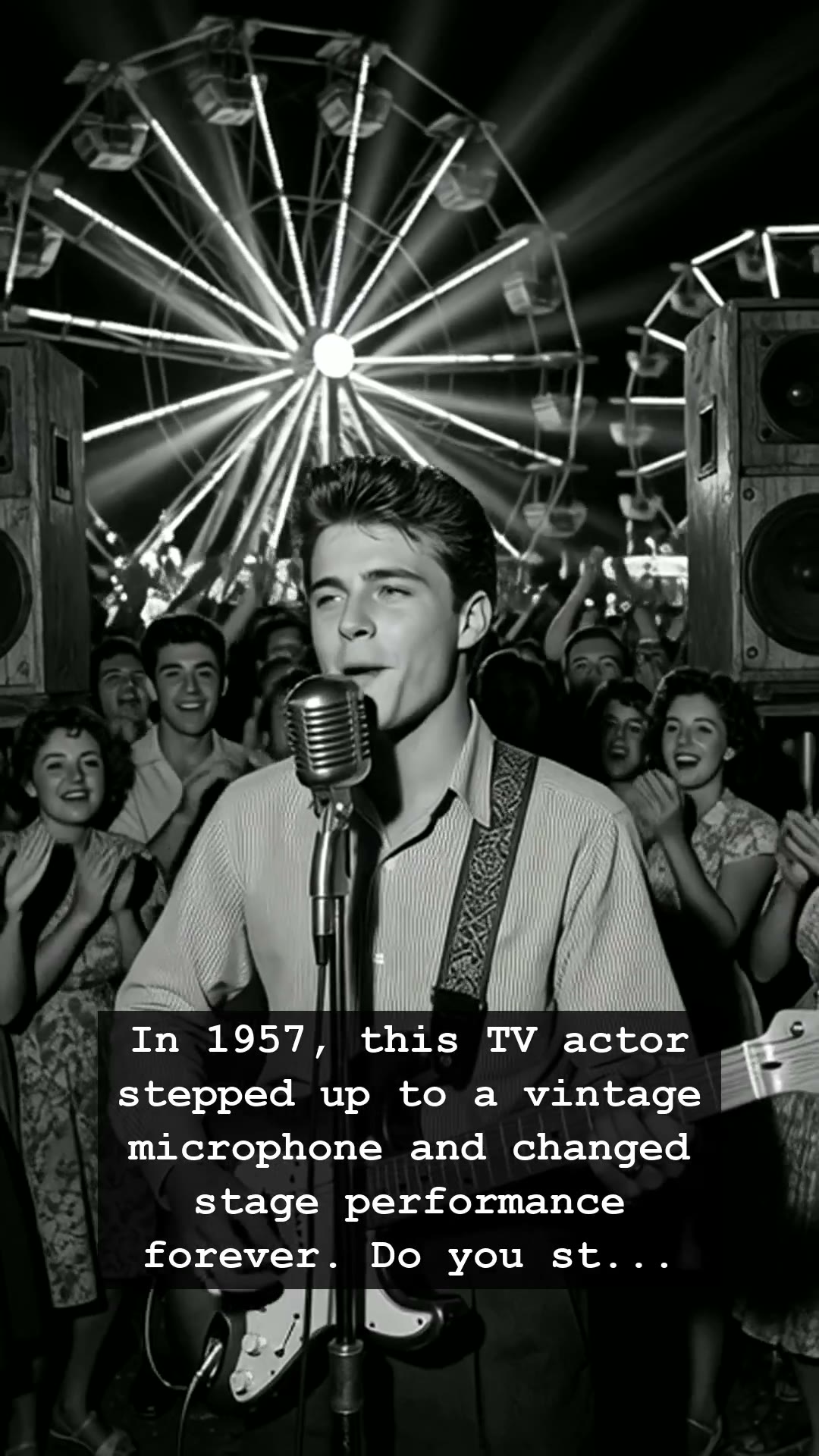
In 1957, a young television actor stepped up to a vintage microphone and completely changed rock and roll stage performance forever. Do you still remember him? Long before the era of MTV and stadium tours, teenagers across America huddled around glowing television sets to watch The Adventures of Ozzie and Harriet. They tuned in for wholesome family sitcom comedy, but they stayed for a quiet revolution. That teenage idol was Ricky Nelson, a boy next door whose silky voice and effortless charm managed to bridge the gap between Hollywood acting and raw musical rebellion.
Picture the scene in late 1957. The Jukebox era was in full swing, spinning shellac records packed with the dangerous, rebellious energy of early Elvis Presley and Jerry Lee Lewis. Ricky Nelson decided he wanted a piece of that musical pie. He recorded a cover of Fats Domino’s I’m Walkin’ and convinced his parents to let him perform it on the family television show. It was a massive gamble that paid off beyond anyone’s wildest dreams. Millions of households watched in absolute awe as this clean-cut actor transformed into a bona fide rock and roll heartthrob right before their eyes.
That single television broadcast triggered an overnight sensation that sent shockwaves through the music industry. The song soared up the charts, proving that television could act as the ultimate launchpad for pop music supremacy. But Ricky Nelson was not content with just being a manufactured TV product. He possessed a genuine love for music, quickly pivoting toward country rock and gathering some of the finest studio musicians in the business to back him up. He wanted artistic respect, not just teenage screams. Yet, fame in the late fifties came with a heavy, suffocating price tag and a darker underbelly of immense personal pressure.
By the time the turbulent late sixties rolled around, Ricky Nelson had traded his pristine television image for long hair, velvet jackets, and a pioneering sound that blended traditional country with driving rock rhythms. He hit the road, traveling relentlessly to connect with fans in sweaty venues and packed auditoriums. But audiences can be fickle beasts. In 1971, he experienced a brutally humbling night at Madison Square Garden during a rock and roll revival concert. When he stepped on stage wearing modern clothes and playing new original music instead of his old 1950s hits, the crowd booed him mercilessly. That painful rejection inspired his bittersweet anthem Garden Party, a poignant reminder of the relentless struggles of an artist trying to evolve while fans desperately demanded the past.
Today, the legacy of Ricky Nelson echoes through the very DNA of modern music culture, reminding us of the heavy tolls exacted by early fame. He proved that television could birth a rock star, but his lifelong journey showed that true artistry requires constant reinvention and staggering courage. When we drop the needle on a vintage vinyl record today and hear his smooth, timeless voice drift through the room, we are transported straight back to an innocent yet complicated golden age. Do you remember the first time you heard his timeless melodies, and what classic track still takes you back to your youth?