
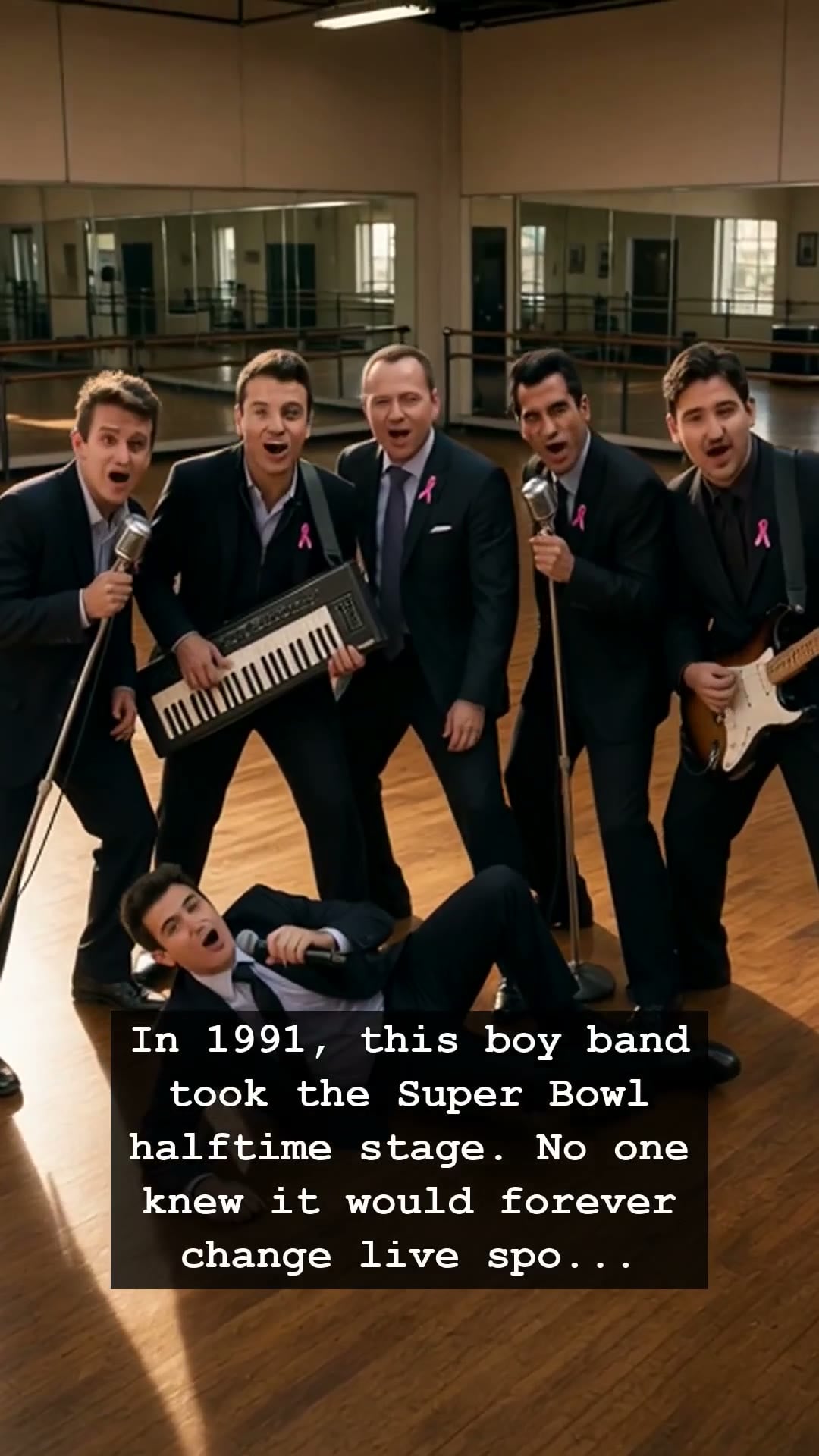
The year was 1991, and the world of sports television was a far cry from the high-octane sensory overload we experience today. Before the era of billionaire-budget light shows and viral choreography, the Super Bowl halftime performance was a modest affair, often relegated to collegiate marching bands and forgotten drill teams. That all changed when New Kids on the Block stepped onto the stage at Tampa Stadium. In an instant, the landscape of live entertainment shifted, proving that a global sports audience was ready to embrace the pure, unadulterated energy of a pop phenomenon. It was a cultural earthquake disguised as a halftime show, forever blurring the lines between the grit of the gridiron and the glitter of the billboard charts.
At the height of their meteoric rise, Jordan Knight, Jonathan Knight, Joey McIntyre, Donnie Wahlberg, and Danny Wood were more than just a boy band; they were a movement. Before the era of the internet, they commanded arenas with the sheer force of a million screaming fans wielding Walkmans and cassette tapes. Their presence at the Super Bowl XXV stage served as a definitive declaration that the pop music industry had finally eclipsed traditional entertainment. For a generation of teenagers watching on chunky CRT televisions, seeing New Kids on the Block under the stadium lights felt like a validation of their own obsession. It was the moment that proved pop stars could command a stage as massive as the Super Bowl, paving the way for the spectacles we see decades later.
However, the reality behind the polished performance was far more grueling than the audience ever realized. Behind the neon outfits and the synchronized dance moves, New Kids on the Block were living in a pressure cooker of exhaustion and industry scrutiny. The late eighties and early nineties were a time of relentless touring schedules and manufactured perfection. Being the faces of a massive musical juggernaut meant sacrificing personal autonomy, leading to the internal friction that often plagues bands at the peak of their influence. While the crowd cheered, the group was navigating the turbulent transition from teenage sensations to young men trying to survive a machine that demanded they remain frozen in time.
This specific performance remains a bittersweet touchstone for Gen X and Millennial fans. It brings back memories of a pre-digital world, where the connection to an artist felt raw and tangible, mediated through grainy VCR recordings and radio requests. The New Kids on the Block era represented the final, frantic gasp of the traditional boy band explosion before the music industry splintered into the grunge-dominated landscape of the mid-nineties. It was a fleeting, spectacular moment where pop culture and athletic prowess collided in the most improbable way possible.
When you look back at that 1991 footage today, the simplicity of it is almost charming. There were no drones or elaborate digital projections, just five guys from Boston giving everything they had to a crowd of millions. New Kids on the Block changed the Super Bowl not by trying to be everything to everyone, but by staying true to the pop energy that defined their decade. As we drift further from that iconic afternoon, the legacy of their performance lingers as a reminder of a time when the world stood still just to watch a pop band take the field, and in doing so, they forever rewrote the history of live sports entertainment.