
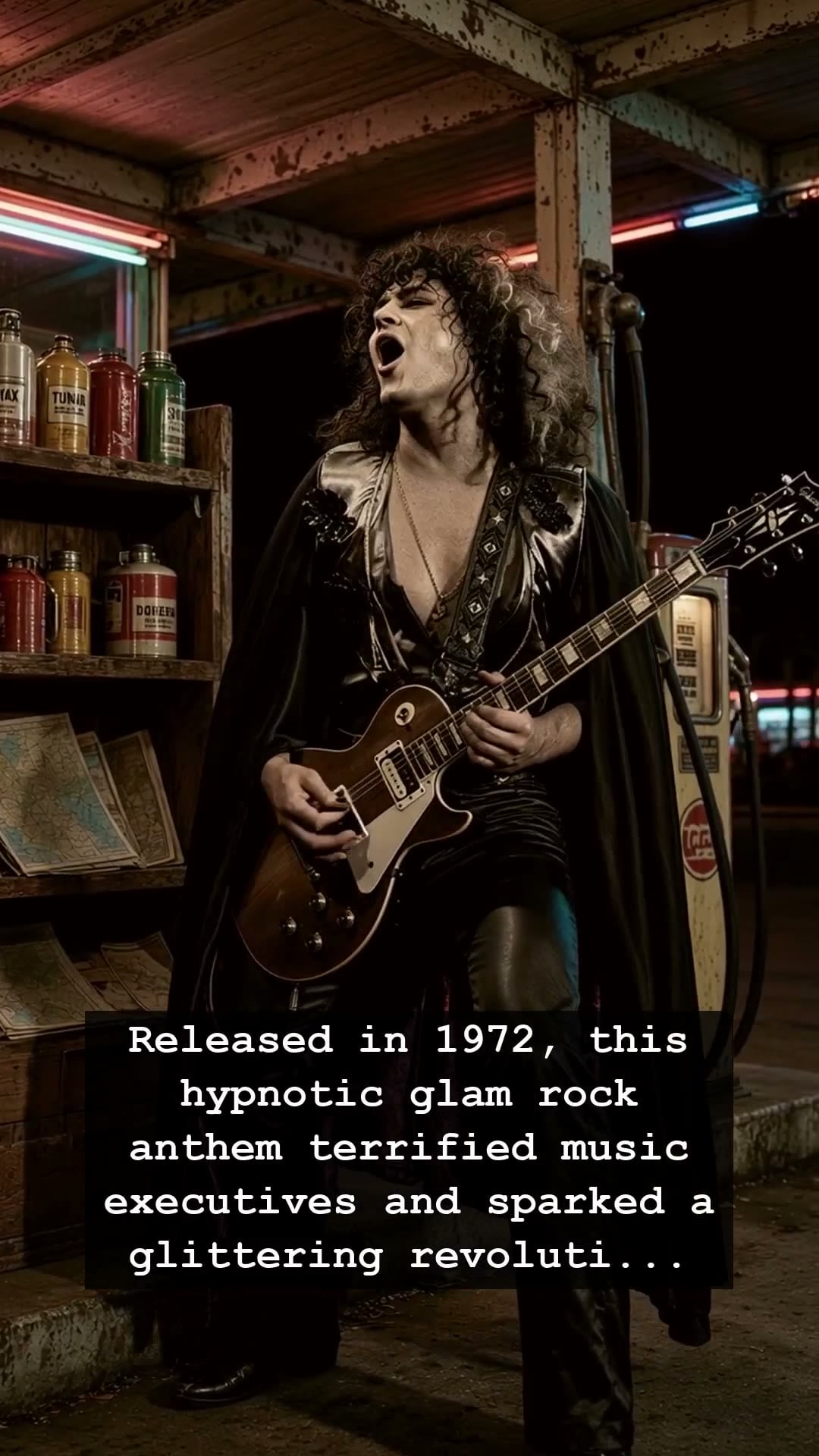
In 1972, the airwaves were dominated by the heavy, hypnotic stomp of a sound that felt like it had arrived from another planet. It was a time when music executives were clutching their pearls, terrified by the raw, glitter-drenched energy that Marc Bolan and his band T. Rex were unleashing upon the world. The song was a siren call for a generation tired of the fading, earnest folk anthems of the late sixties. With his cascading curls, feather boas, and a guitar tone that cut through the silence like a jagged shard of neon glass, Marc Bolan didn’t just perform; he presided over a glittering revolution that permanently altered the trajectory of rock and roll.
Before the world knew him as the high priest of glam rock, Marc Bolan was a wandering acoustic troubadour with a penchant for poetic, almost ethereal lyrics. But the transition to T. Rex marked a violent, glorious departure from his humble beginnings. As he swapped his acoustic guitar for a Les Paul, he discovered the power of the boogie. The studio sessions were charged with a volatile mix of ambition and ego, creating friction that would define the era. There was something dangerous about it, a deliberate defiance against the stoic rock gods of the time. Marc Bolan understood that rock was not just about the notes—it was about the spectacle, the theater of the absurd, and the intoxicating rush of fame.
This was the era of the jukebox and the early tremors of the MTV generation, a period where aesthetics became as vital as melody. Marc Bolan sat at the center of this storm, his influence stretching far beyond his own charts. He turned the stage into a personal runway, challenging the masculinity of the rock star archetype with heavy makeup and flamboyant velvet suits. Behind the scenes, the pressure was immense. The touring lifestyle, fueled by late-night parties and the relentless demands of a fickle public, took its toll. Yet, in those moments under the blinding stage lights, Marc Bolan looked untouchable, a shimmering icon leading his legion of fans into a new, decadent reality.
The genius of Marc Bolan lay in his ability to blend infectious, simple hooks with a sense of otherworldly mystery. While his peers were exploring complex, long-winded psychedelic jams, T. Rex kept it tight, punchy, and irresistibly danceable. It is why those records still resonate today; they possess a timeless energy that refuses to age. Even when the glitter eventually faded and the trends shifted toward the synthesizers of the eighties, the sonic footprint of T. Rex remained a bedrock for every artist who understood that style is a form of substance.
Looking back at that golden era of 1972, we remember Marc Bolan not just as a musician, but as a cultural spark plug who dared to make rock fun, dangerous, and impossibly beautiful again. His life was cut tragically short, but the echoes of his heavy stomp still ring out in the halls of music history. As you spin those vintage records today, you can still feel the magic he wove—a reminder that music, at its core, should always feel like a revolution.