
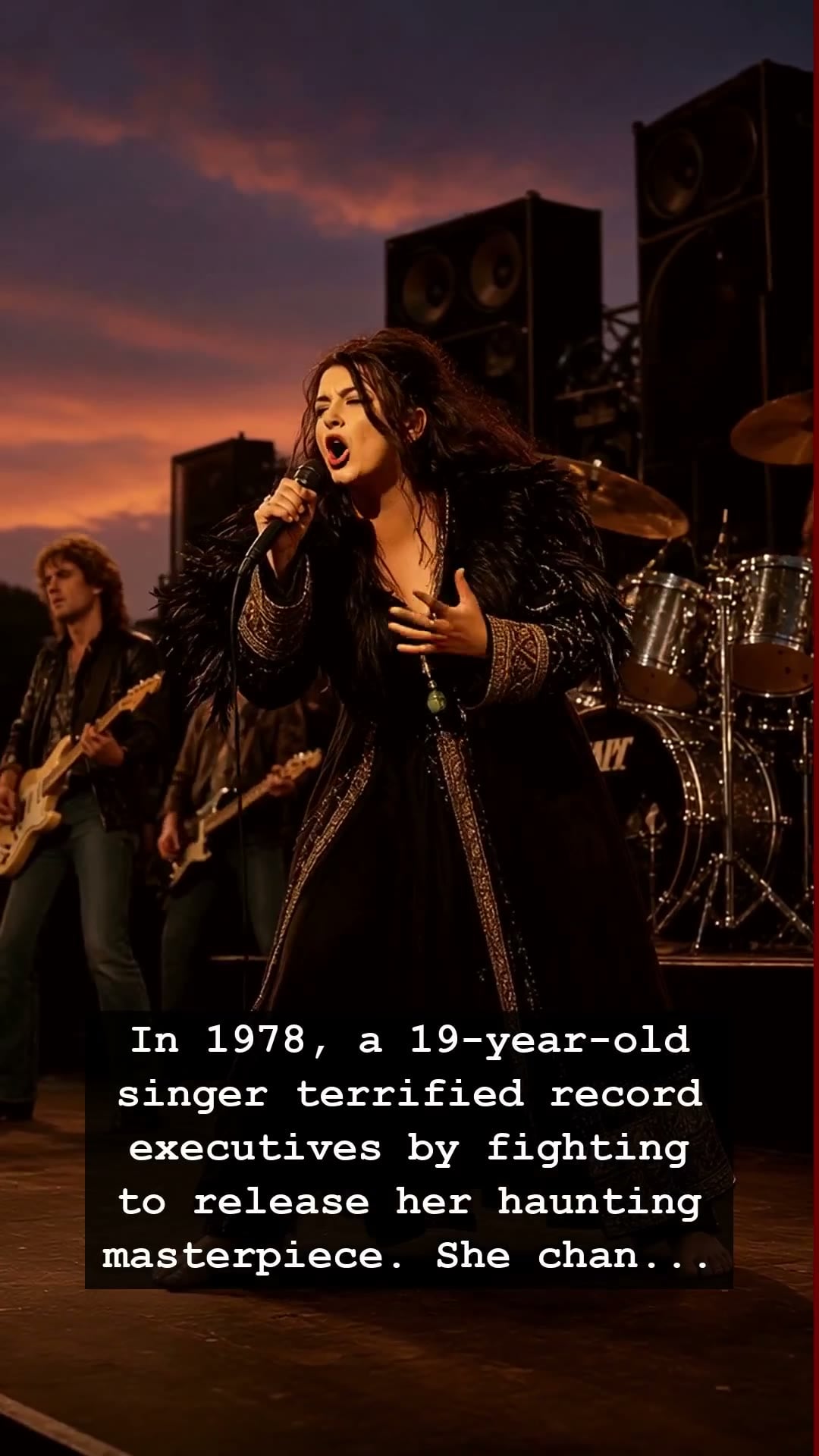
In 1978, the neon-soaked excess of the decade was just beginning to stir, but in the sterile boardrooms of the British music industry, a quiet storm was brewing. A nineteen-year-old girl with an otherworldly voice and a penchant for interpretive dance stood before a room of grizzled, skeptical executives. They wanted a safe, radio-friendly pop star, but Kate Bush had something far more haunting in mind. She stood her ground, demanding that her debut single be a sprawling, operatic adaptation of Emily Bronte’s literature. The executives were terrified; they feared it would be commercial suicide. Instead, it became one of the most pivotal moments in pop history.
That song was Wuthering Heights. When it finally hit the airwaves, played on bulky wooden stereos and crackling jukeboxes, it didn’t just climb the charts; it defied the gravitational pull of the late seventies. While the world was dancing to the synchronized glitz of Disco, Kate Bush offered something visceral, eccentric, and utterly unhinged. Her voice, shifting between ethereal highs and ground-level whispers, cut through the noise like a jagged glass shard. It wasn’t just a track; it was a sensory performance that made listeners pause, turn up the volume, and wonder if they were hearing a ghost or a future legend.
The drama behind the scenes was as intense as the music itself. EMI executives had pushed for a safer, more conventional track, but Kate Bush possessed an iron will that belied her youthful appearance. She refused to be a manufactured product. This struggle between artistic integrity and the cold, mechanical nature of record labels defined the era of the late 1970s. For a young woman to assert such total creative control before the age of twenty was practically unheard of, making her an instant icon for those who felt the industry was losing its soul to corporate polish.
Looking back, the success of Kate Bush served as a bridge between the introspective folk of the early seventies and the avant-garde art pop that would define the eighties. She turned the recording studio into a laboratory, experimenting with sounds that were far ahead of their time. Long before MTV brought visual storytelling to every living room, Kate Bush was already using her music as a canvas for complex, gothic, and deeply emotional narratives. She was the original architect of the cinematic pop experience.
Decades later, that same magic remains undimmed. Whether you first heard her on a dusty vinyl record or through the modern lens of streaming, the haunting melody of her breakout hit still resonates with a timeless, eerie beauty. It reminds us of a time when pop stars were not just performers, but storytellers willing to take risks that scared the establishment. Kate Bush taught us that the most powerful music is the kind that refuses to conform. So, the next time you hear those opening piano chords, close your eyes and remember the teenager who stood up to a room full of suits and changed the world forever.