
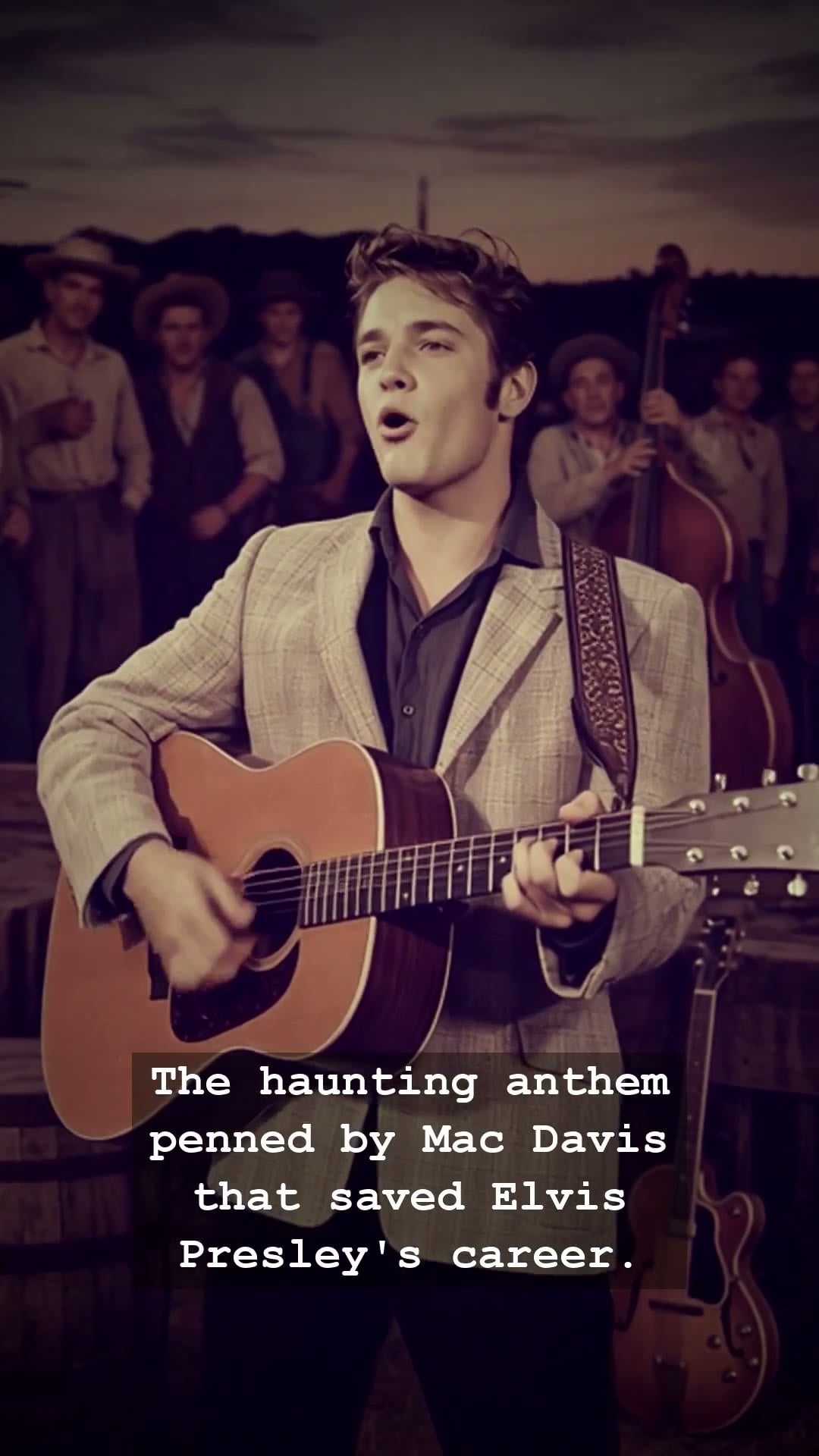
The year was 1969, and the King of Rock ‘n’ Roll was staring into the abyss of cultural irrelevance. Elvis Presley had spent the better part of the decade trapped in the formulaic monotony of B-grade Hollywood musicals, while the rest of the world was tuning into the gritty, revolutionary sounds of the counterculture. The jukeboxes were shifting away from his signature croon, and the industry had already begun to write his musical obituary. He needed a miracle, a song that would strip away the sequins and remind the world that behind the hype was a man with a soul. That miracle arrived in the form of a devastatingly honest ballad written by a then-rising songwriter named Mac Davis.
Mac Davis, a man who would eventually carve out his own legendary career, understood something that many of the King’s handlers missed. He saw the urban landscape of the late sixties—a time of social unrest and stark economic disparity—and channeled it into a haunting narrative titled In The Ghetto. When he presented the track to Elvis Presley, he wasn’t just offering a song; he was offering a lifeline. The lyrics, which tell the tragic cycle of poverty on the cold streets of Chicago, were a radical departure from the upbeat rockabilly hits that had defined Elvis Presley’s early days. It was a gritty, social commentary that felt entirely out of place for a man known for his hip-shaking lightheartedness, yet it was exactly what the doctor ordered.
Recording at the famed American Sound Studio in Memphis, the atmosphere was thick with tension and anticipation. Elvis Presley approached the microphone with a gravitas he hadn’t displayed in years. Mac Davis watched as the legend breathed fiery life into the character of the abandoned child and the desperate father. There were no flashy costumes here, just the raw vulnerability of a voice that had been stifled for too long. When Elvis hit those low, aching notes, everyone in the studio knew they were witnessing a resurrection. The song wasn’t just a hit; it was a total reclamation of his identity as a serious artist capable of profound storytelling.
Upon its release, In The Ghetto became an instant sensation, proving that the King had not lost his touch. It topped charts globally and cemented a creative partnership between Elvis Presley and Mac Davis that would yield several more hits, including the high-octane Burnin’ Love. Yet, it is the haunting stillness of In The Ghetto that remains the most significant, as it bridged the gap between the fading golden age of the fifties and the socially conscious music of the seventies. It served as a stark reminder that even the biggest icons are only as good as the stories they choose to tell.
Decades later, the song remains a haunting anthem that echoes through history, reminding us of the thin line between stardom and obscurity. It stands as a testament to the fact that when art is born from true, raw emotion, it never truly fades. Whenever we hear that iconic opening guitar pluck, we are transported back to that pivotal moment in Memphis where Mac Davis helped Elvis Presley find his footing again. It serves as a beautiful, melancholic reminder of the power of a song to change a life forever. Next time you drop the needle on this track, listen closely to the desperation in the air; you are hearing the sound of a legend reclaiming his throne from the shadows.