
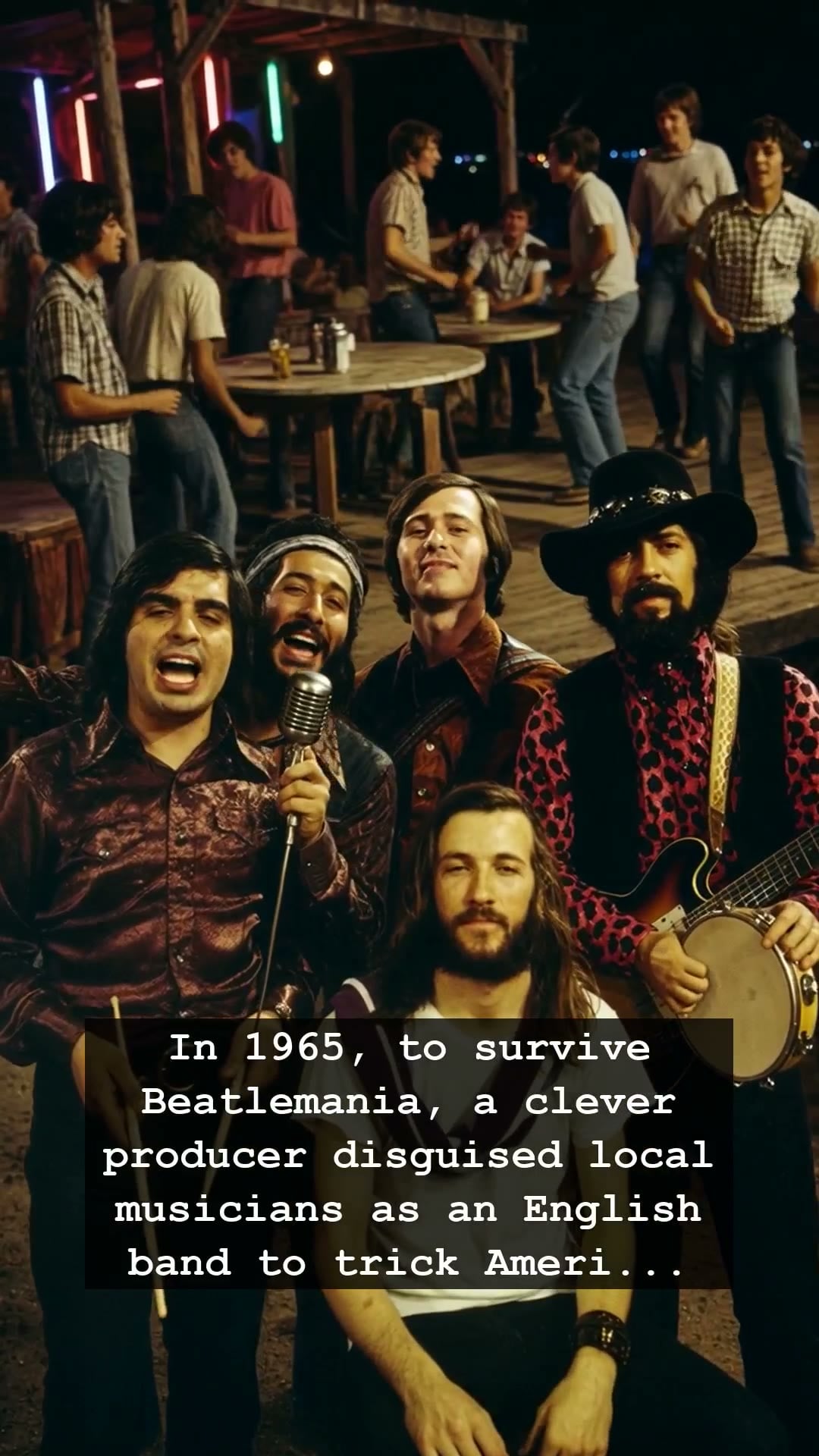
The year was 1965, and the American airwaves were practically choking on the British Invasion. If you turned on your transistor radio or strolled past a bustling jukebox, you heard nothing but the polished, mop-topped sounds of Liverpool. American musicians were terrified. Their local records were gathering dust, ignored by DJs who were suddenly obsessed with everything crossing the Atlantic. In the heart of Texas, producer Huey Meaux saw his local talent struggling to compete, so he cooked up a scheme that remains one of the most audacious, hilarious, and successful acts of musical deception in rock and roll history.
Meaux took a group of genuine, soulful Texas musicians—Doug Sahm, Augie Meyers, and their bandmates—and decided that if the public wanted the British sound, he would give them a counterfeit version. He dressed the group in sharp mod suits, gave them a mysterious, vaguely international name, and pushed the Sir Douglas Quintet onto the airwaves. When the record She’s About a Mover started climbing the charts, the American public was convinced these were the newest sensations from across the pond. The accents were faked, the branding was meticulously curated, and for a brief, breathless moment, nobody suspected the truth.
The genius of the Sir Douglas Quintet wasn’t just in the charade; it was in the music itself. While the aesthetic was designed to satisfy the cravings of a teen pop culture obsessed with The Beatles, the actual sound was a gritty, infectious blend of Tex-Mex, swamp blues, and organ-driven rock. Doug Sahm, with his gravelly voice and authentic charisma, was never truly a British mod, yet he captured that specific mid-sixties energy with an effortless cool. The ruse eventually fell apart when the band stepped onto a stage and their undeniable Texas drawl betrayed their humble origins, but by then, the world was already hooked.
Looking back at this moment through the lens of nostalgia, the story of the Sir Douglas Quintet feels like a snapshot of a more innocent, yet intensely competitive era. Before the globalized internet flattened the landscape of musical discovery, these regional pockets of talent had to fight tooth and nail for space on the Billboard charts. The story of their deception reflects the desperate creativity required to survive in an industry that had suddenly shifted its gaze overseas. It is a testament to how the art of the ‘hook’ was just as important as the hook in the song itself.
Today, the legacy of the Sir Douglas Quintet transcends that silly 1965 marketing stunt. They went on to become one of the most influential bands in Texas music history, bridging the gap between rock, country, and soul. Every time I hear that iconic, swirling Vox organ opening in She’s About a Mover, I am transported back to an era of AM radio and high-stakes drama. It serves as a reminder that the best music often comes from the most unlikely places, even when it is hiding in plain sight behind a tailored suit and a fabricated accent.