
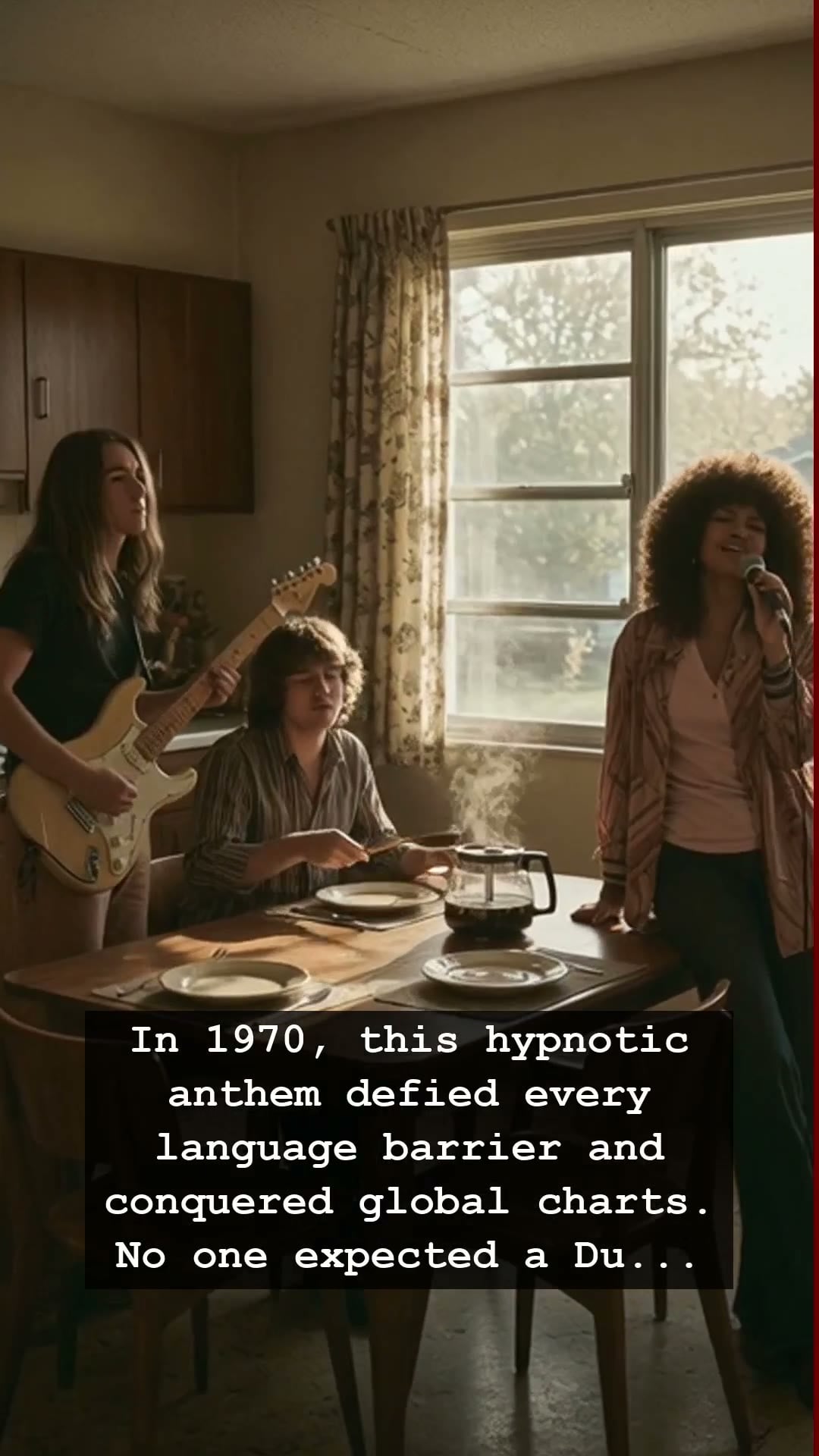
It was 1970, and the world was changing. The golden age of the jukebox was beginning to shift, and the airwaves were dominated by the heavyweights of the British Invasion and American soul. Yet, out of the small, unassuming corners of the Netherlands, a band emerged that would defy every linguistic barrier and musical expectation. Shocking Blue arrived not with a whisper, but with a hypnotic, guitar-driven roar that conquered global charts and etched their name into the annals of psychedelic rock history. For a brief moment, the world forgot about the giants of the West and surrendered to the electric pulse of a Dutch sensation.
The song, of course, was Venus. It is a masterpiece of simple, driving rhythm and Mariska Veres’s hauntingly soulful vocals that still sends shivers down the spine of anyone who experienced the transition from the late sixties into the experimental seventies. At the time, the mainstream music industry was a closed club, heavily guarded by American and British labels. For a band from The Hague to reach the top of the Billboard Hot 100 was more than just a hit; it was a revolution. It proved that in an era before globalized internet, the raw, magnetic energy of a truly great sound could transcend geography and language alike.
But the rise of Shocking Blue was not without its shadows. Behind the shimmering gold records and the bright lights of the television appearances, the band navigated the typical turmoil of mid-century stardom. There were creative clashes, the immense pressure of living up to a one-hit-wonder status, and the exhausting grind of touring a world that couldn’t quite decide if they were a novelty act or pioneers of a new genre. The beauty of their story lies in this friction; the contrast between the sunny, upbeat melody of their biggest hit and the gritty, psychedelic reality of their band dynamics.
Think back to the aesthetic of that era. Imagine the crackle of a vinyl record playing on a turntable, the smell of cigarette smoke in a cramped studio, and the visual revolution of color television beginning to bring the world into our living rooms. Shocking Blue was the bridge between the fading psychedelic dream and the hard-hitting arena rock that would soon follow. They existed in the middle of a cultural earthquake, holding their own against the icons of Woodstock and the rising tide of disco fever that would eventually dominate the decade.
Today, the legacy of Shocking Blue serves as a potent reminder of how unpredictable and democratic the world of music used to be. They represent a time when a song could become a universal anthem simply because it felt right, not because an algorithm demanded it. Whether you discovered them through a dusty radio station or a curated nostalgia playlist, their influence remains undeniable. As you listen to those opening chords today, ask yourself: do you still remember the exact moment the world turned electric? Some songs never truly stop playing; they just wait for the right moment to pull us back into the past.