
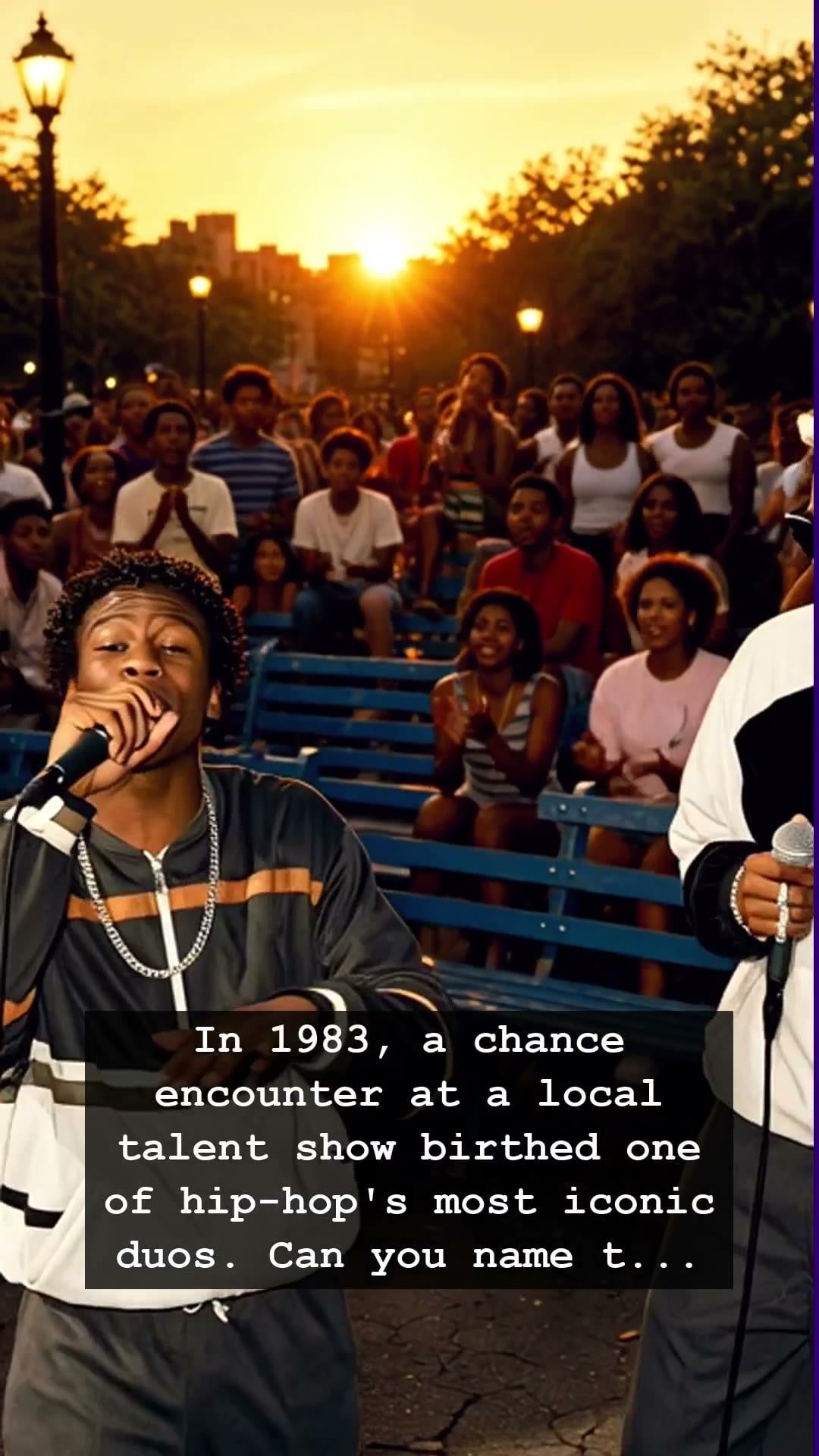
It was 1983, a year when the golden age of hip-hop was just beginning to stir in the concrete veins of New York City. While the radio waves were crowded with the synthesized pulses of disco fading into oblivion, a different kind of revolution was brewing in the damp, smoke-filled corners of Harlem talent shows. Among the sea of aspiring performers stood a young man with a distinct, rhythmic British lilt that felt entirely out of place yet undeniably magnetic. This man was Ricky Walters, who would soon become immortalized to the world as Slick Rick, the undisputed king of hip-hop storytelling. His rise was not a matter of luck, but a fated collision of talent.
At one such contest, a young beatboxer named Doug E. Fresh was already carving a name for himself. He watched from the wings as this newcomer stepped up, his delivery sharp, theatrical, and steeped in the swagger of a London upbringing transplanted into the gritty Bronx scene. Doug E. Fresh, sensing the tectonic shift in the room, didn’t hesitate. He recruited Slick Rick on the spot, creating a chemistry that would define a generation. Together, they would record The Show and La Di Da Di, tracks that remain the blueprint for lyrical charisma and rhythmic storytelling. It was a time when cassette tapes were the primary currency of cool, and every Walkman on the street was blasting the iconic duo.
Slick Rick brought a level of narrative complexity that hadn’t been heard before. While many rappers of the mid-80s focused on the party atmosphere, Slick Rick was weaving cinematic tales of morality, crime, and urban struggle. He spoke with the cadence of an old-world raconteur, blending humor with a sharp, observant eye for the darkness lurking beneath the neon lights of the era. His persona, complete with an eyepatch that became a permanent fixture of his mythos, was as calculated and iconic as the characters that populated his verses. He wasn’t just a performer; he was a novelist trapped in a rhythm.
Yet, the glitz of the burgeoning hip-hop industry was often shadowed by the weight of fame. For Slick Rick, the journey from that Harlem talent show to superstardom was marked by intense personal turmoil and the harsh glare of public scandal. The pressure to sustain his meteoric rise, combined with the volatility of the streets he once knew, created a complex friction that eventually led to legal battles and deep-seated personal tragedy. It is the classic archetype of the music industry—the sudden ascent, the blinding spotlight, and the inevitable crash that tests the soul of the artist.
Today, the legacy of Slick Rick resonates in every rapper who chooses to tell a story rather than just spit a verse. He proved that style and substance could coexist, influencing everyone from Snoop Dogg to Jay-Z. Looking back at his early recordings, you can still feel the electric charge of that 1983 encounter, a moment that altered the trajectory of American music forever. He remains a master storyteller, a relic of a time when hip-hop was finding its voice, and a testament to the fact that legends are often born in the most unlikely, humble spaces.