
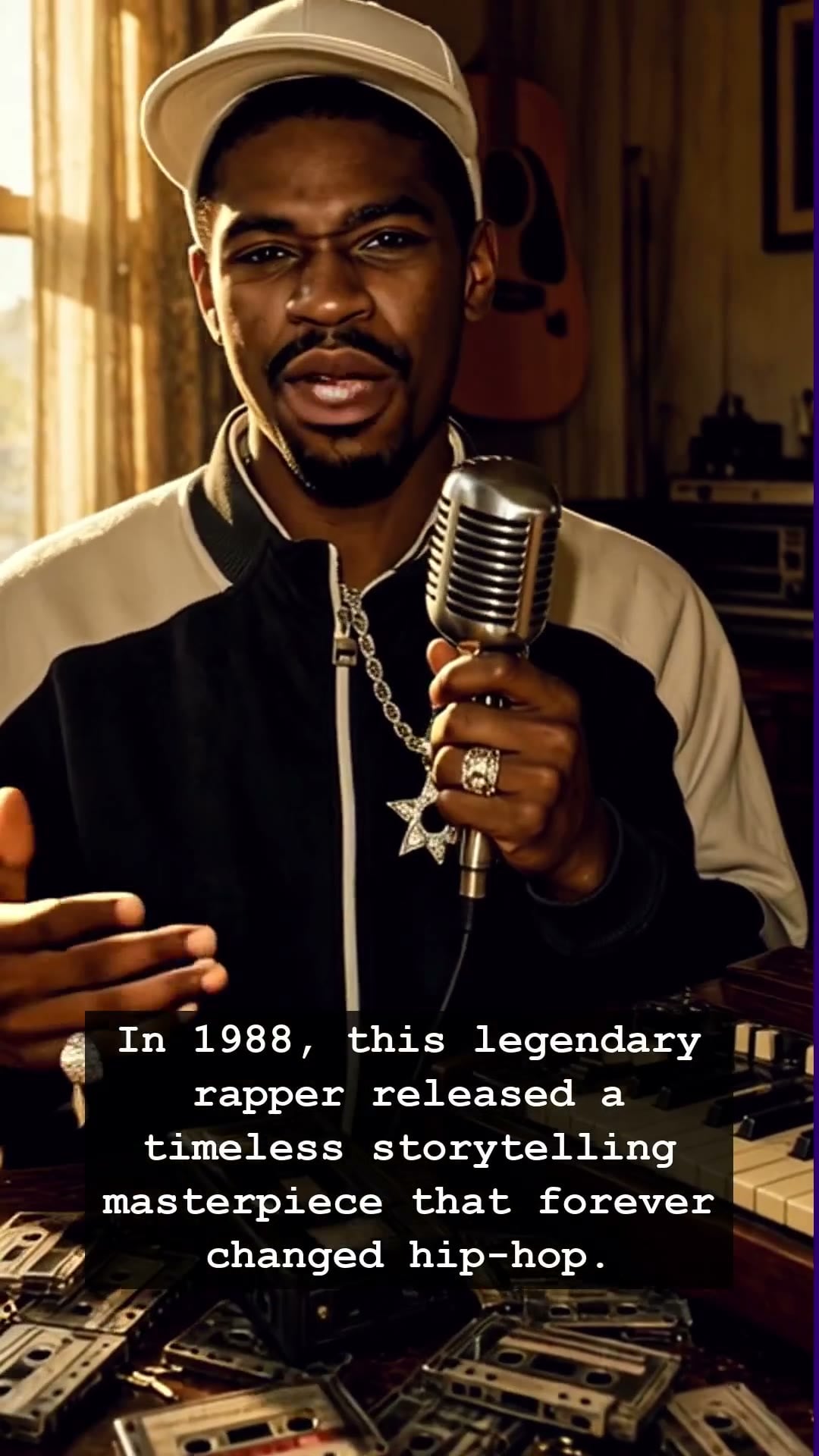
It was 1988, an era where the crackle of a fresh vinyl on a turntable felt like a sacred rite of passage. While the streets were pulsating with the raw energy of the Golden Age of hip-hop, one artist chose to take a different path. Slick Rick, the eyepatch-wearing virtuoso, didn’t just drop a rap song; he dropped a cinematic fable that moved at the speed of a rhythm. When he released his legendary track Children’s Story, he didn’t just change the game—he elevated hip-hop from simple rhymes to profound, cautionary literature set against a backdrop of urban struggle.
To understand the impact of Slick Rick, you have to transport yourself back to the late eighties. The air was thick with the scent of hairspray and the synth-heavy beats that dominated the charts, but the underground scene was hungry for authenticity. Slick Rick brought a unique British-born flair and a storytelling cadence that felt like a bedtime story told by a street-wise uncle. His voice was smooth, distinctive, and entirely unmatched in its ability to paint vivid, high-stakes environments in the listener’s mind. He transformed the microphone into a megaphone for moral dilemmas, capturing the imagination of a generation that grew up alongside the rise of MTV.
Behind the glitz of his iconic jewelry and the mystery of his trademark eye patch, Slick Rick was navigating the turbulent waters of newfound fame and legal peril. His life off-stage was often as dramatic as the tales he spun on the track. There was a genuine vulnerability to his delivery that resonated with fans who felt ignored by mainstream media. While other artists focused on bravado, Slick Rick focused on narrative. He understood that hip-hop wasn’t just about the beat; it was about the life lived between the lines. His influence spread through the culture like wildfire, cementing his status as a lyrical architect.
What makes his 1988 contribution so timeless is its refusal to age. Even as trends shifted from the analog warmth of the eighties toward the digital production of the nineties and beyond, the narrative structure of Slick Rick remained the gold standard. Producers sampled him, poets studied him, and aspiring rappers attempted to mimic his fluid, conversational flow. He turned the beat into a stage, and the studio became a theater where he performed every role with chilling precision. It is rare to find an artist who captures the zeitgeist so perfectly that their work becomes a cultural time capsule.
Today, we look back at the era of Slick Rick with a sense of bittersweet longing. It was a time when stories felt more intimate and when a single record could define the collective consciousness of a neighborhood. Whether you remember hearing it blaring from a portable boombox on a concrete stoop or spinning it on your first Walkman, his music remains an indelible part of the soundtrack of our lives. Slick Rick did not just leave us with a classic; he left us with a masterclass in human connection, reminding us that no matter how much time passes, a great story never fades away.