
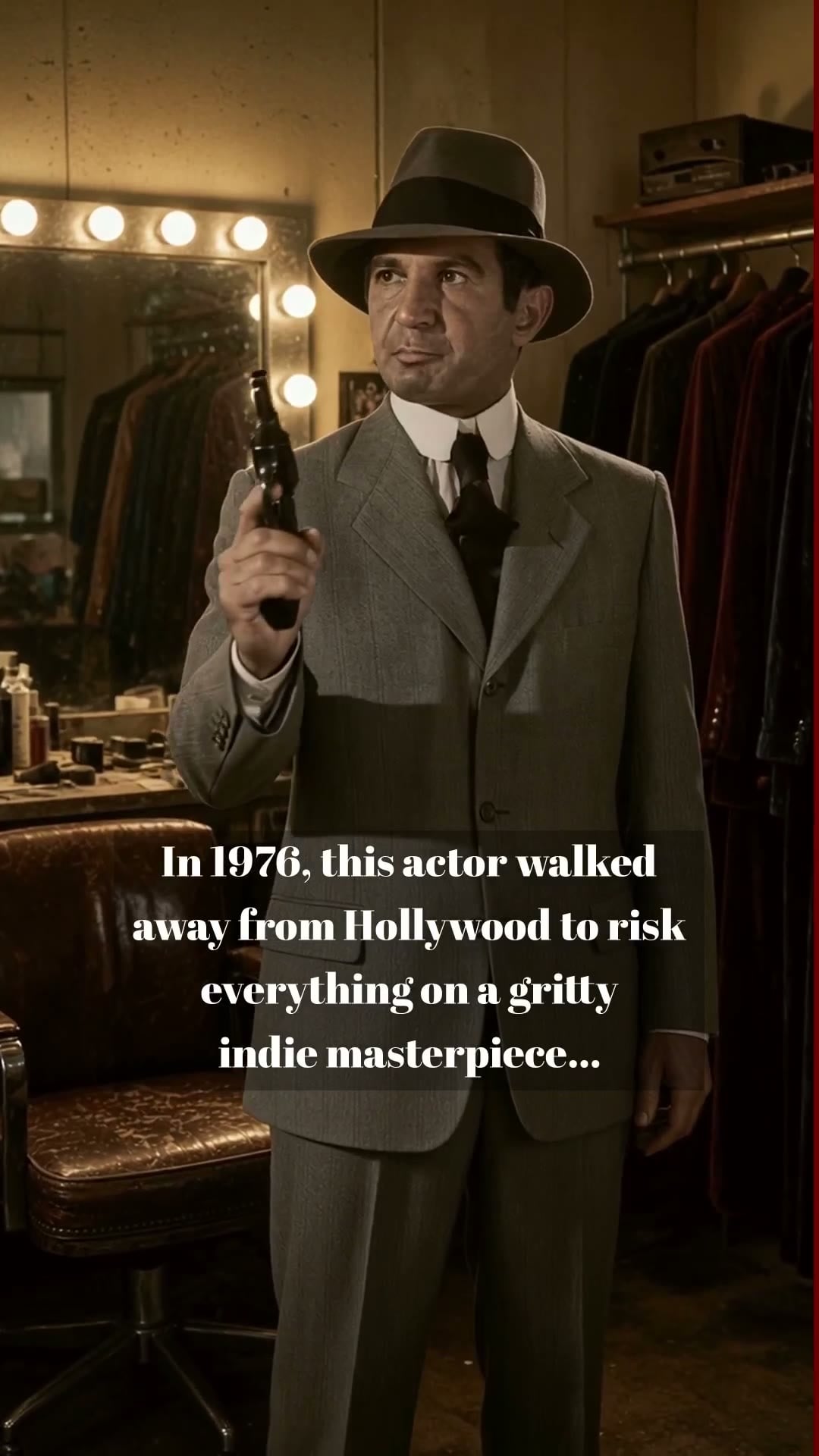
In the shimmering landscape of 1970s Hollywood, security was the ultimate currency. Actors clung to studio contracts, sought the prestige of an Oscar nomination, and chased the commercial safety of the blockbuster. Yet, in 1976, one man stood against the tide. Ben Gazzara, a veteran of Method Acting and a face recognizable from both the Broadway stage and the silver screen, made a choice that left his contemporaries bewildered. He walked away from the cushioned safety net of the mainstream industry to commit himself to a gritty, low-budget indie production: John Cassavetes’ The Killing of a Chinese Bookie.
To understand why this was considered career suicide, one must remember the era. Hollywood was transitioning from the fading elegance of the Golden Age into a volatile, high-stakes environment where the box office mattered more than the soul of the performance. Ben Gazzara was already an established talent, having built a reputation for intense, mercurial portrayals that pushed the boundaries of emotional honesty. When he signed on to play Cosmo Vitelli, a strip club owner caught in a downward spiral of debt and existential dread, he wasn’t just taking a role; he was investing in a raw, unvarnished vision of life that few major studios would ever dare to touch.
Watching the film today, one is struck by the deliberate pace and the haunting vulnerability that Ben Gazzara brought to the screen. Unlike the polished, larger-than-life figures populating the multiplexes, Gazzara’s Cosmo felt like a man we might actually know—flawed, weary, and stubbornly dignified in the face of collapse. This was the pinnacle of the independent movement, a testament to the idea that cinema could be a conversation between the actor and the truth rather than a carefully packaged product for the masses. His performance transformed the film into an enduring piece of art that defied the fleeting nature of VHS rentals and box office tallies.
The collaboration between Ben Gazzara and Cassavetes was more than a professional partnership; it was a bond forged in the fires of creative liberation. By risking his standing in the industry, Gazzara helped pave the way for the wave of independent directors who would eventually define the landscape of the following decades. He showed that true artistry required a willingness to be uncomfortable. His legacy isn’t found in a trophy room or on a glossy magazine cover, but in the enduring respect of fellow actors who cite him as a master of human complexity.
As we look back at the cinematic history of the twentieth century, we find that the most profound shifts didn’t always happen in the glitz of an Oscar night or the frenzy of a premiere. They happened in the quiet, focused moments where a performer like Ben Gazzara chose authenticity over acclaim. Even today, decades later, the shadow of his work looms large, a reminder of a time when the risk taken in the dark of a dimly lit set could change the world of film forever.