
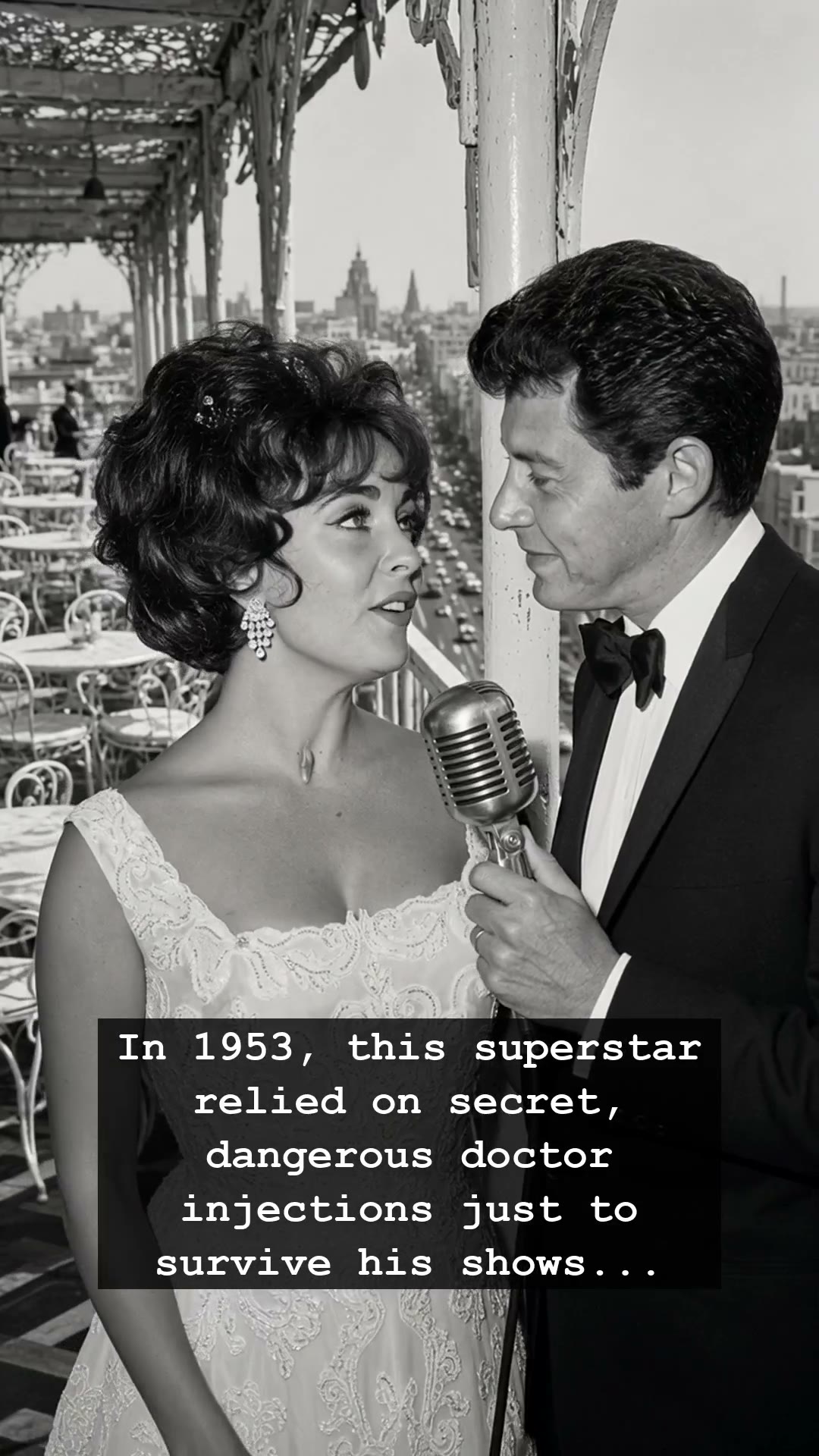
In 1953, the airwaves were dominated by the velvety, pristine tenor of Eddie Fisher. To a generation of postwar Americans, he was the ultimate golden boy—a superstar whose face graced magazines and whose voice crackled from every jukebox across the nation. He seemed to possess an inexhaustible reservoir of charm and energy, moving effortlessly from sold-out radio broadcasts to electric television performances. Yet, beneath the perfectly coiffed hair and the meticulously tailored suits, a haunting reality was taking hold. While the public swooned over his ballads, Eddie Fisher was silently fighting a war of attrition against his own exhaustion, relying on a dangerous, clandestine medical ritual just to stand upright under the stage lights.
Behind the curtain of mid-century stardom, the entertainment industry was a grueling, unforgiving machine. There were no labor laws for the idols of the early fifties, only the relentless demand of promoters and the suffocating pressure of maintaining a perfect image. To meet the crushing schedule of live shows and recording sessions, Eddie Fisher turned to a dark, hidden medical secret: specialized amphetamine injections. These shots were sold as miracle tonics by unscrupulous physicians who catered to the elite, promising endless vitality to performers who were burning out. For Fisher, these injections were not a lifestyle choice but a grim survival mechanism, a way to chase the ghost of his own success as it slipped through his fingers.
This was an era long before the cultural revolution of Woodstock or the synthesized excess of the MTV generation. It was a time when the veneer of the American Dream was polished to a mirror finish, and anyone who dared to show a crack was quickly discarded. Eddie Fisher lived in the epicenter of this pressure cooker. While the world saw a man who could command an audience with a simple smile, he was trapped in a cycle of chemical stimulation that masked deep-seated fatigue and the anxiety of being the most famous man in the country. It is a sobering reminder that the music we hold dear, the songs that define our memories of the early fifties, were often forged in the fires of personal struggle.
The tragedy of Eddie Fisher is not just about the drugs or the intensity of his schedule; it is about the price of an icon. His story remains a poignant chapter in the history of American pop music, a stark contrast to the clean-cut persona he was forced to project to his adoring millions. Today, when we hear his voice—that warm, unmistakable tenor—it is impossible not to think of the man behind the microphone, laboring in the shadows of a studio to keep the dream alive for everyone but himself.
Though decades have passed, the legacy of Eddie Fisher serves as a mirror for the harsh reality of fame in the twentieth century. He remains a symbol of an era that demanded everything from its stars and offered little in the way of empathy. As we look back on those golden years, let us remember not just the hit records, but the human cost that defined the soundtrack of a generation. Does the music still move you the same way when you know the secret weight he carried?