
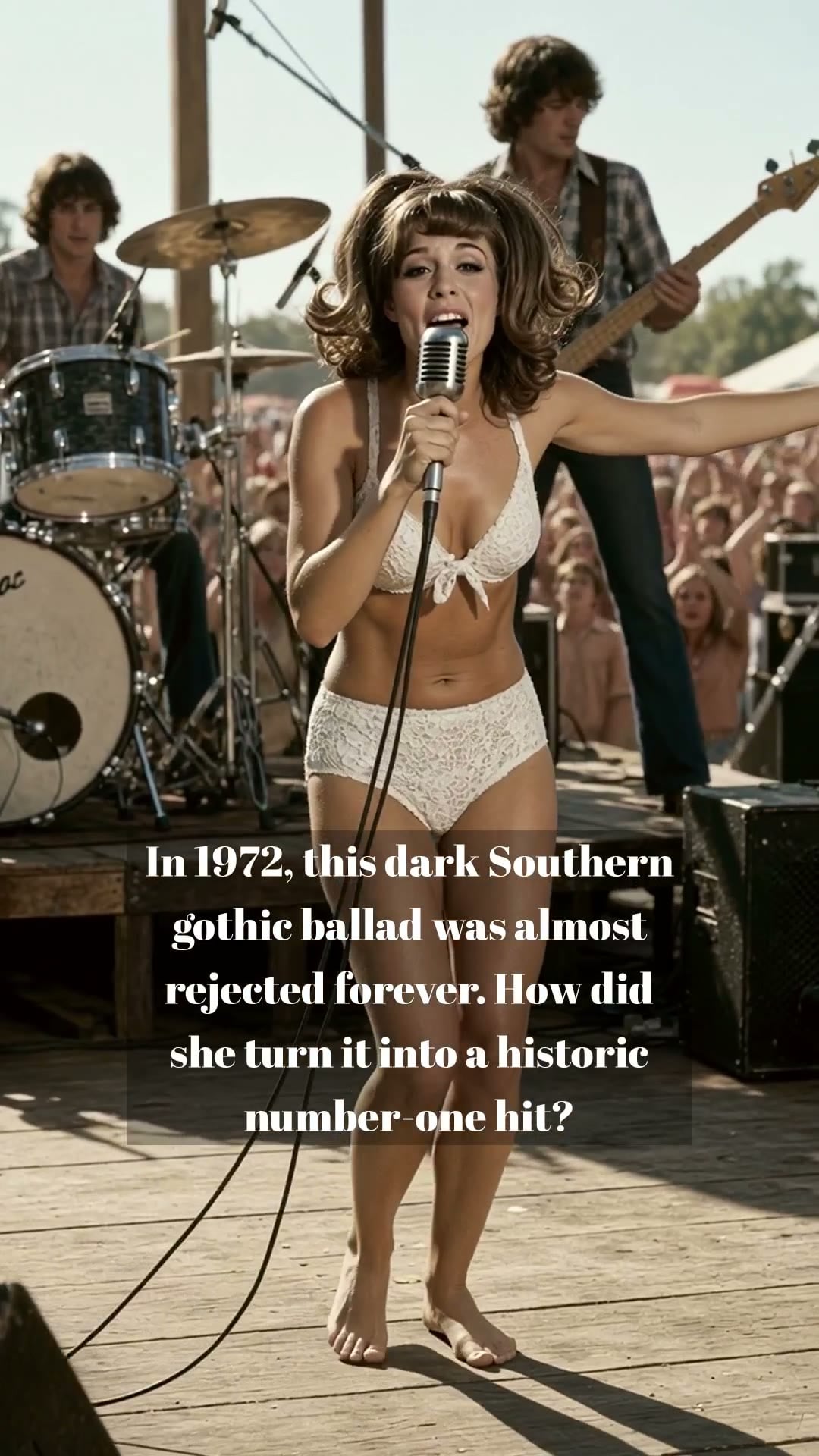
There is a distinct, dusty magic to the early 1970s, a time when the lines between folk storytelling and pop music blurred into something unforgettable. For many of us who remember the era of cathode-ray tube televisions and the crisp sound of a fresh 45-rpm record, the name Vicki Lawrence brings back memories of iconic variety shows and a sharp, comedic wit. Yet, beyond the laughter, there lies a haunting musical legacy. In 1972, a dark Southern gothic ballad titled The Night the Lights Went Out in Georgia emerged from the shadows of rejection to become a cultural phenomenon, proving that sometimes the most unlikely songs define an entire generation.
The story of this track is as compelling as its lyrics. Written by Bobby Russell, the song was originally offered to a major Hollywood icon of the day, but her husband famously dismissed it, believing the grim subject matter would never find a home on the radio. It was a moment of missed opportunity that left the song drifting in industry limbo. Enter Vicki Lawrence, a starlet already gaining traction on the national stage, who possessed the rare ability to inhabit a character just as easily as she could deliver a punchline. She saw past the dark narrative to the raw, visceral drama hidden within the melody, sensing that audiences were ready for a story that felt like a miniature film noir on record.
When Vicki Lawrence entered the studio, she didn’t just sing the song; she acted it. Drawing from the same depth of commitment seen in the practitioners of Method Acting, she leaned into the tragedy and the atmospheric tension of the Georgia swamp. The track climbed the Billboard Hot 100, eventually clinching the number-one spot. For those of us who spent our Friday nights glued to the screen or adjusting the tracking on our VHS tapes to capture our favorite moments, it felt like a collective victory. It was a reminder that genuine talent, when paired with the right intuition, can overcome the skepticism of the Hollywood establishment.
Beyond the charts, the song became a touchstone of the decade, a piece of Americana that resonated with anyone who appreciated the craft of Southern gothic storytelling. Vicki Lawrence proved that her versatility extended far beyond the sketch comedy stage. She captured a mood that was eerie, sophisticated, and deeply human, bridging the gap between the theatrical golden age of the past and the evolving music landscape of the New Hollywood era. The song’s success was not just a fleeting trend; it was a testament to the power of a voice that could hold an audience captive through pure, unfiltered narrative weight.
Even now, decades removed from that historic 1972 breakthrough, the song retains its haunting quality. It remains a fixture in our collective consciousness, a melodic snapshot of a time when radio played stories rather than just beats. Vicki Lawrence transformed a rejected manuscript into a masterpiece, leaving an indelible mark on the soundtrack of our lives. As we look back at the era of classic cinema and pop icons, it is worth remembering the star who dared to embrace the darkness and turn it into gold. Perhaps tonight is the perfect time to pull that record from the shelf, turn the volume up, and let the echoes of that Georgia night sweep over you once again.