
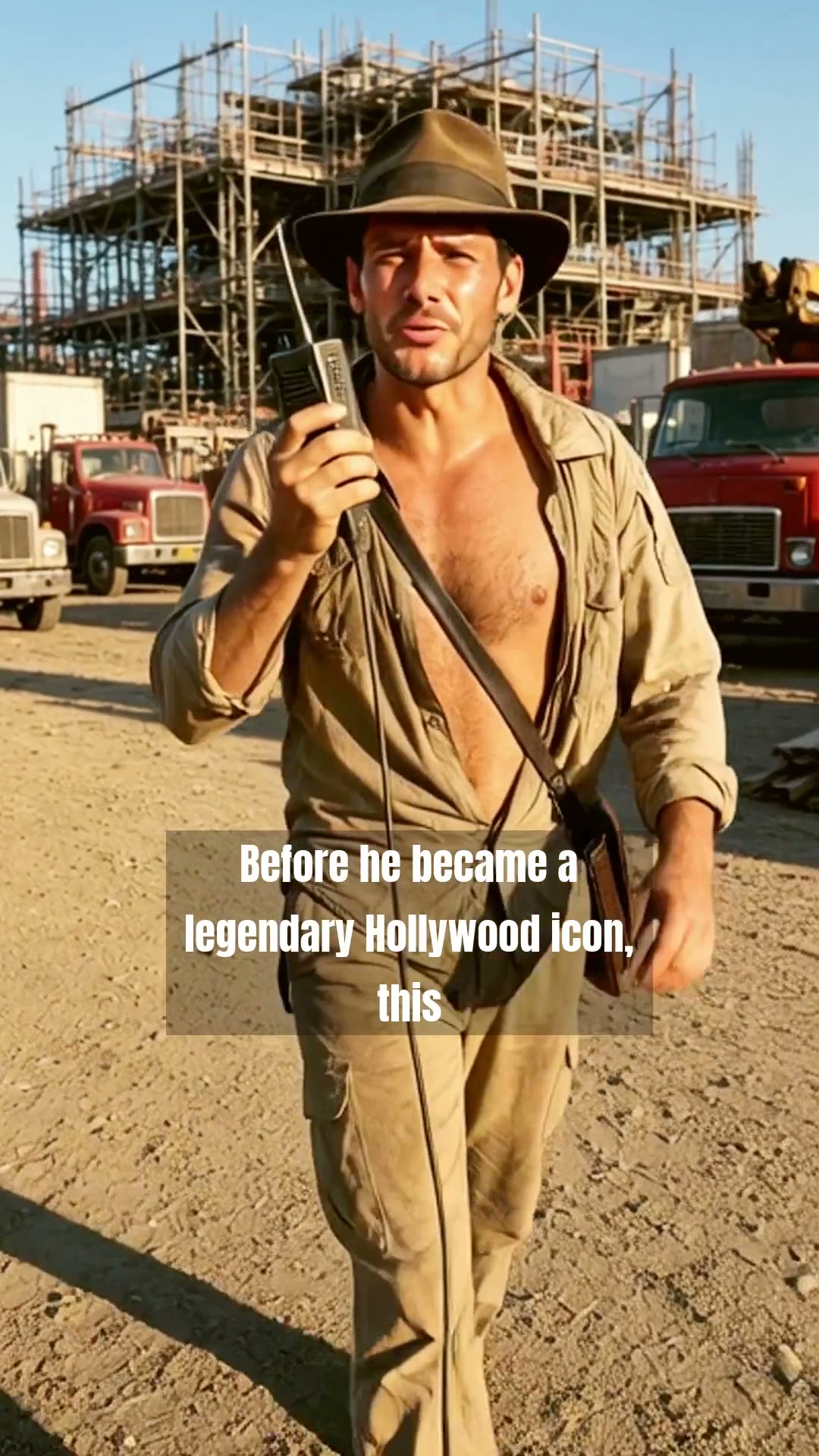
In the golden tapestry of cinematic history, few stories capture the heart of a dreamer like that of Harrison Ford. Before he became the scruffy-looking nerf herder who captured our imaginations in the late seventies or the fedora-wearing archaeologist we all grew to love in the eighties, Harrison Ford was simply a man with a hammer and a vision. Living in Los Angeles during an era where the struggle for a big break was the quintessential rite of passage, he found himself working as a carpenter to support his growing family. To the neighbors and the clients who commissioned his custom cabinets, he was a skilled craftsman, a quiet professional whose hands were more accustomed to sanding wood than clutching a blaster or a whip.
It is easy to look back at the era of the Blockbuster and assume that every star emerged fully formed from the studio system, but the journey of Harrison Ford tells a more grounded, human story. In the quiet workshops of Hollywood, while the legends of the Method Acting era were perfecting their craft in studio basements, Ford was building the very furniture that would furnish the homes of those same casting directors and producers. There is something profoundly poetic about the transition from the physical labor of building cabinets to the ethereal labor of building myths on the silver screen. He wasn’t just auditioning for roles; he was carving out a path through sheer persistence, waiting for the moment when a galaxy far, far away would finally come calling.
When that moment arrived in 1977, the shift was seismic. Harrison Ford did not just step into the role of Han Solo; he redefined what a leading man could look like. He brought a sense of rugged realism to space opera, a grounded cynicism that felt perfectly at home in a post-Vietnam, cynical Hollywood landscape. That same authenticity defined his work in the eighties, as he transitioned from the cockpit of the Millennium Falcon to the treacherous temples of Indiana Jones. He was never the polished, untouchable star of the old Golden Age; he was the weary hero who felt every bruise and shared every laugh, a quality that endeared him to audiences spanning multiple generations.
As we look back at the VHS tapes that lined our living room shelves, it is the grit in Harrison Ford’s performances that remains most vivid. Whether he was fleeing the Empire or running from a giant boulder, he possessed an uncanny ability to ground the most fantastical situations in human emotion. He reminds us that greatness is often preceded by years of obscurity, where the most important work is done in silence and solitude. His career serves as a testament to the idea that sometimes, you have to build the frame before you can hang the masterpiece.
Decades later, the legacy of Harrison Ford continues to echo through the halls of cinema. He remains a bridge between the classic star power of the past and the modern blockbuster spectacle. When we watch his early performances today, we aren’t just seeing a star; we are seeing a man who earned every spotlight he stood under. The carpenter who once built cabinets has left us with a body of work that is as solid and enduring as the oak he once worked with. Perhaps the next time you watch one of his timeless classics, you might pause to appreciate not just the hero on screen, but the quiet, hardworking man who dared to believe his hands were meant for more than just wood.